A land of many gardens
When heading to the Charlottesville (also known as the Piedmont area), Virginia, don’t miss these wonderful public gardens. If you head this way, many great Plant-lover places await you. Check them out for free (or, in some cases, with an invite or small donation).
Please be aware that if you purchase from some of the links on Virginia is for Gardeners, we may receive a small percentage of that sale. Your cost will be the same, regardless! Thanks for reading:)
Gardens and greens on Grounds
Smack dab in the middle of Charlottesville, is arguably the main reason that the city has become what it is to this day: the University of Virginia.
You’ll hear many languages on campus, be able to sample food from many cultures nearby, and marvel at the campus itself, a bona-fide UNESCO world heritage site.
UVA has land all over Virginia, thank to alumnus, research and wealthy benefactors. However, its main campus is in Charlottesville. The town is an hour west of Richmond Virginia, and just over 100 miles from Washington, D.C.
Pavilion gardens I-X
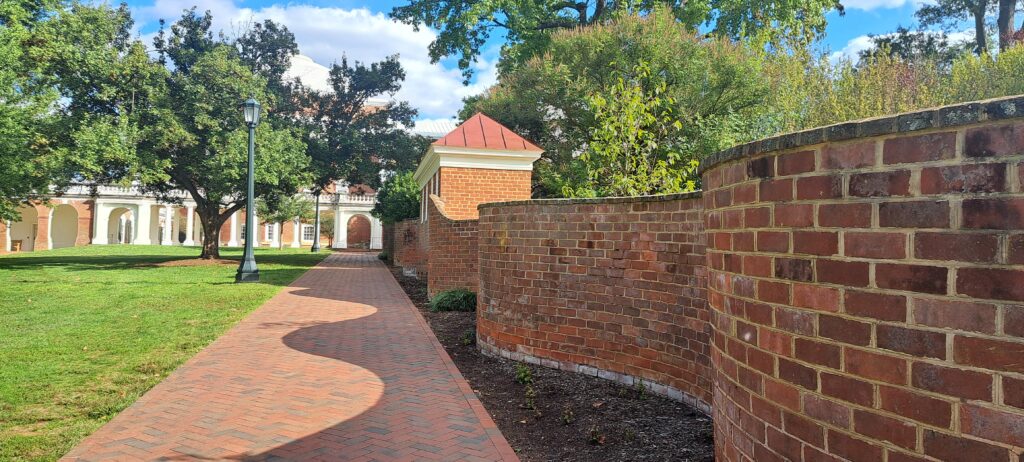
The heart of the campus, (“Grounds”, to UVA students and faculty) is the large rectangular Lawn.
This large grassy meeting spot is anchored by the Rotunda,(at 1826 University Avenue, Charlottesville, VA) and flanked by 10 faculty’s homes and dorm rooms. Behind the dwellings are the pavilion gardens, accessible through weig.ted gates.
Pavilion gardens are numbered 1-10. Each has a slightly different historical focus.
Several styles within a short stroll
One side of the Lawn contains the sunnier odd numbered- pavilions 1,3,5,7, and 9. The even numbers feature shade, antique statuary and large trees. Some are heavier on edible fruits and shrubs. Others are ornamental and more garden club-oriented.
Meander unhurriedly through them all and determine your favorite. Then, return in another season, and see if your favorite garden is now different. UVA Grounds crew mow, water and mulch here and two Head Gardeners oversee responsibility for these special pavilions.
Division of Labor
One gardener generally tends to the odd numbers, and the other, the even numbers. (At least, that is how it has been the past five years, since I began touring them with my classes in 2021).
Because there are people that live in all of these places where the gardens are located, please behave as you would in any neighborhood or public place and respect when they are closed off for private use (which is rare, but it does happen).
Charlottesville student’s great garden legacies
Also on UVA’s Grounds are several organic student gardens.
One is across from the cemetery, located at the corner of Alderman and Cemetery Roads. The UVA Cemetery and Columbarium is historically garden-like as well, and a quiet place to visit. UVA’s Student Garden is at the corner of Alderman and McCormick Roads.
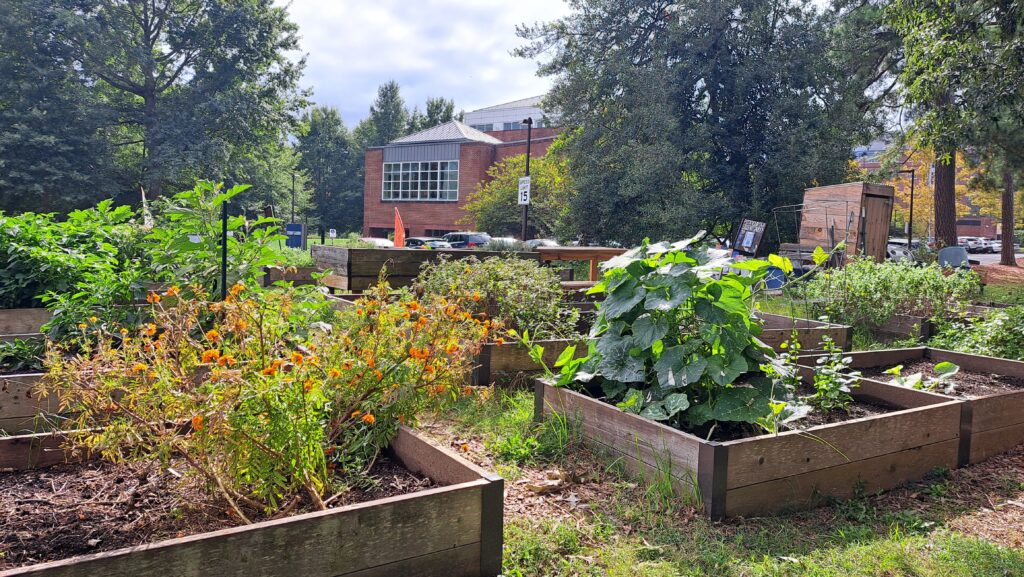
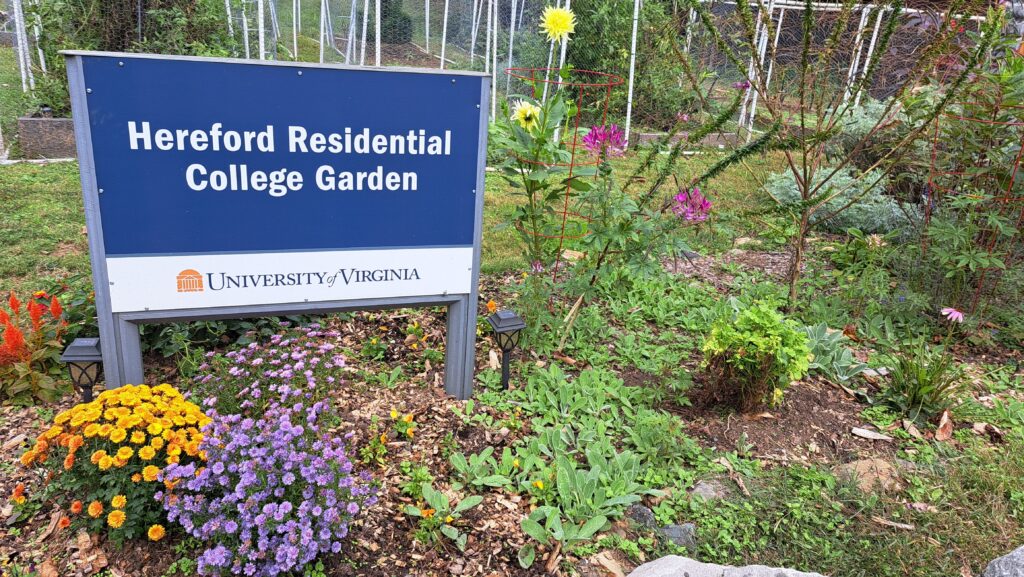
Downhill on McCormick Road is one of our nation’s oldest observatories, trails for hiking and mountain biking, and the Hereford Residential student garden on Hereford Drive next to Runk Dining Hall.
Peer pressure
The student gardens are where you can see 8-10 raised and permanent beds full of vegetable, flowers and fruits.
If things are growing in these gardens, assume those plants are the varieties to grow around here! Proximity of resident deer, groundhog and rabbit necessitate growing pest-resistant crops.
Demonstration pest-proofing
Because of the enormous pest-pressure on all these gardens, the student gardens are great demonstrations of what’s safe to plant in your own yard.
If you are an organic grower and live nearby, take note! Additionally, Hereford Garden features “groundhog guards”. These are custom-fashioned movable fences that demonstrate how to protect your vegetables in pest-heavy areas.
More at Morven
Slightly off campus (aka “Grounds”) but still owned by UVA is the UVA Morven Sustainability Lab and Morven Kitchen Garden. Morven is a historic 2913-acre estate that was donated to the university in the early 2000s by former resident and billionaire John Kluge.
Morven was originally a working dairy farm, and then later stud farm for racehorses. Nowadays, the estate-turned-educational outpost includes mountain views, antique buildings, a Japanese teahouse, and countless breathtaking trees and ornamentals.
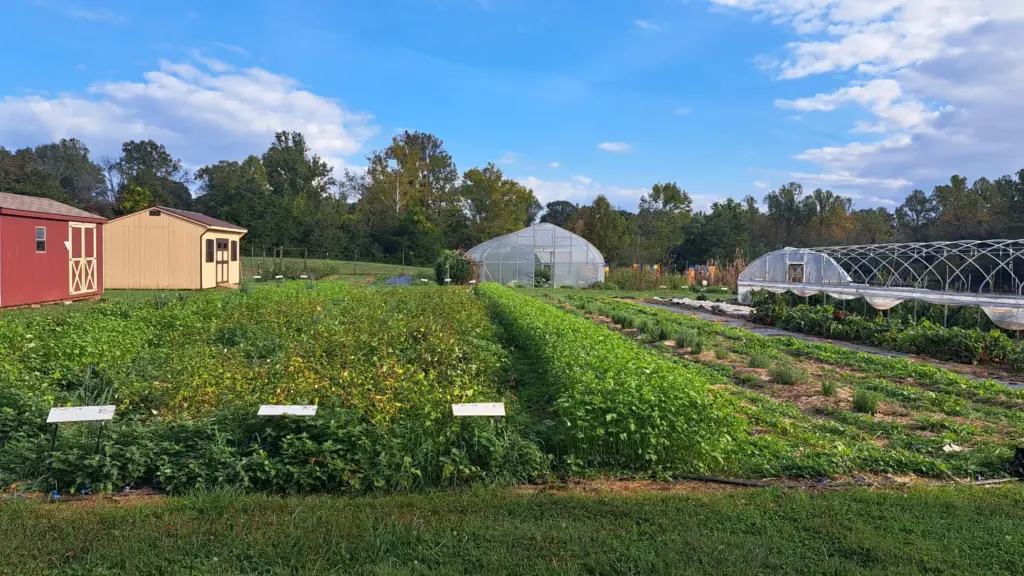
They again have cattle, as well as horses, chickens, and bees. There are huge goldfish in the Japanese Tea House garden.
Morven is home to a thriving CSA community supported agriculture program (pictured).
University students, staff and community residents are invited to volunteer on-farm. All are also welcome to buy a share (a subscription) to the food grown at Morven. Pick up is on-site weekly, with at least one other drop-off spot on or near campus in Charlottesville, Virginia.
Visiting Morven
To visit, make an appointment by email. Plan a few weeks ahead to correspond with somebody that works there. Ask a student, Faculty, staff or alumnus at UVA if you want an easier chance of visiting Morven.
Community days (aka “open house”) happen throughout the school year. The Morven Kitchen Garden Instagram page usually announces these community days well in advance.
Gazpacho-self to the garden!
Another way to experience Morven is to attend their fabulous annual Gazpacho fundraiser. This event offers garden tours, raffles, music and s’mores in the early Fall. For a more in-depth connection to this space, look up the summer classes they host onsite.
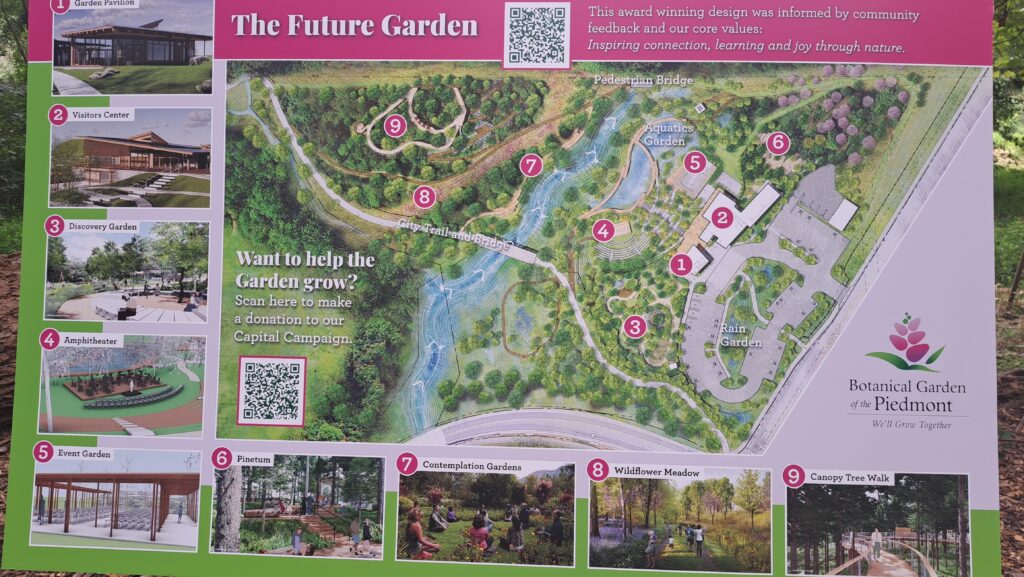
On the other side of Charlottesville is a newer botanical garden.
Located near to Charlottesville High School, they’ve established a labyrinth, and pathways through a beautiful woodland. Volunteers and staff are fundraising for a community building.
This garden has a largely wooded and natural landscape aesthetic. I first visited during a botanical illustration festival. Currently, they offer programs on pollinators and special mornings workdays.
Keep an eye out for new programs and offerings monthly at the Botanical Garden of the Piedmont.
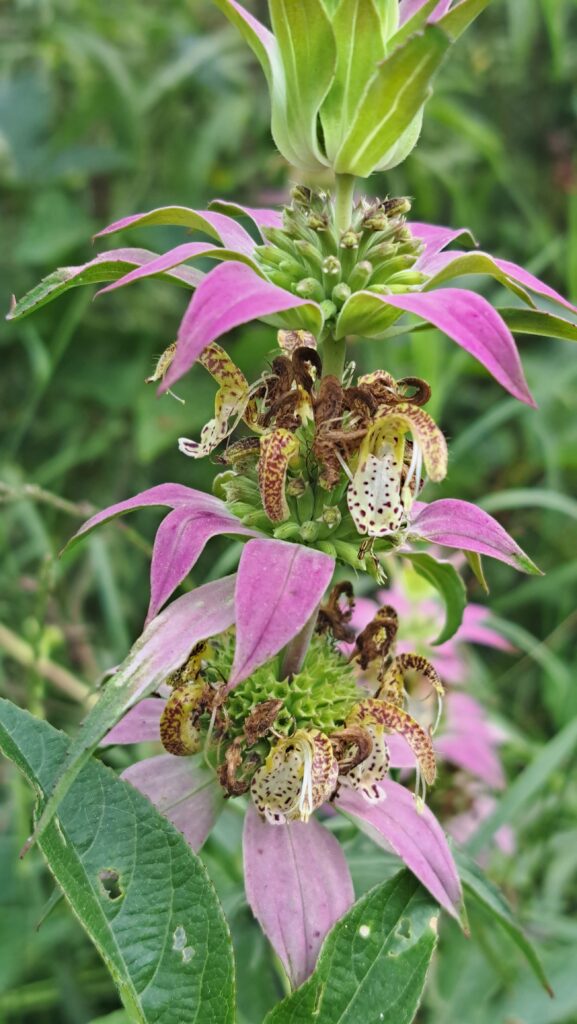
The Ivy Creek Foundation is also near Charlottesville. It was the site of an African American farmer and agricultural agent family’s historic house and barn.
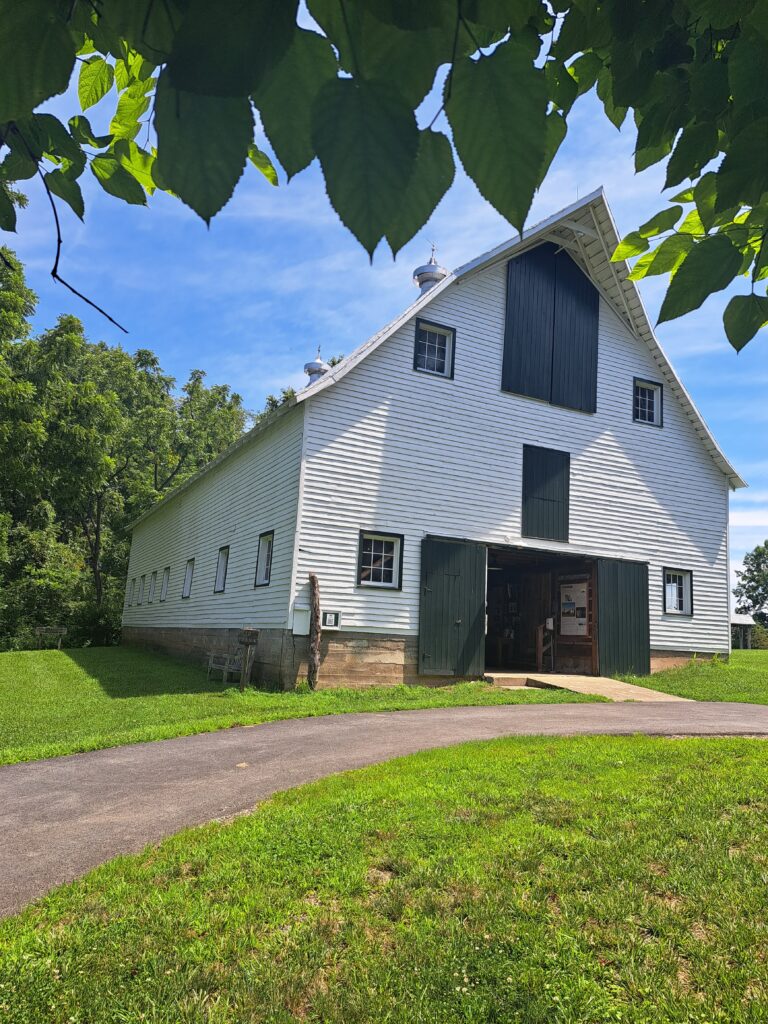
Nowadays, the barn has been renovated, and the family home is in the middle of thorough renovations.
Near the home are beautiful (and labelled!) native garden plantings. Ivy Creek Foundation offers myriad programs throughout the year including caterpillar walks, and pollinator lectures, and native plant sales in the spring.
A gem in the western side of Charlottesville
Tree walks, bird talks… get on their website, or sign up for their list. Plan to spend a few hours hiking, enjoying the gardens, and take in a lecture or a starry-sky program at night..
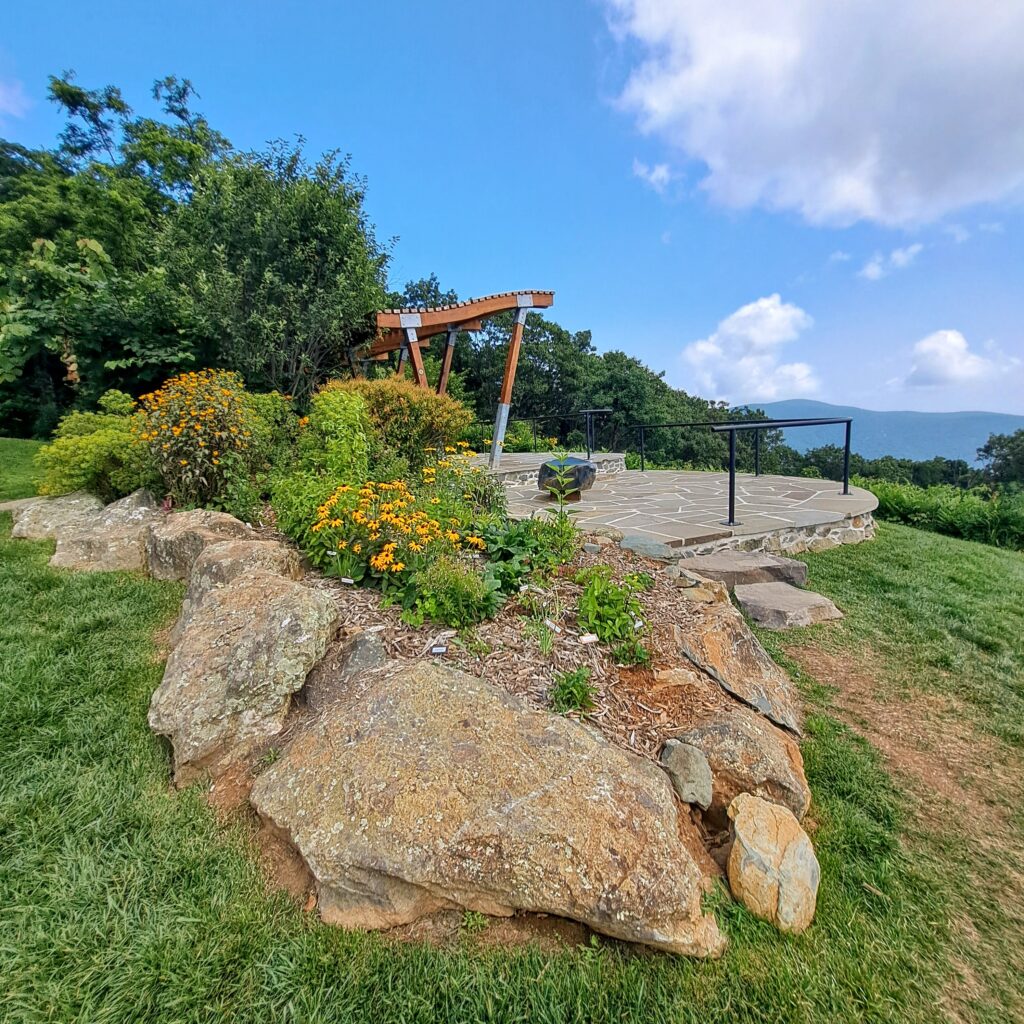
Further afield, is the Nature Foundation at Wintergreen. At Wintergreen Resort, there are several public gardens tended by avid native plant program volunteers.
They do a great job taking care of these public gardens and grow many of the perennials within them.
Worth the Hike (Drive) up
These public (labelled) native plant installations are located: in front of the property Owner’s Association, the mountain golf course, Founders Overlook and the Nature Foundation center’s building.
Visit 3421 Wintergreen Drive up at the resort to get maps and more information about their numerous nature and hiking programs.
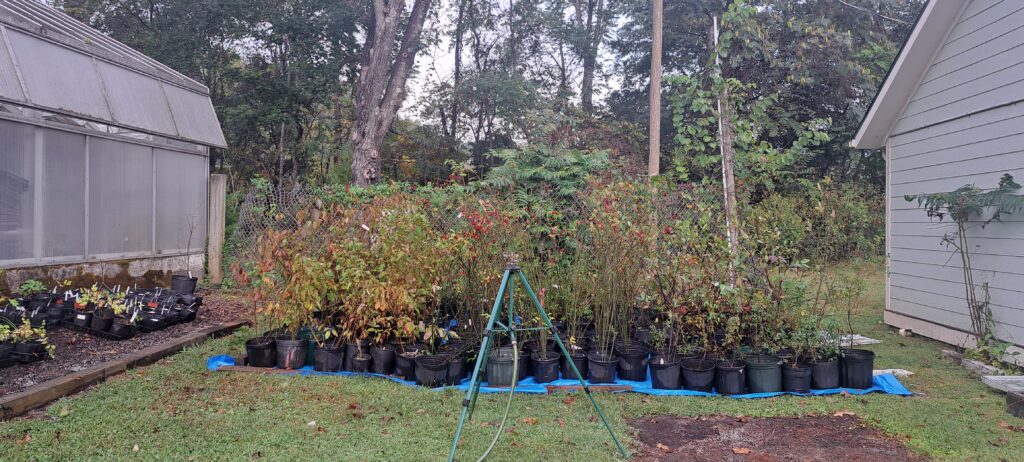
As mentioned, The Nature Foundation at Wintergreen volunteers grow over a hundred different kinds of native. perennials, trees, shrubs, vines and ferns. If you are interested in native plants, get on their list.to find out when they’re selling them!
Nelson knows
Also in Nelson County on the other side are the Quarry gardens in Schuyler. They are also a native plant-focused public garden. Appointments and a small donation are requested to make sure that they’re open.
It’s a gorgeous site of regenerative landscaping and planting it was a site where soapstone was quarried for many years. Now a beautiful testament to planting native and healing the land, with a great nature center onsite.

The Rockfish Valley Natural History Trail is a three-mile loop full of native plantings, interpretive signs and QR codes all around the trail. The parking area is on Route 151, adjacent to a great nature center.
Many avid gardener volunteers live in the greater Charlottesville area. They do their best to educate and encourage people to get outside, enjoy nature, and, in many cases, to plant native plants.
Plant your own
After visiting all these beautiful gardens, you’ll find a lot of the native plants that you see growing here. Between the native plant society, the Department of Forestry Master gardener, The Nature Foundation at Wintergreen plant sales, there are many options! Plant them in your garden, and enjoy!
Getting to C-ville
There is a great train depot on Main Street. The station is right near UVA, with ample inexpensive parking: https://www.amtrak.com
Flying direct into Charlottesville? https://gocho.com