Many years ago, I edited a newsletter for the Master Gardeners in Virginia Beach called ‘Gleanings’. I often asked other gardeners for submissions. Because assembling a newsletter was new to me, as well as growing things, I needed their support. Occasionally, generous people obliged me, which is how I learned of an excellent idea for a butterfly/insect/birdbath. After completing it, I wanted to be the best host and plant for pollinators.
This easy how-to was simply a terra-cotta dish (the kind that usually goes under the plant’s pot) perched atop a tomato cage column. Underneath the column were planted vines (like four o’clock or similar annual) to cover the cage and make for a pretty attractive place for birds to perch and bathe.
I immediately implemented this idea, and soon enough the flowers were on their way, and the birds and butterflies seemed like they needed more.
Please be aware that if you purchase from some of the links on Virginia is for Gardeners, we may receive a small percentage of that sale. Your cost will be the same, regardless! Thanks for reading:)
Best Hosting: Planting for Pollinators
We decided to install our first Butterfly Garden. Nowadays, people who want to host call them Pollinator Gardens, but it means the same thing.
There was a great duo that had a company called “Plants with a Purpose” in the Master Gardeners. Their flyers inspired our plant choices. Their premise was that plants should enhance the landscape for wildlife first, then humans.
Hosts with the most for Pollinators; rationale
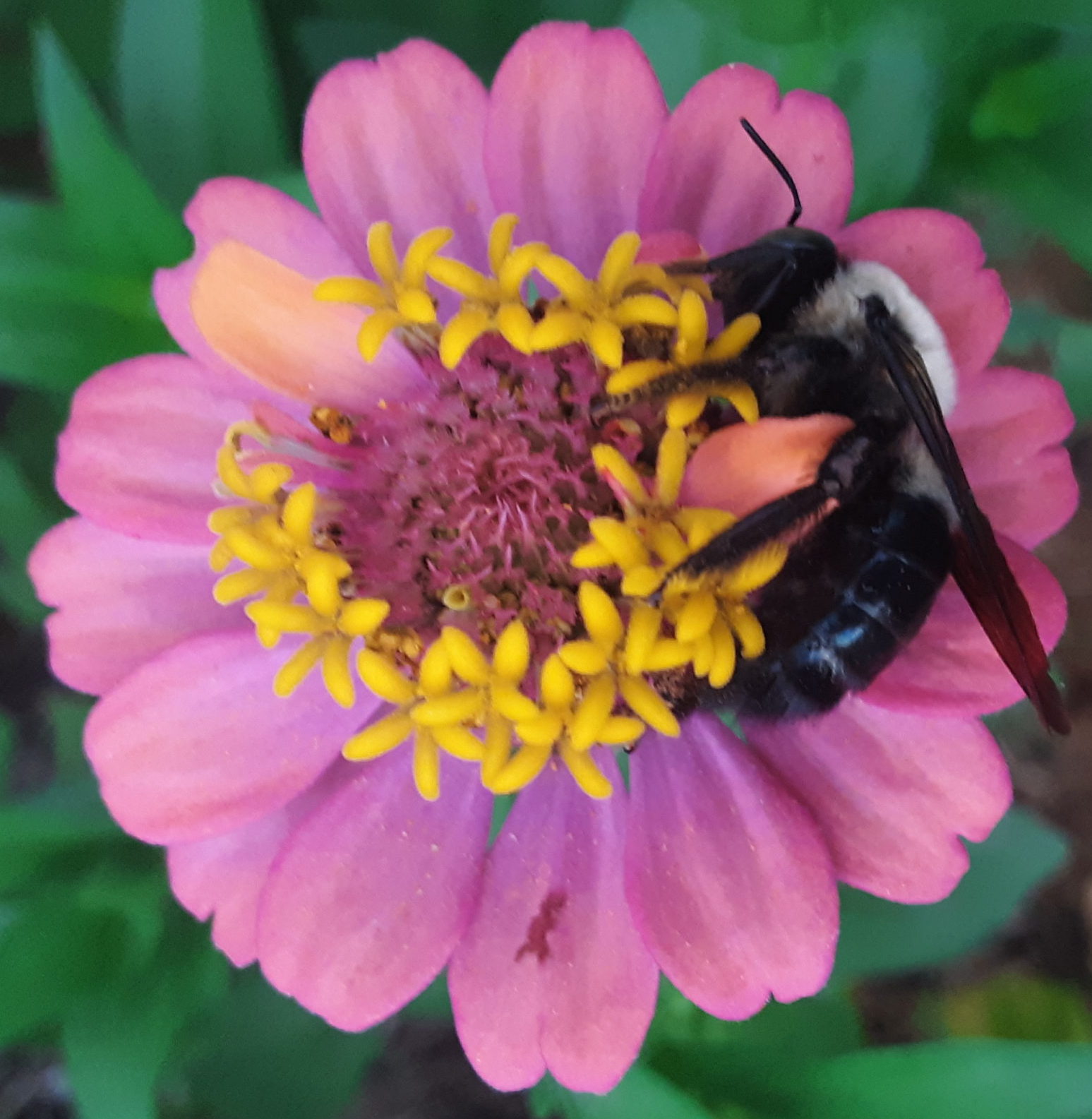
Ultimately, a landscape of perennials nourishes bees, birds, and butterflies far greater than plants chosen only for beauty. You get to experience many new visitors with a butterfly garden. Their visits add beauty while encouraging them to raise young and return to your garden, year after year
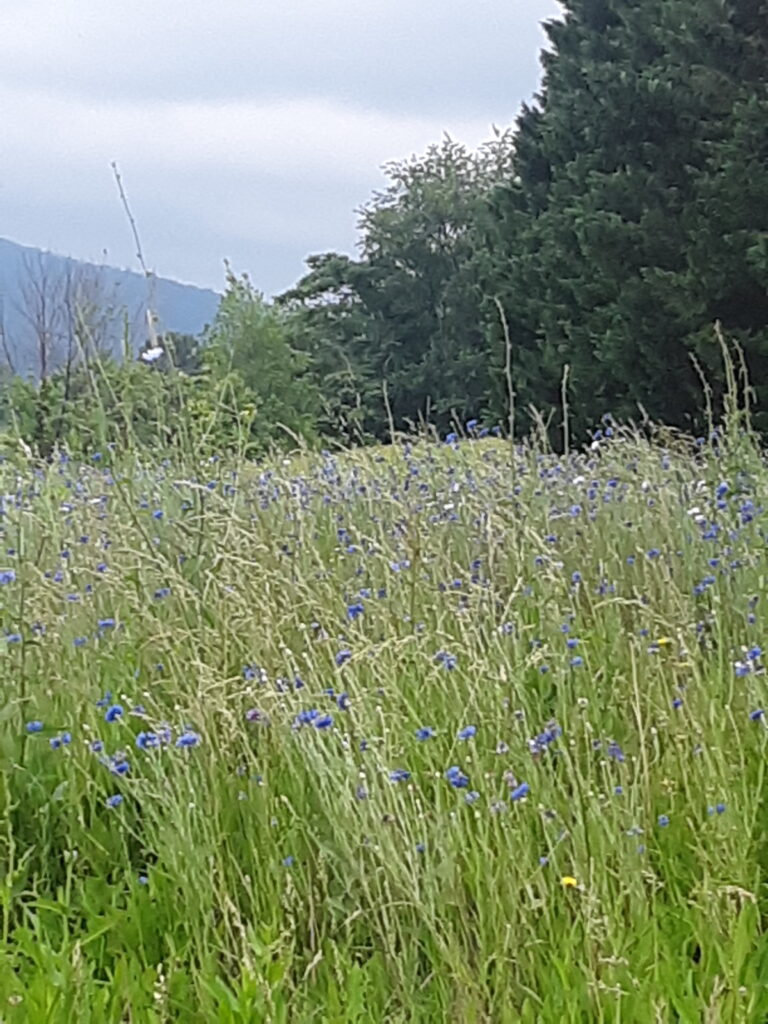
Perennial plants and meadow/pollinator garden aesthetic reduce work and increase biodiversity in your space..
Our new cheap-o birdbath was located on a newly planted island bed of butterfly-attracting plants. Around the time we began planning it, my friend Melissa Pease was researching the same subject, on a much larger scale.
At the time, Melissa worked for the Elizabeth River Project, an awesome non-profit that works to restore the health of the Elizabeth River. This river runs through Portsmouth, Norfolk, Virginia Beach, and Chesapeake.
Melissa compiled comprehensive lists of native and wildlife-enhancing trees, shrubs, perennials, and groundcovers that grow in its watershed. She also included information about the animals that live nearby, and birdhouse construction information.
A book for bees, birds and butterflies
The guide she created was underwritten by some of the Project’s biggest benefactors AND beneficiaries, and ALSO included stories on landowners along the river who’d planted wildlife habitats, reaping numerous benefits. Melissa even included plans for bird and bat houses, and we were happy to come celebrate the official book release.
I was privileged to have use of this fine book, and I USED it! We chose things Butterfly Weed (Asclepias tuberosa) with tie-dyed looking blooms, and Echinacea (purpurea) and Pawpaw (Asimina triloba). The latter two are excellent sources of food for swallowtail caterpillars and pawpaw in particular bears a custard-like fruit. Most importantly, we planted Milkweed.
Monarch revival
At the time we were choosing our plants, the Monarch Butterfly had suffered unprecedented losses due to genetically engineered strain of Zea mays (corn). I’d loved these butterflies since last century after doing a report on them in the fourth garden.
In this case, the strain affecting the Monarchs was called “Roundup™Ready Corn.”
The corn seed had bred-in resistance to the same-named herbicide, so it could be sprayed on fields and continue to live, as everything else around it died. This made keeping fields “clean” easy for everything except for the butterflies.
Everything affects EVERY thing
There used to be a multitude of plants, animals, and insects living in those formerly productive corn fields. Post-planting seed engineered to resist herbicide, it was mass carnage for a vast percentage of the Monarchs.
These fields were NOT the best hosts in plant choices for pollinators
Many of these majestic butterflies were killed off en route to their over-wintering grounds back in Mexico the year before we planted. We wanted to be good hosts, and plant lots and lots of Milkweed to help rebuild this beloved pollinator’s population.
Public actions and reactions
Eco-activists across the country were dressing as Monarch butterfly fairies and symbolically dumping Corn Flakes into trash cans. (Parent company Kellogg’s was using the Roundup-ready corn in its manufacturing).
At home, we practiced a more subtle but equally powerful form of activism (my favorite): planting seeds. By sowing Milkweed, we hoped for the best. Soon enough, different plants flowered and thrived. We enjoyed being great hosts for pollinators after creating our butterfly bed. It provided much joy for the remaining years we lived in that home.
However, the Milkweed seeds never did bloom to attract their intended guests. This was the only detraction in an otherwise very successful garden. Our new residents included West Virginia sulfurs, Painted Ladies, Black Swallowtails, Tiger Swallowtails, and even Monarchs themselves… just no Monarch caterpillars (they feed solely on Milkweed).
The best new opportunity arises to host a pollinator garden
Fast Forward seven years (now twelve, Ed.) to our newly-planted butterfly garden in an albeit more arid situation. Once more, we planted Ascelpias, Buddleia (unfortunately now considered to be an invasive species in the western part of the country as of July 2024). We also planted Echinacea, Arrowwood Viburnum and Chrysanthemum. Most importantly, we included umbelliferous plants such as yarrow, dill and fennel, and tucked in tuberous flowers, too. A new favorite was Jerusalem Artichoke.
Include a tray of wet sand for “puddling” and other strategies
Nearby, we put a tray of wet sand for “puddling” which is what insects like butterflies with proboscis like to use to drink minerals.
It was an exceptionally hot summer. For the last half of the rainless season, a birdhouse gourd vine took over the entire front yard. It came close to smothering plants we’d lovingly placed to attract the butterflies.
Nonetheless, I let the vine remain because it was helping to keep the ground shaded. This was a very important job in 100-degree+ temperatures.
Summer surprise!
In these inhospitable conditions, imagine my surprise when a few little milkweed plants just appeared, and began to grow. And grow. And bloom!
In a year we least expected it, not only did we finally play host to the esteemed pollinator plant Milkweed, but our Milkweed played host to many many Monarch caterpillars! It even grew to seed. We were hopeful it was securing a spot in the garden for future years.
Happier holidays
While our family won’t always be able to celebrate Christmas in Mexico like we did in 2002, it gives me great pleasure to know some of our Milkweed guests WILL. Against all odds, they are able to make it home due in part to our efforts. That gives me something to be thankful for, miles away with my family, here in Virginia.