What history is growing in the gardens of historic Williamsburg? It’s early September and I visit several gardens to find out.
I begin in Williamsburg, since I am coming from the north. Later in the week, I will work my way down to the Hampton Roads area. For now, though, I am deliriously happy because I love old buildings, history and gardens. I love historical Williamsburg.
Please be aware that if you purchase from some of the links on Virginia is for Gardeners, we may receive a small percentage of that sale. Your cost will be the same, regardless! Thanks for reading:)
A place in time
Though I travel there a few times a year to meet up with family, go to Busch Gardens or just stroll around, I am on a mission today. This time, my specific focus is to visit gardens and farms.
There are many historic homes and landscapes here, so I find a treasure trove of places. Some are new to me, and others are a balm of familiarity and old-growth tree canopy.
If you are coming from a different location, you will appreciate this handy article about parking strategies for your day in history.
Usually, I use the Colonial Williamsburg parking app and utilize one of the parking lots off Merchant Square. It is the one closest to a spot I’ve always loved; a field filled with horses.
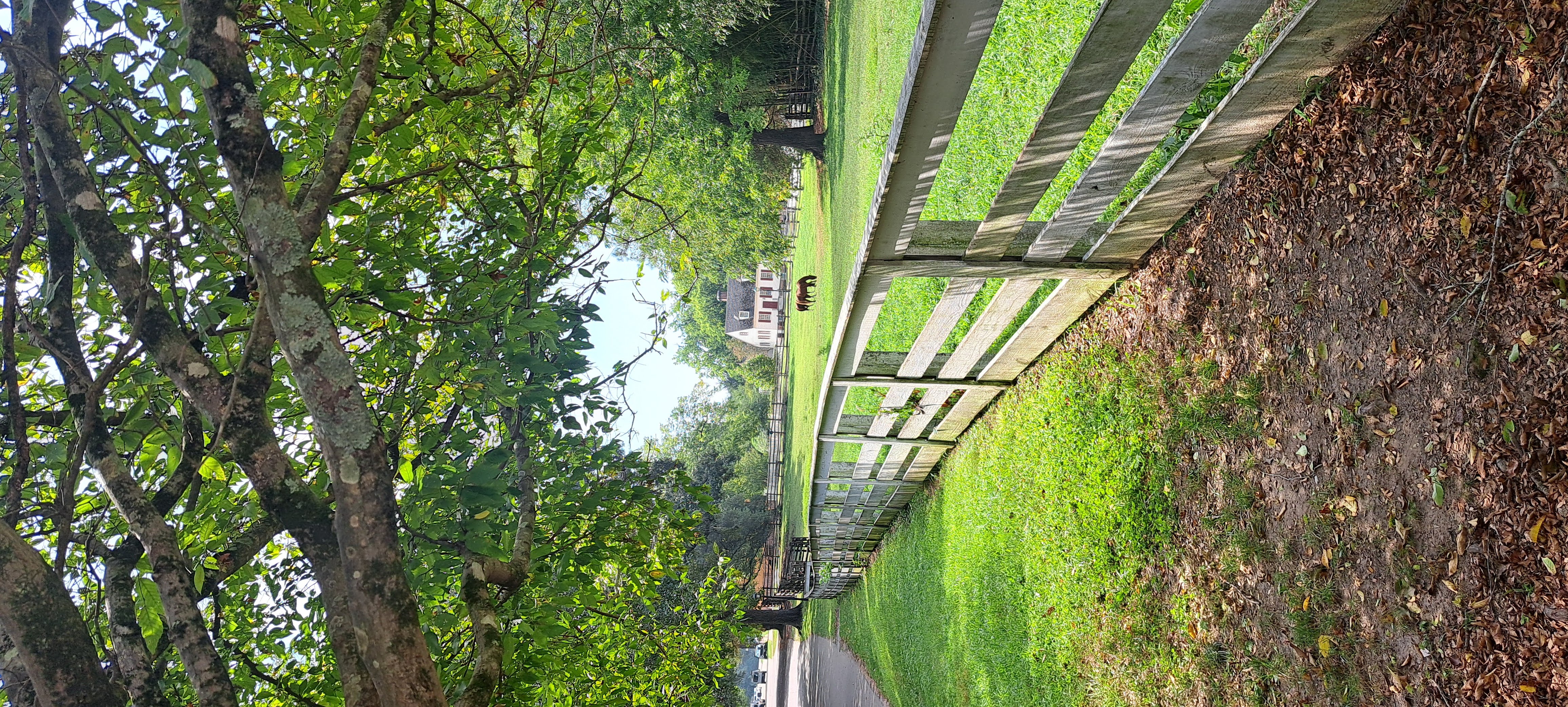
I appreciate the split rail fences local artisans built thst dot the old town. Just walking around, seeing renovations, and talking to costumed guides and fellow tourists is a delight.
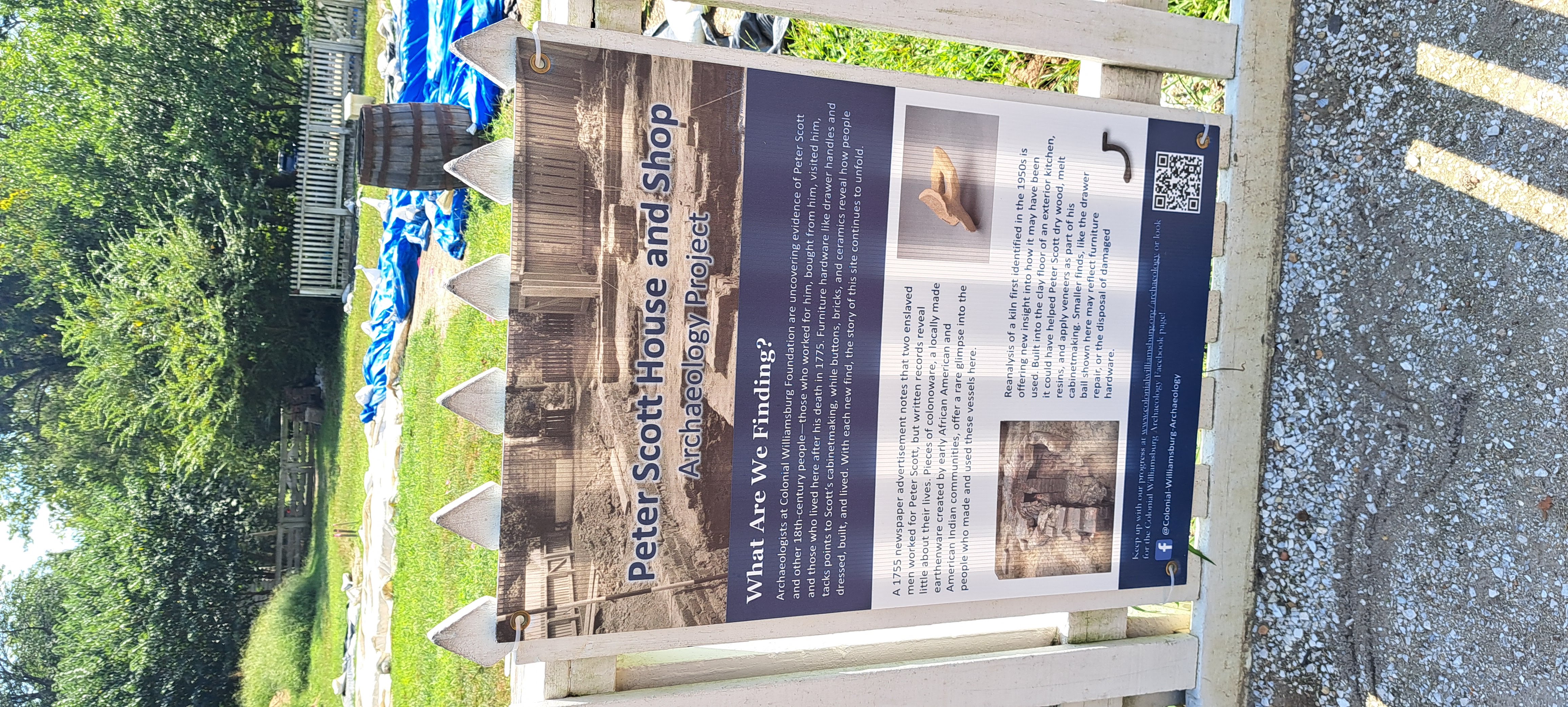
People are here to appreciate and analyze our past as Americans, the good and the bad. Today I see craftspeople remaking buildings and others performing ongoing archaeological digs.
Unearthing the past for our future
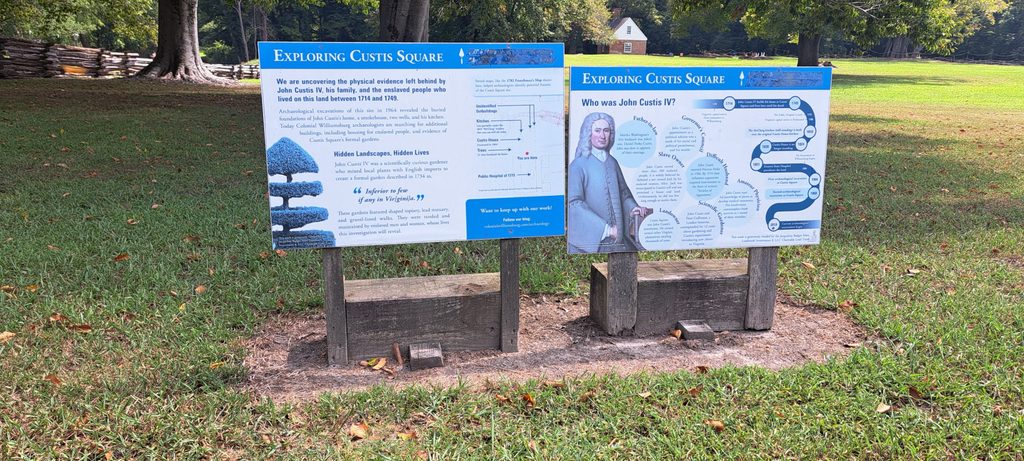
This is a newer improvement they’re making, in Custis Square, which is the physical evidence left behind.
Curtis, his family, and enslaved people lived on this land between 1714 and 1749. So that area is being renovated. Also, some archaeological research is happening in that area as I walk by.
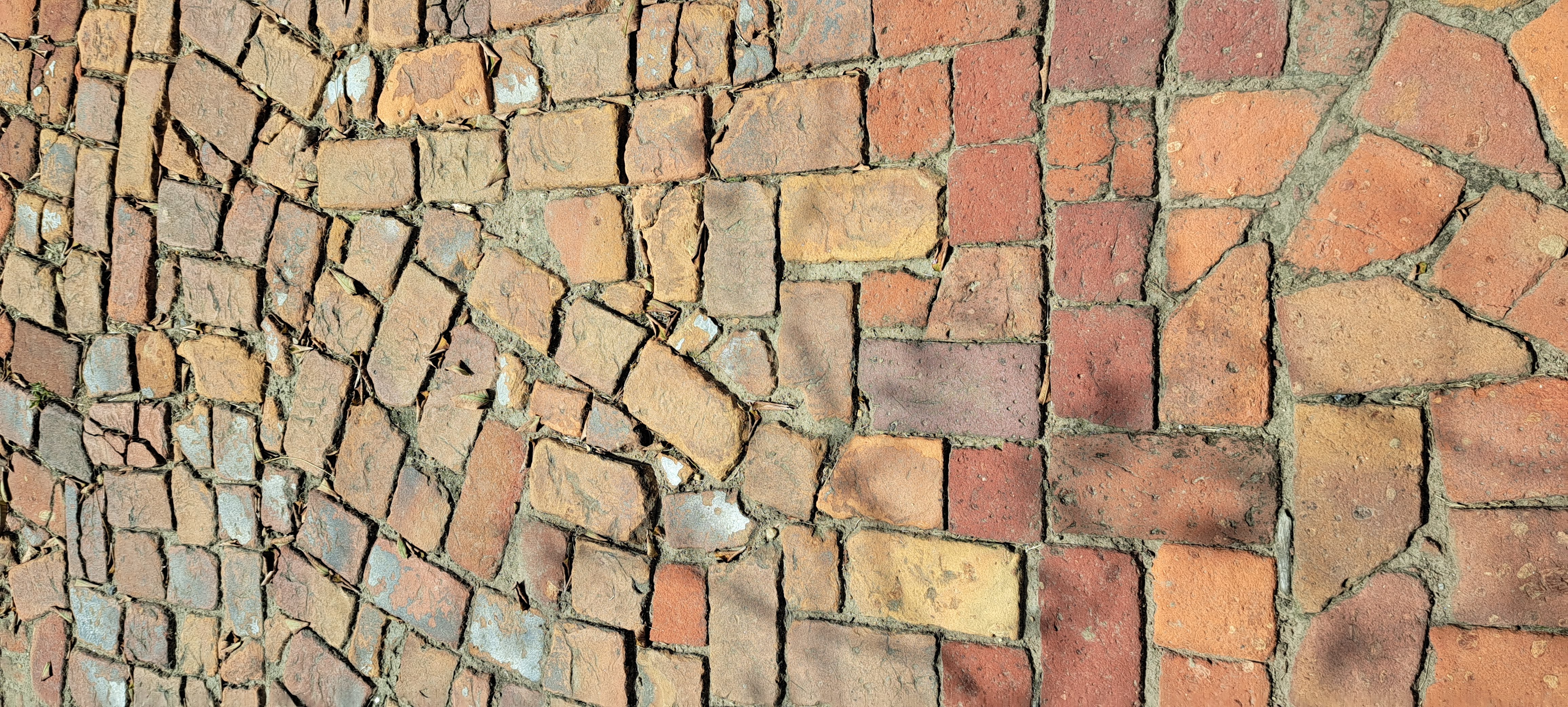
One of the things that I think are important in gardens are pathways.
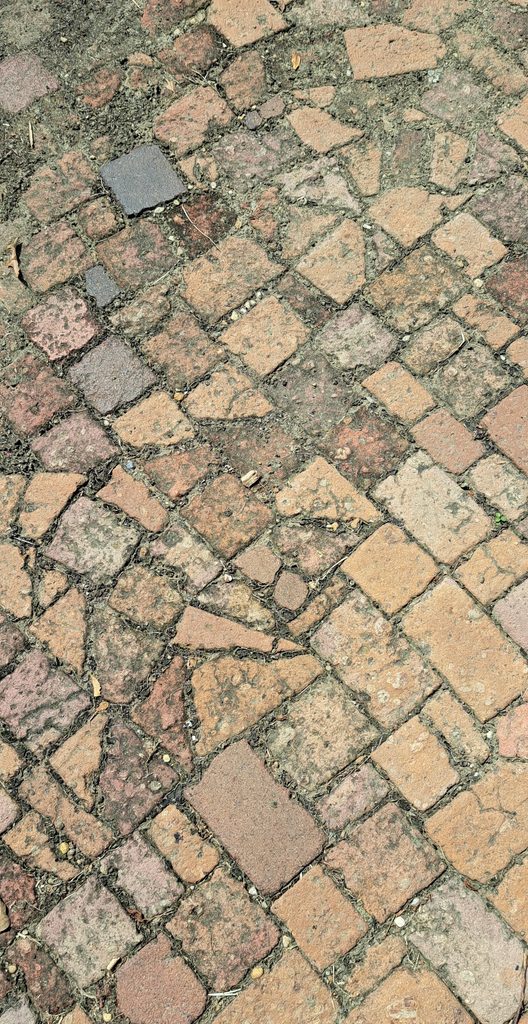
In Williamsburg, there’s a plethora of pathways. Not the least among them, the creative and ingenious use of all the brick. These are some of the walkways and brick that I see.
To market, to market
Who knows the stories those bricks could tell and what they’ve seen? In looking for the new Market Garden, I learn the old site that was there across from Bruton Parish is now also under excavation.
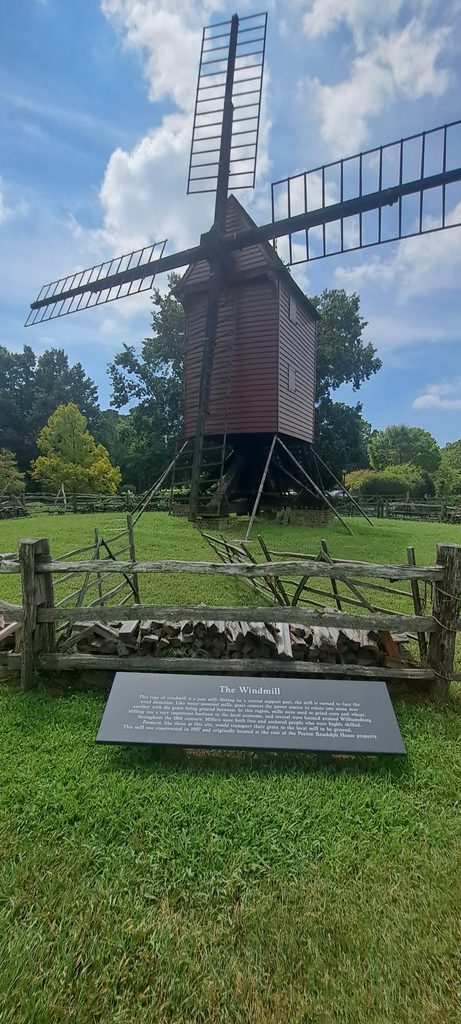
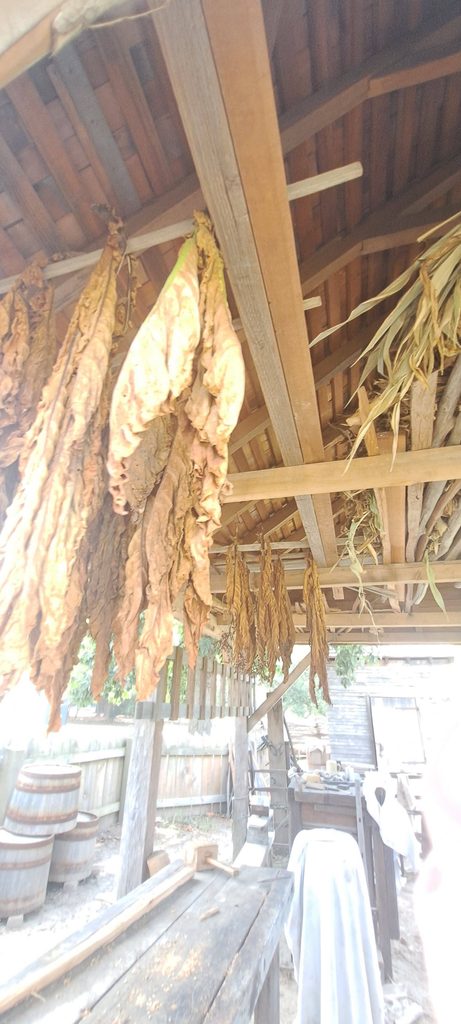
But they’ve moved it, so I go in search of the bew location. I find a farm site mainly used for growing tobacco (Nicotiana tabacum), which was originally the most important crop in Virginia. Alex, a costumed interpreter does a great job of explaining the whole process of growing and curing it.
There in the barn, he explains to me and an affable couple that the tobacco they grow here is ultimately given to Native American tribes, because, for them, it is a sacred plant.
He describes the ceremony and dance they performed upon receipt of the tobacco the previous year. It reminds me to appreciate this beautiful and important plant, which I see in my week of travels in historic sites throughout Virginia.
Corn, yes– but not corny
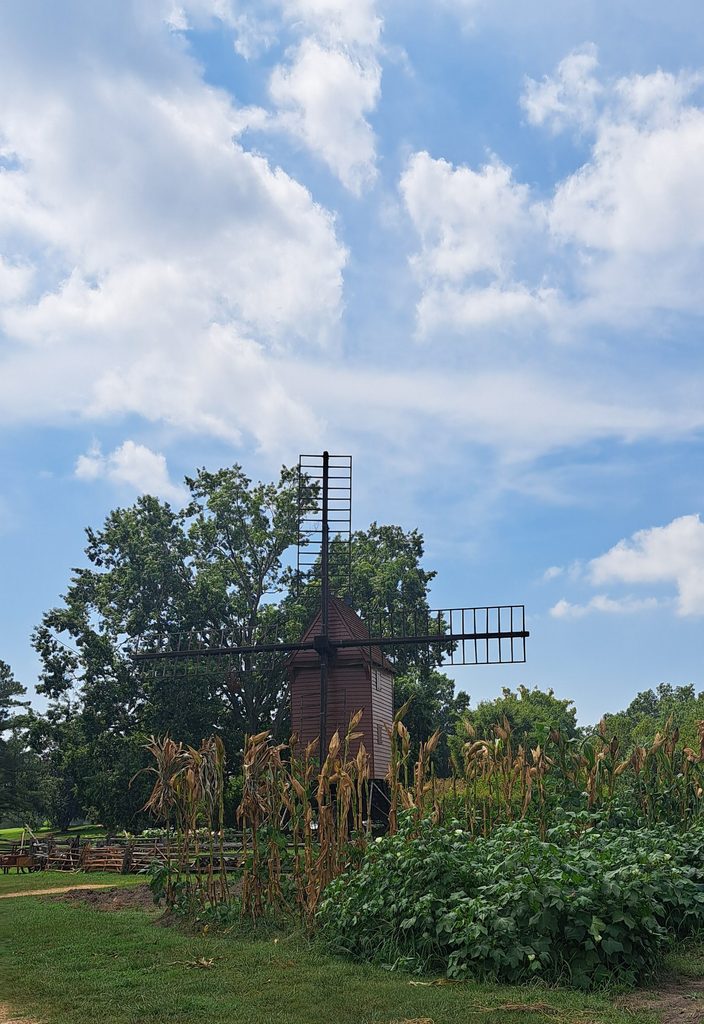
The corn grown here still looks great in late summer. Arguably, this “gold” Native Americans introduced the colonists to became an equally (if not even MORE important) crop for the new colony of Virginia.
Some of the corn Alex showed me was gourd seed corn. an heirloom variety thst possesses unique-shaped kernel.
There were still many things growing, despite the fact that it has been a very hot summer. Though its still quite toasty today, I am in my happy place; talking to people who love history and grow things for a living.
Time to pay the pepper
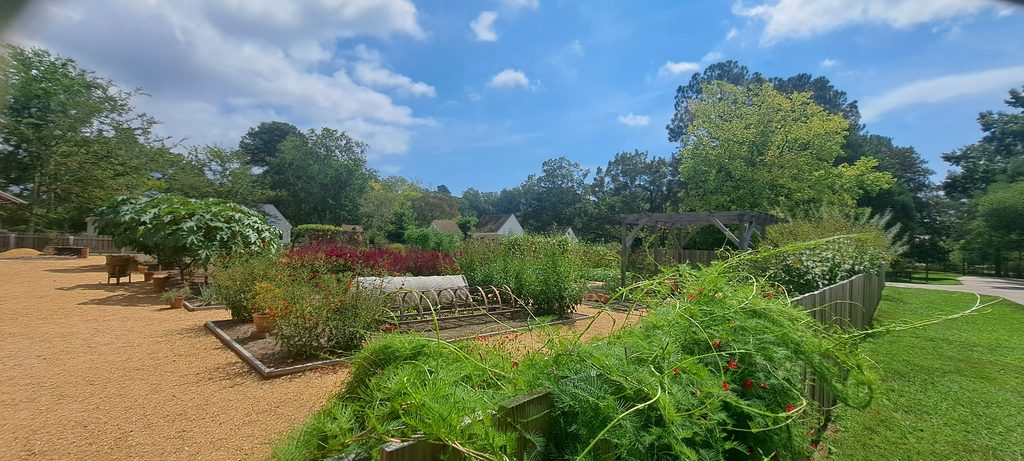
Admittedly, I do not actually enter the garden, because it is now a ticketed location. This is unfortunate, because you used to be able to walk into the garden, ask questions of the people working there, and buy plants and other helpful and relevant gardening paraphenalia.
I am perplexed, because beautiful plants, hats, baskets and tools they sold seemed to subsidize it being open to all. With a nice covered on-site store, there is no way I ever could walk away empty-handed.
I didn’t actually walk away EMPTY this time either. I received free advice and seeds from a very kind interpreter. Still, I don’t know why they didn’t keep the store wh3n they moved the garden.
As you can tell, I am slightly averse to change. Ah, well.
What else is growing in the gardens of historic Williamsburg?
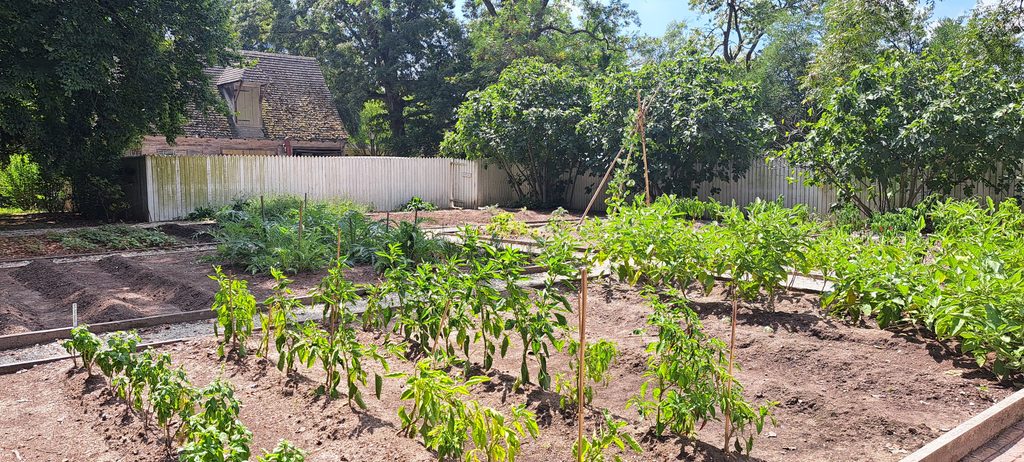
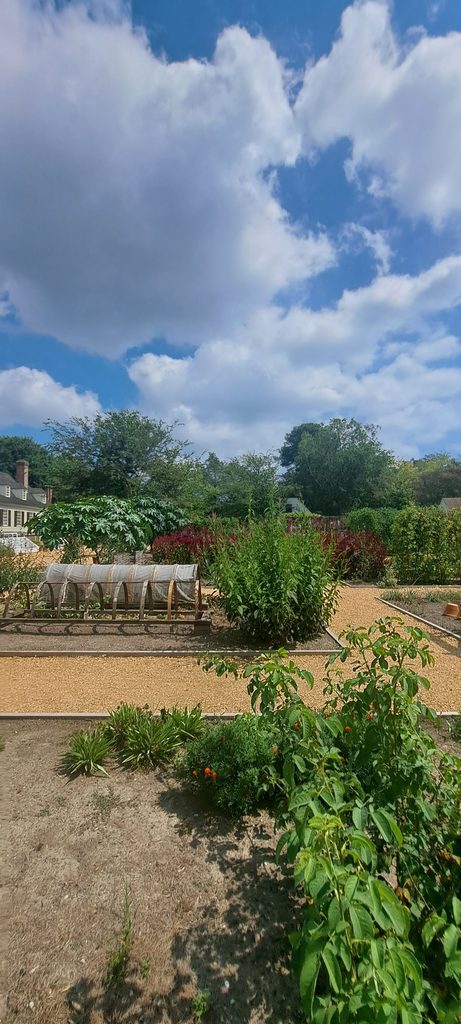
I can still look over the fence and things are looking beautiful there. Their okra was quite majestic. Cockscomb (Amaranth) and the chilies are doing quite well. The corn is TALL.
Historic and new strategies
I appreciate that they have some high tunnel beds. I’m not sure if that is a practice from Willuamsburg’s earlier times, but it’s definitely a great strategy for growing many kinds of plants.
I talk to the gardener like a neighbor over the fence, because I AM a gardener.
We talk to other gardeners on our days off, visit other gardens on our days off, work in our gardens on our days off, and go to garden centers. It is just what we do.
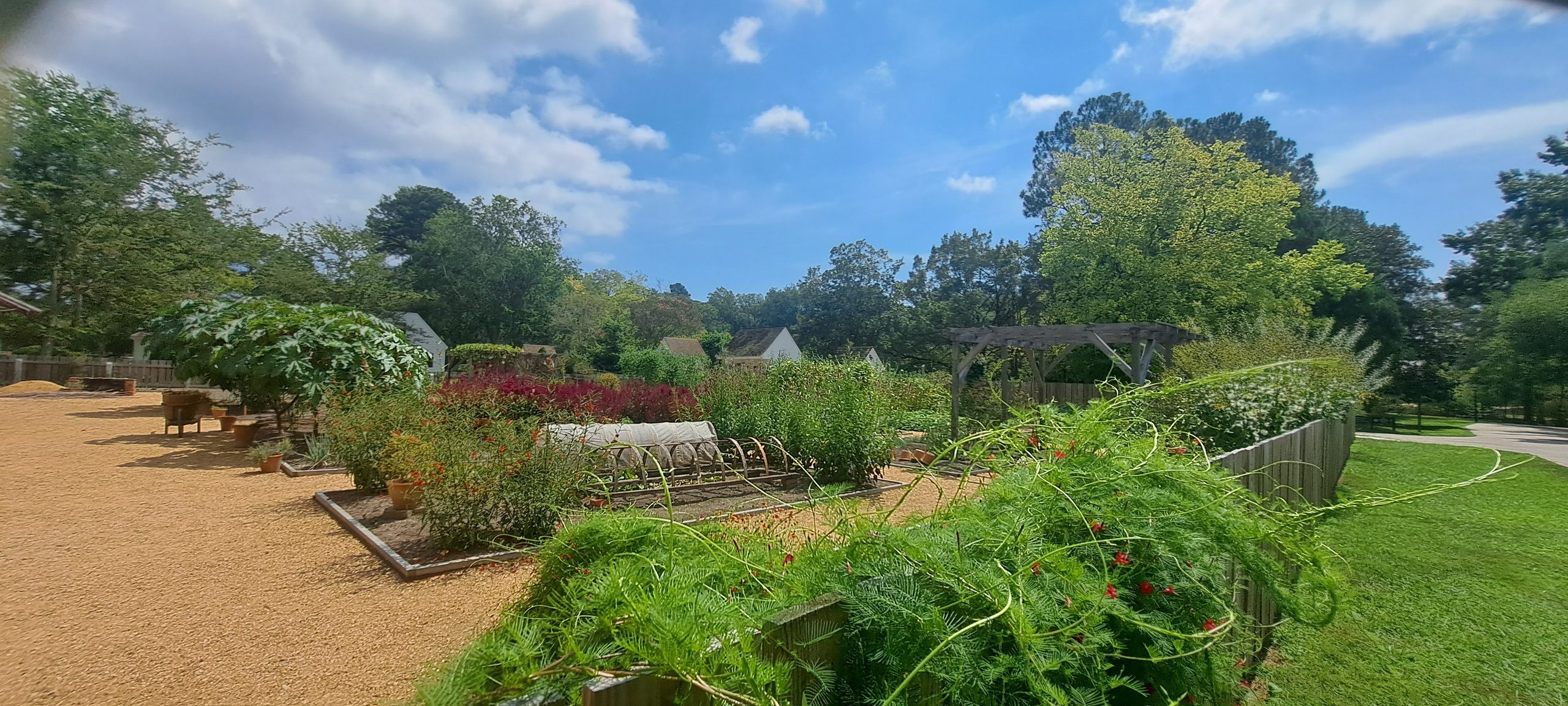
Anyhow, as you can see, the new site is extensive. Moreso than the old site. Perhaps that is why it now requires ticketed entry.
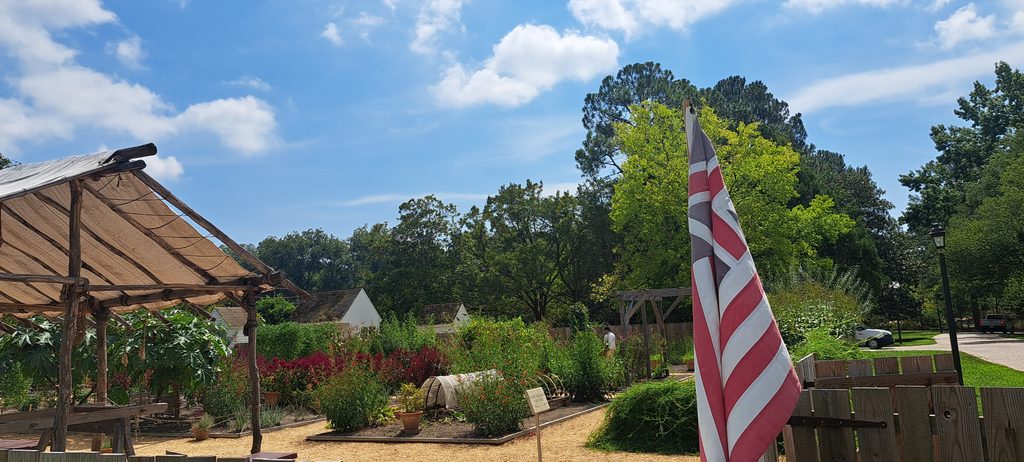
If you’ve been there before, you will recall slightly different strategies as to how they’re growing things. Obviously, the plants are still watered well through the summer. The paths are looking great, and not covered over with Bermuda. I have to remind myself while thinking guiltily about my unkempt late-summer garden that this garden has a STAFF to maintain its tidy appearance.
Public garden features in historic Williamsburg
I see many, many different kinds of fencing used–split rail, picket, stockade, etc. A multitude of growing strategies: row cropping, raised beds, blocks, coldframes being seated, cloches nearby for quickly-approaching cooler evenings. So that was fun.
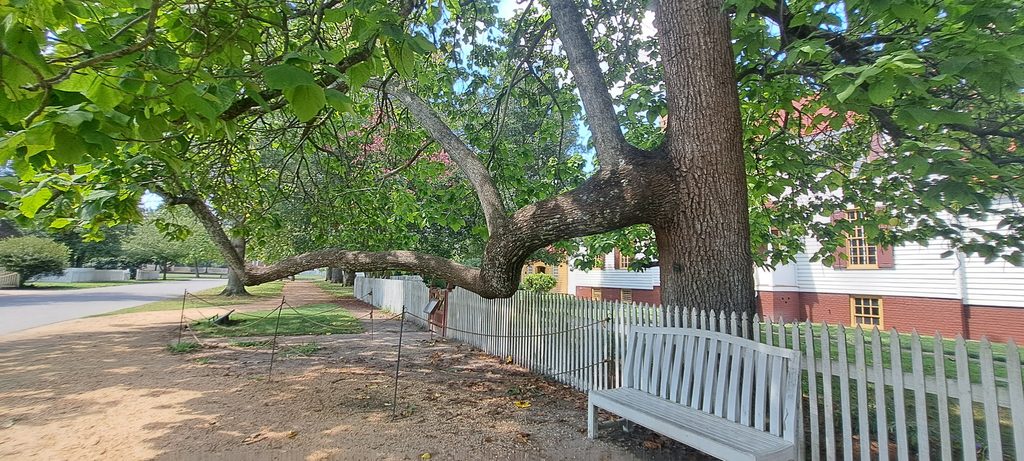
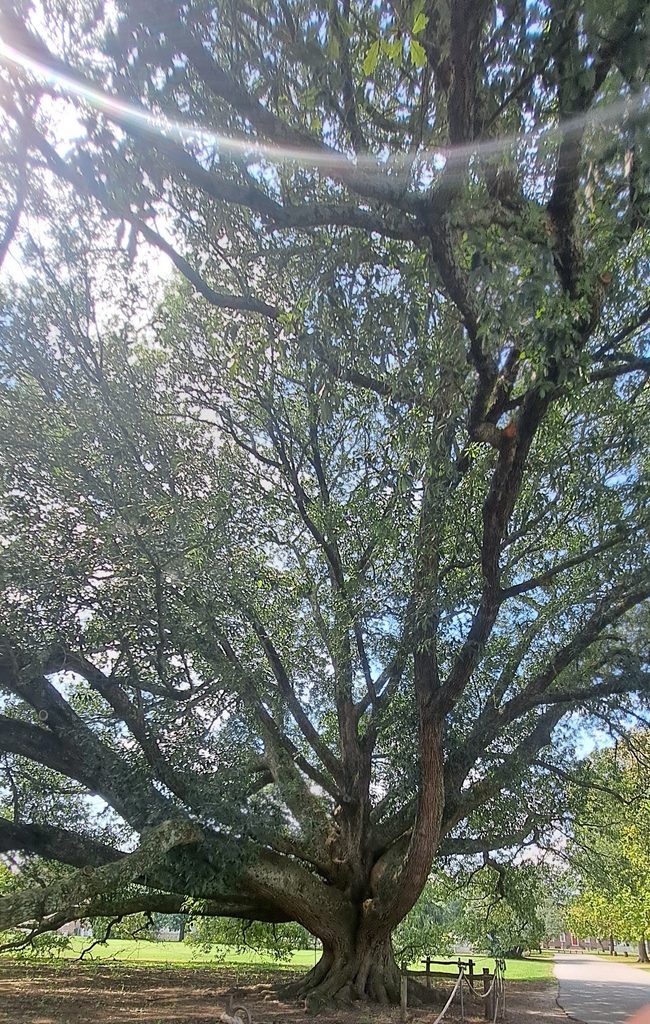
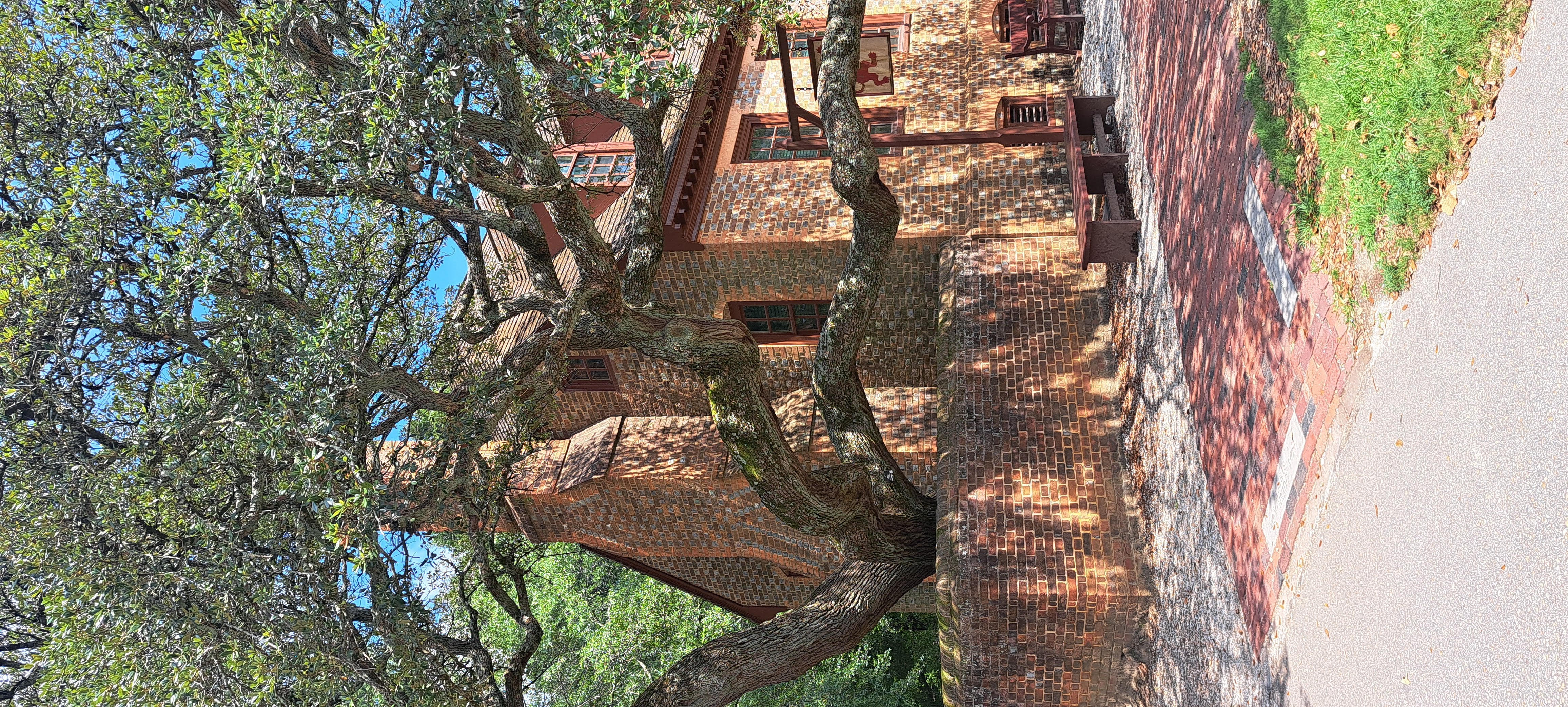
Of course, no description of the landscape of Williamsburg is complete without mentioning the TREES. Lots of big, old, beautiful and notable trees.
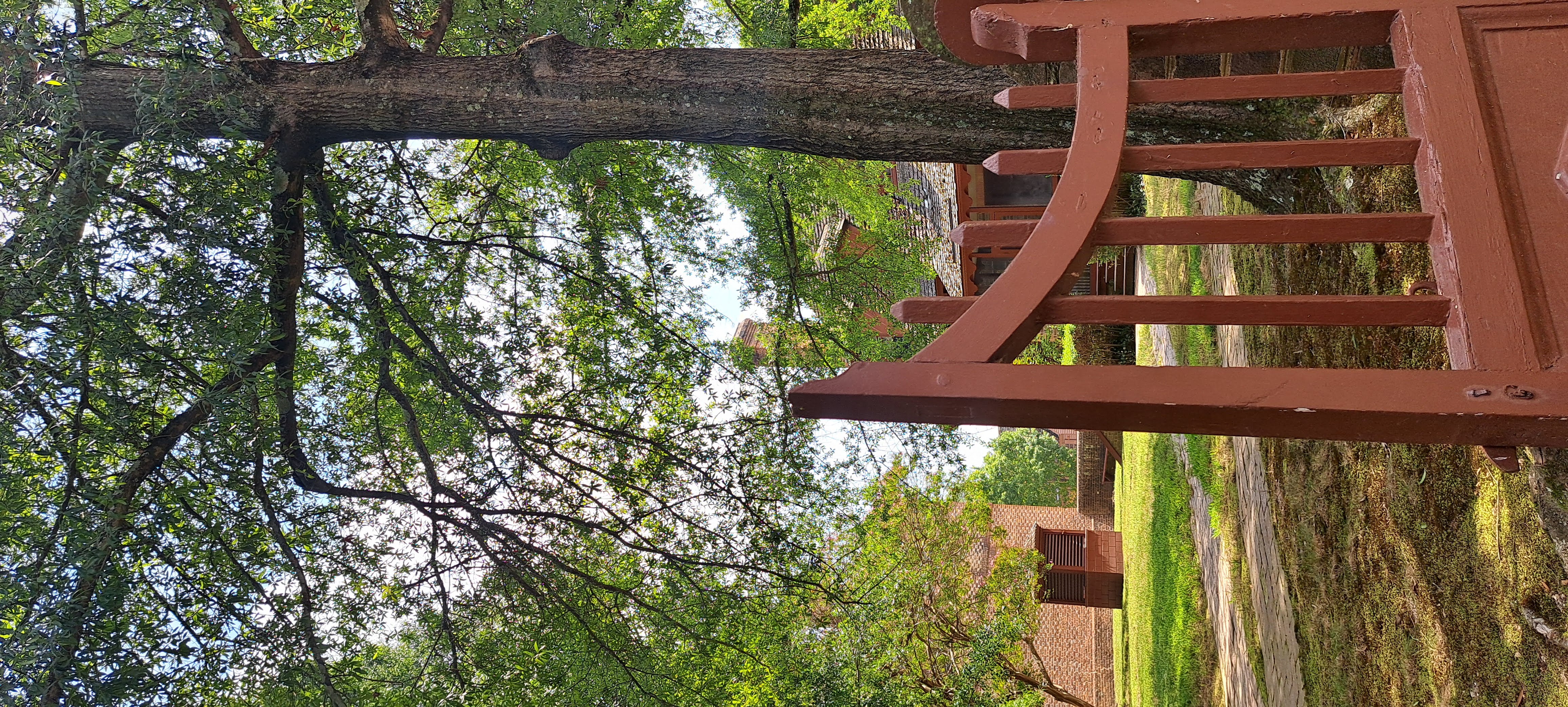
Williamsburg does a great job of labeling these specimens and in many cases thise labels also include QR codes.
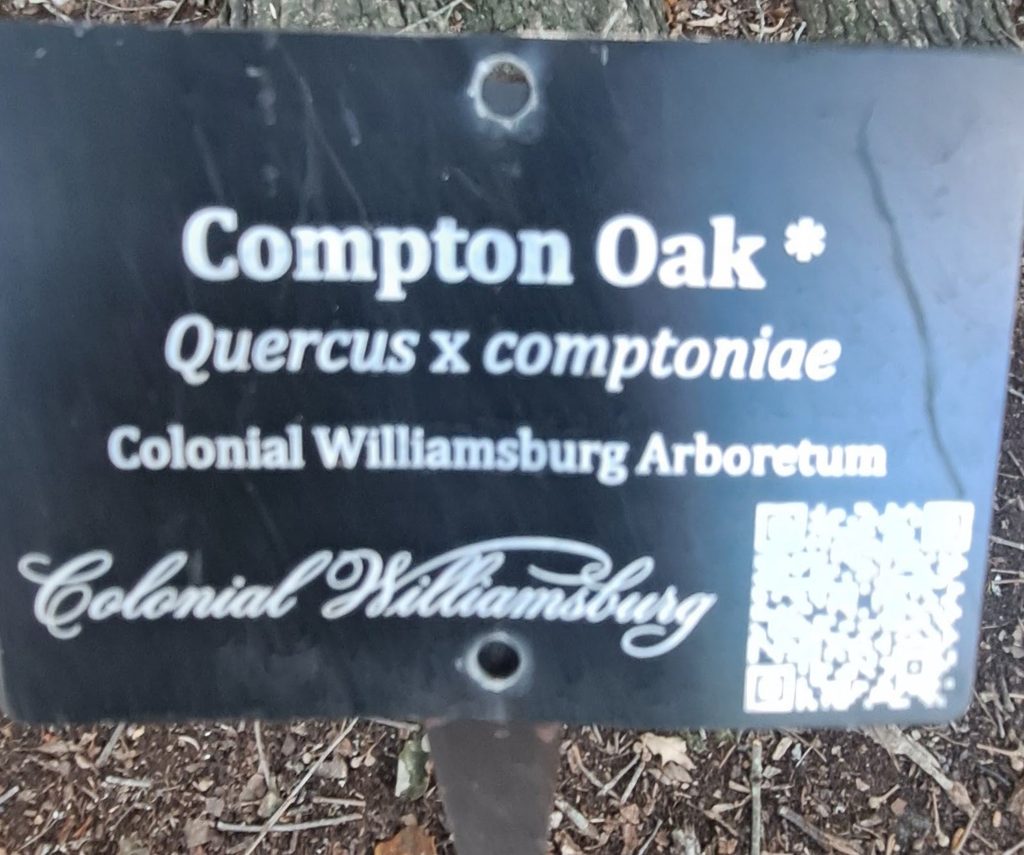
That’s a newer addition to Colonial Williamsburg that I really appreciate. So many times, I’ve gone there and not recognized a tree. It may not be native to this area but still grows well.
Likely it was planted there because people were bringing all different kinds of things back to the area to see what “took” hundreds of years ago. One example is the Compton Oak. With more and more beautiful gardens, pathways, gate, fences and design around every corner…
Garden-variety voyeurism
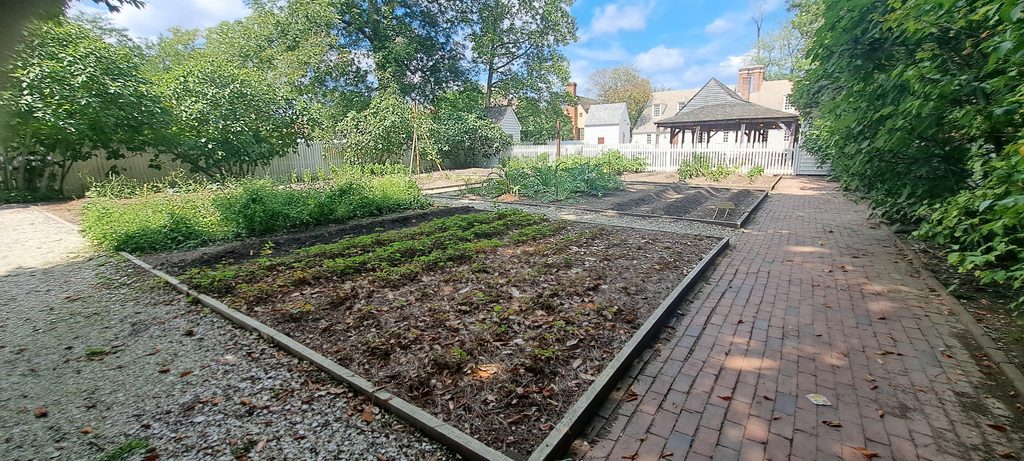
I like looking in backyards of residents, and historic homes that are still open to the public. Residents know that hundreds of thousands of people flock to their neighborhood year round to gawk, so they keep their different gardens in tip-top shape, too.
Gardens and Ghosts
Part of my mission, aside from looking at the gardens today, is trying to find the most haunted house in Williamsburg.
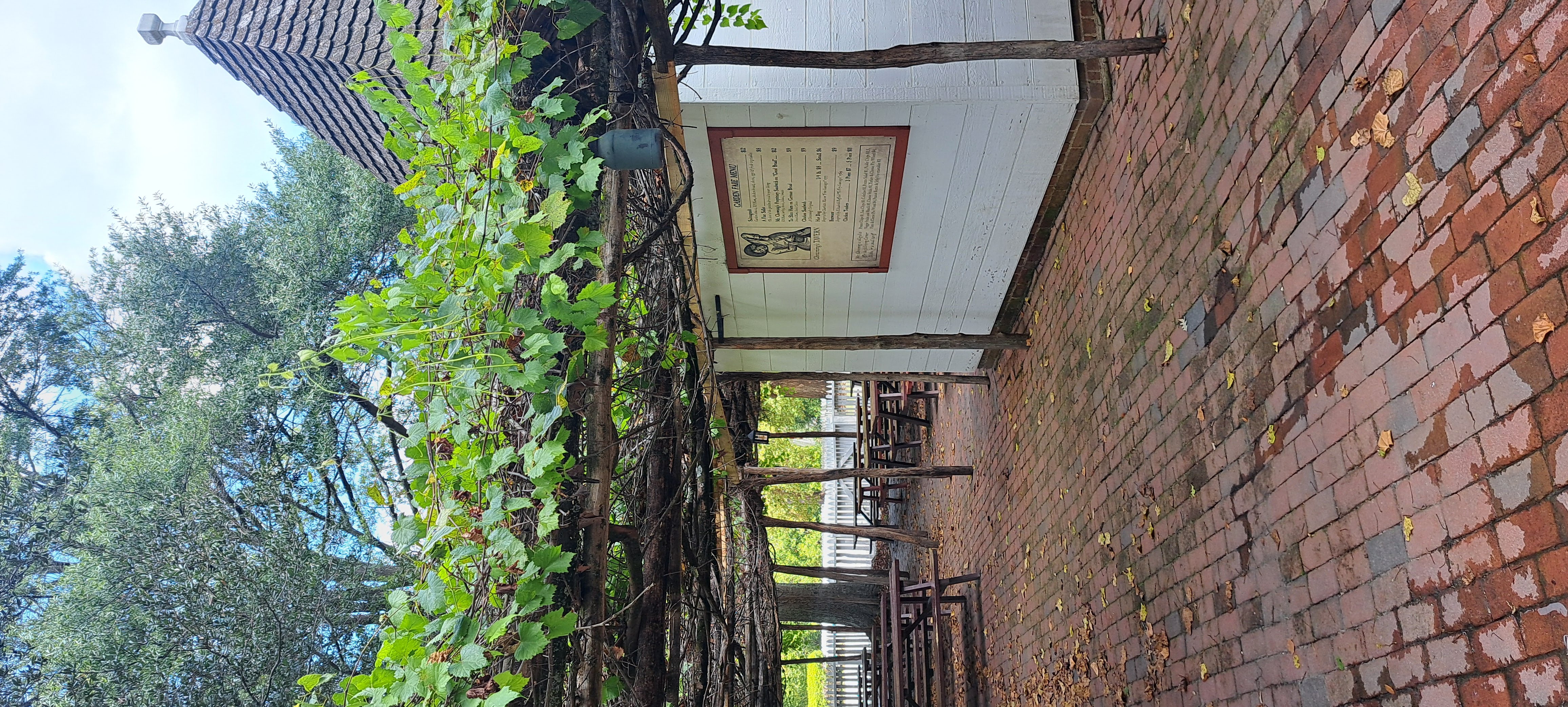
I miss the tour by just minutes. I talk to a wondeful bartender at a garden restaurant right across from there. She tells me that the restaurant (Chownings Tavern, patio pictured above), is also haunted.
Things happen, she says, when she’s there cleaning up at night and alone. Nothing scary. But just a ‘presence’. This time of year, I begin thinking more about that, too.
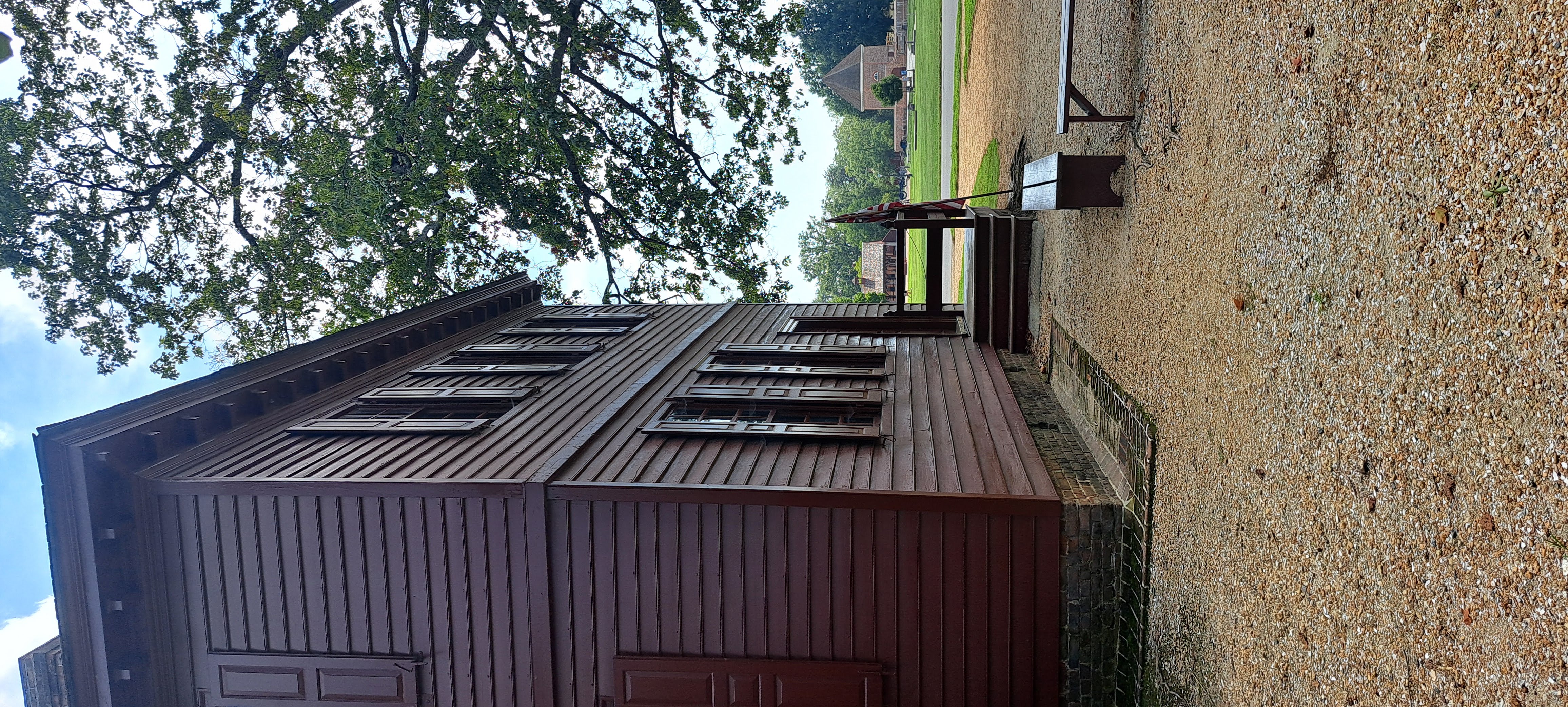
Some feel there is a ‘veil’ between the living and those who’ve passed. It feels quite real to me here in Williamsburg.
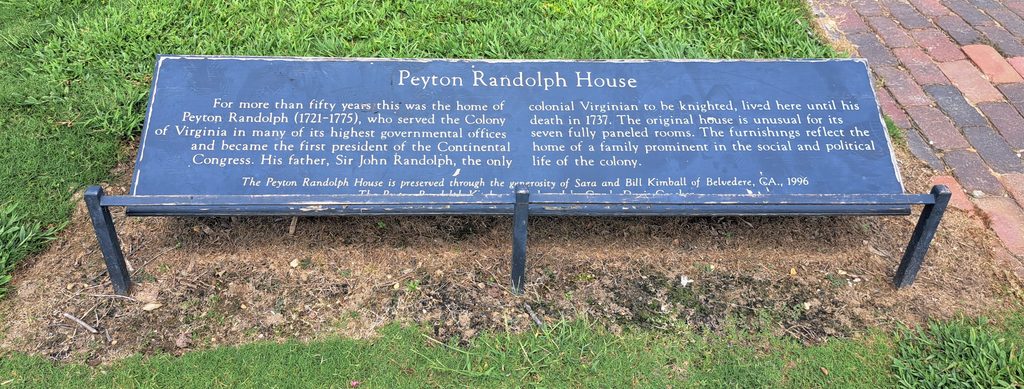
This house is considered the most haunted in Williamsburg. It’s called the Peyton Randolph house, and has a very storied history. I plan to write more about ghosts in gardens, so stay tuned.
On a less spooky note…
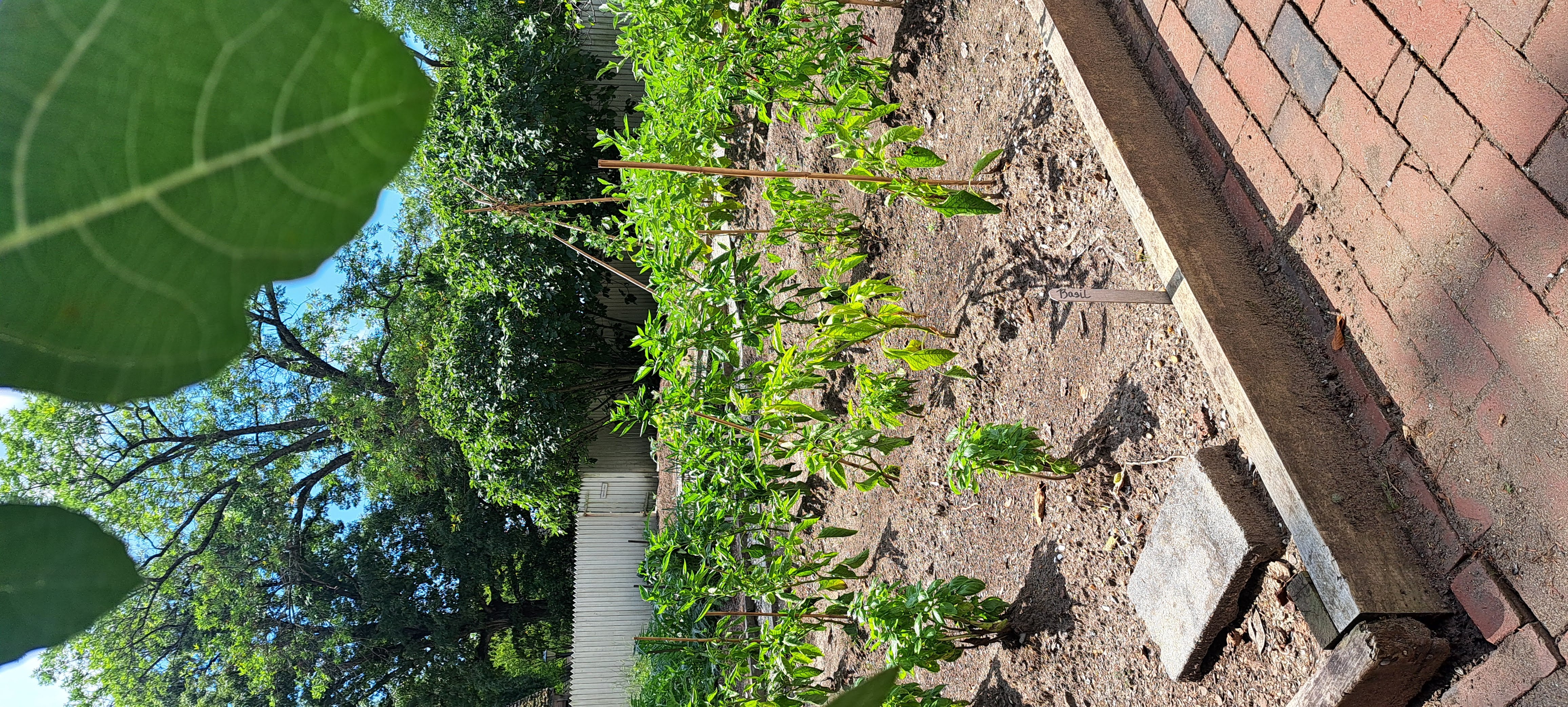
You really don’t want to miss just walking around and looking over the beautiful fences. I saw lots of chilies growing.
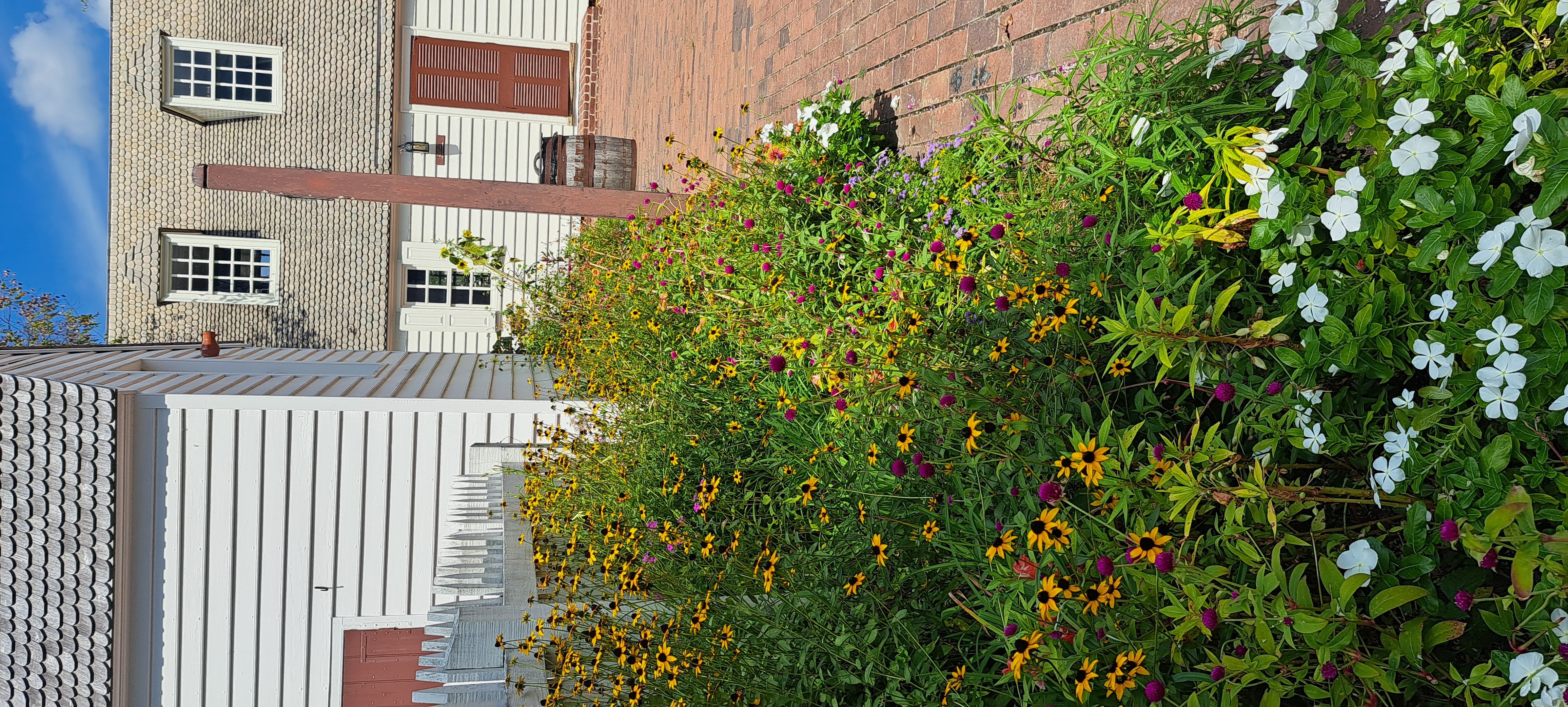
Introduction of more native plants into the gardens, like the rudbeckia growing near the tavern where you can buy their famius molasses and ginger cookies. The trees are still fully leafed out this time of year, and though fall will be here soon, flowers still bloom brightly around every corner.
It’s not the beginning of fall yet, but it is September.
I enjoy the hardscapes and admittedly, I am a sucker for cute picket fence! Ive long been fascinated by the way that people living here plant and maintain the historic appeal of their homes and yards.
My other reason of being
I plan to return soon to this place for gardens, and for ghosts. Will you be travelling in this area, and enjoy history? You have to visit to see what is growing in the gardens of Williamsburg, then. It’s a top spot in the United States for all three: history, gardens, ghosts.
They do have traditional ghost tours in Williamsburg, mostly around Halloween. if you check Viator, you likely can find tours of many stripes year ’round.
Peter Scott house and shop. is the site of the old garden, where they’re now doing some archaeological digs.
If you visit in Winter, there’s also an ice skating rink set up in Merchant Square. This is one of the main walkways in Williamsburg that I enjoy strolling around.
It is fun to watch different people react to the actors that work there, or the gardeners, not told mention the different historic houses, and the incredible trees (some of which are so beautiful, they almost make you cry).
It does not go without saying that they have really good soil in Williamsburg. Certain gardens there have now been cultivated for centuries. For a newer country like the United States, this concept is fairly mind-blowing. Gardens evolve and change over many years, and (I think) it takes a good long while for them to develop a “soul” as well. The older gardens of Williamsburg definitely have souls.
Some time on the water to break up the heat
At the spur of the moment, I feel like I want to take the ferry from Jamestown to Surry/Scotland. I haven’t been on it in more than 20 years.

It’s only 10 minutes away from Colonial Williamsburg and I luck out! I’m able to get the last spot on the ferry.
Making the most of the 15- minute ferry ride by walking on the upper deck, my hair and shirt whip in the breeze. I spy a huge Osprey nest in the middle of the James, and talk to many nice people who work on the boat. They give me recommendations of things to do and see on both sides of the water.
We make conversation, and I only pull out my phone to take pictures a few times. On the water, it is much easier to feel and be in the moment.

Across the James
The Scotland-Jamestown ferry is free. It takes you just a couple minutes away from Chippokes State Park, which is the longest, most continuously farmed plot of land in the United States by European descendants.
Obviously, most of the East Coast had people living here that were already farming in a much different manner than we’re used to today.
But if you’re wondering what it looked like when great swaths of America were devoted more to growing crops not lawns, Chippokes has fields that look much like they did 300 years ago.
And lots of farm equipment, which I will cover in a future article. For now, though I highly recommend taking the ferry.
Thank you for joinging me on my historic farm and garden adventure. From the mountains to the coast, Virginia is for Gardeners!