On my trip to find the living history in historic gardens, I decide (at the spur of the moment) to head to Chippokes State Park. This is an exciting detour. Usually, my normal route includes heading to Virginia Beach via Interstate 64. This time, though, my route requires a ferry trip!
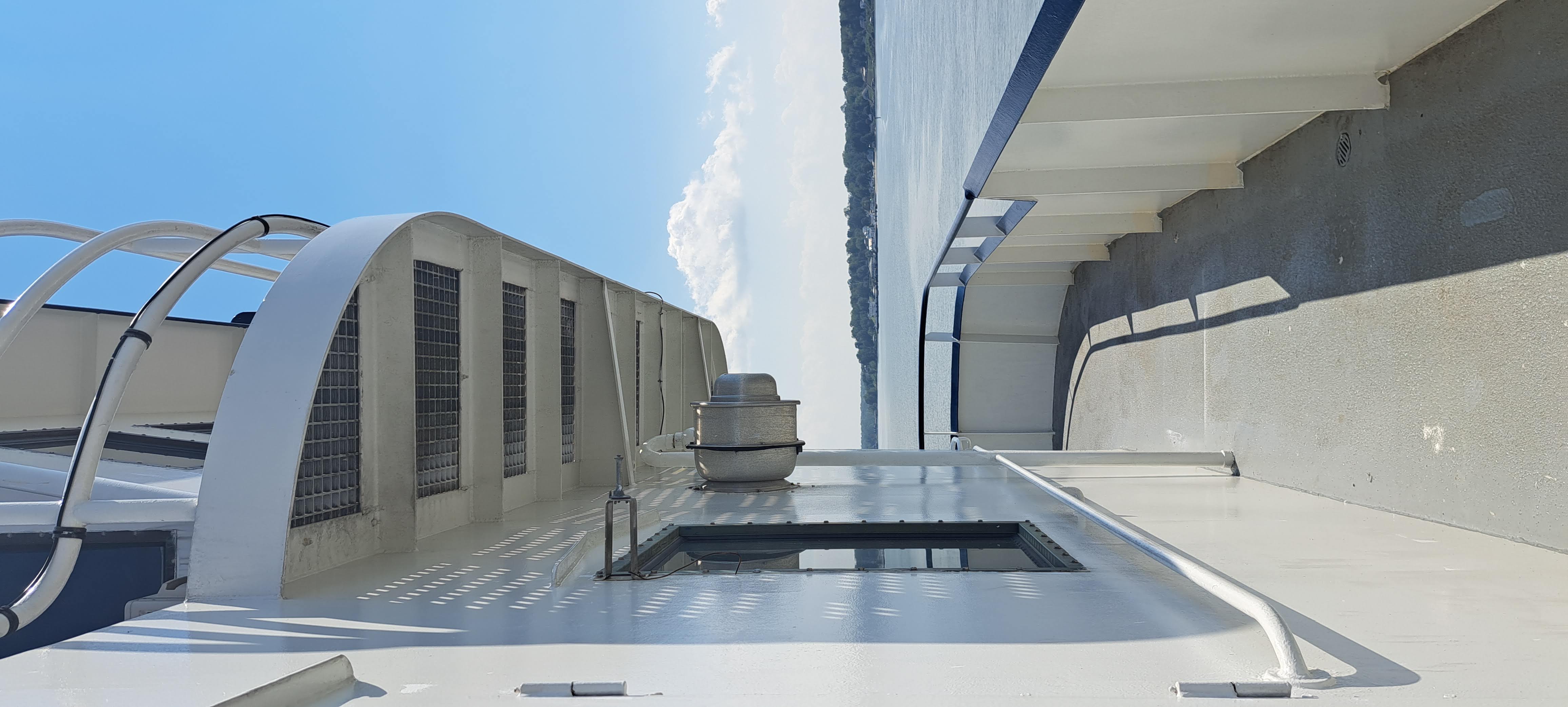
Best way to get from Point A to Point B
The ferry leaves from a dock near historic Jamestown. The dock is at 2289 Jamestown Rd, Williamsburg, VA 23185
To obtain the daily schedule of crossings, call: (800) 823-3779
Somehow, I arrive in time to catch the last space on the ferry. I drive right on. The polite and friendly staff put blocks behind my tires, to keep mine and other vehicles from sliding around on the water passage
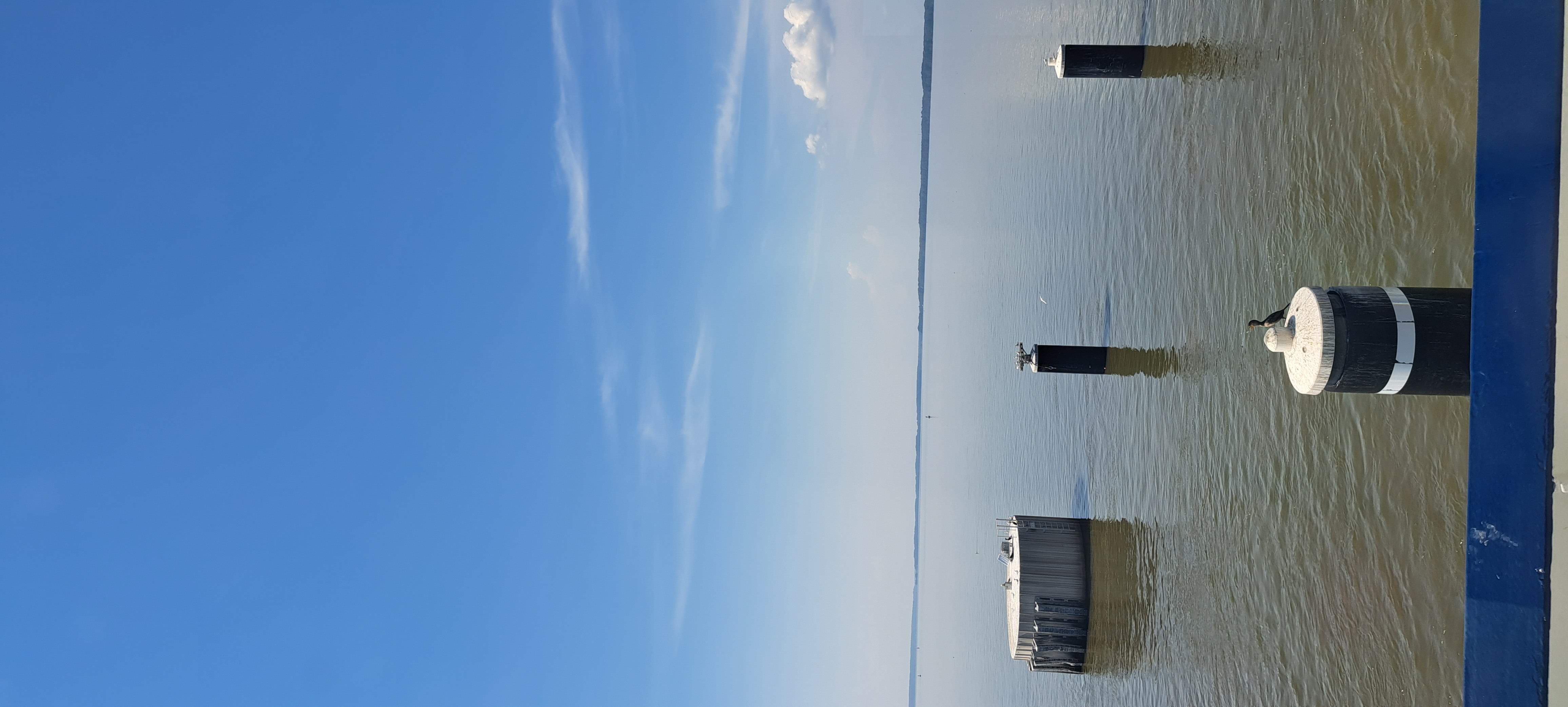
The day is clear, quite hot and GORGEOUS.
Still, it is breezy and divine. We shove off. We’re on the river!
Travelling by water is how people navigated here for thousands of years before roads. It feels natural to incorporate a ferry ride into my trip to historic sites across Hampton Roads. Crossing the James is one of the best ways to avoid some traffic and find living history while travelling between the Williamsburg area and Chippokes State Park.
I meet a few nice people on the boat who told me they cross regularly. The staff and passengers each give me tips to head up to the observation deck on the second floor. A woman who recently moved back here from California tells me her favorite places to go on the other side of the water, where we are headed.
The trip is quick, fun, and over too soon.
I get dropped off at 16289 Rolfe Hwy, Surry, VA 23883, which is also where to get ON the ferry and head over to Williamsburg. From this docking point in Scotland, Virginia I head on to the living history of Chippokes State Park.
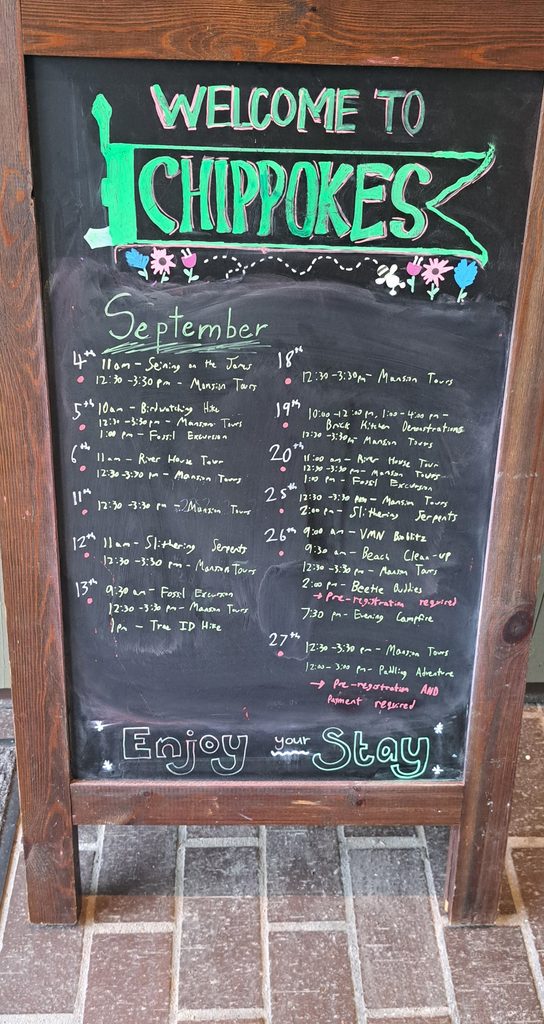
Living history at Chippokes State Park
There is no one at the gate, so I am initially flummoxed regarding payment. I finally hand over my $7 daily admission fee at the Information and Nature center after running through the outdoor museum during its last hour open of the day.
It’s been very hot during my trip the past two days. The garden there still looked pretty great, considering the extreme heat we’d all been experiencing all summer. (One thing this gardener realized by visiting many public plots: gardens are still productive, but also kind of tired by September and late summer. Aren’t we all?)
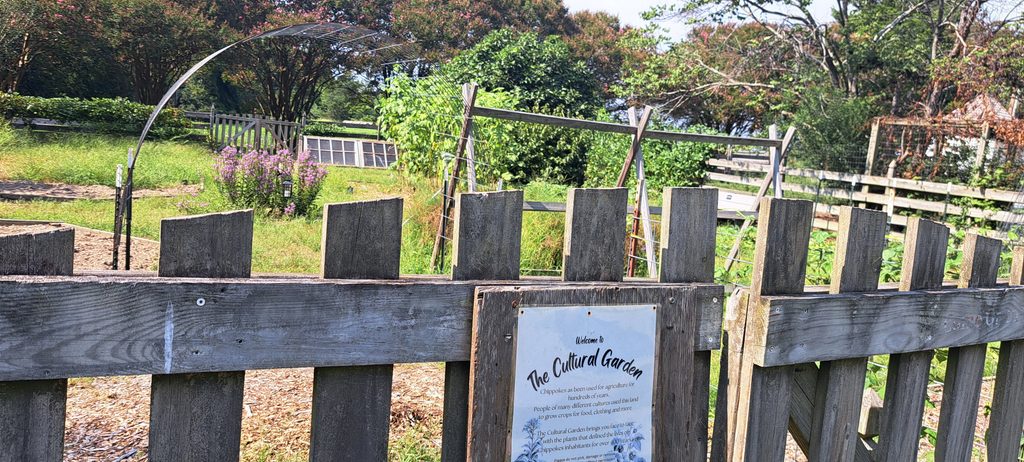
The demonstration garden is very beautiful. Interpretive signs, nice fencing, sweeping views of vast fields and the nearby water.
There’s a frames for peas and other things that need trellising cold frames. Tall corn and okra.
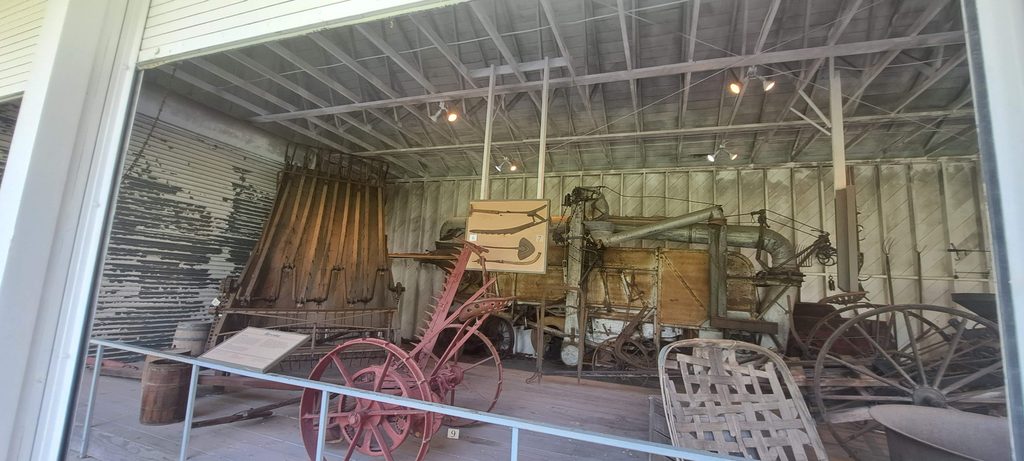
Many years of Field and Farm technology
This land has been, according to the Virginia State Park website, a “working farm since 1619, [and] the park offers modern recreational activities and a glimpse of life in a bygone era.” The original home, The Jones-Steward Mansion, often opens for tours. Outside, all manner of farm tools are on display.
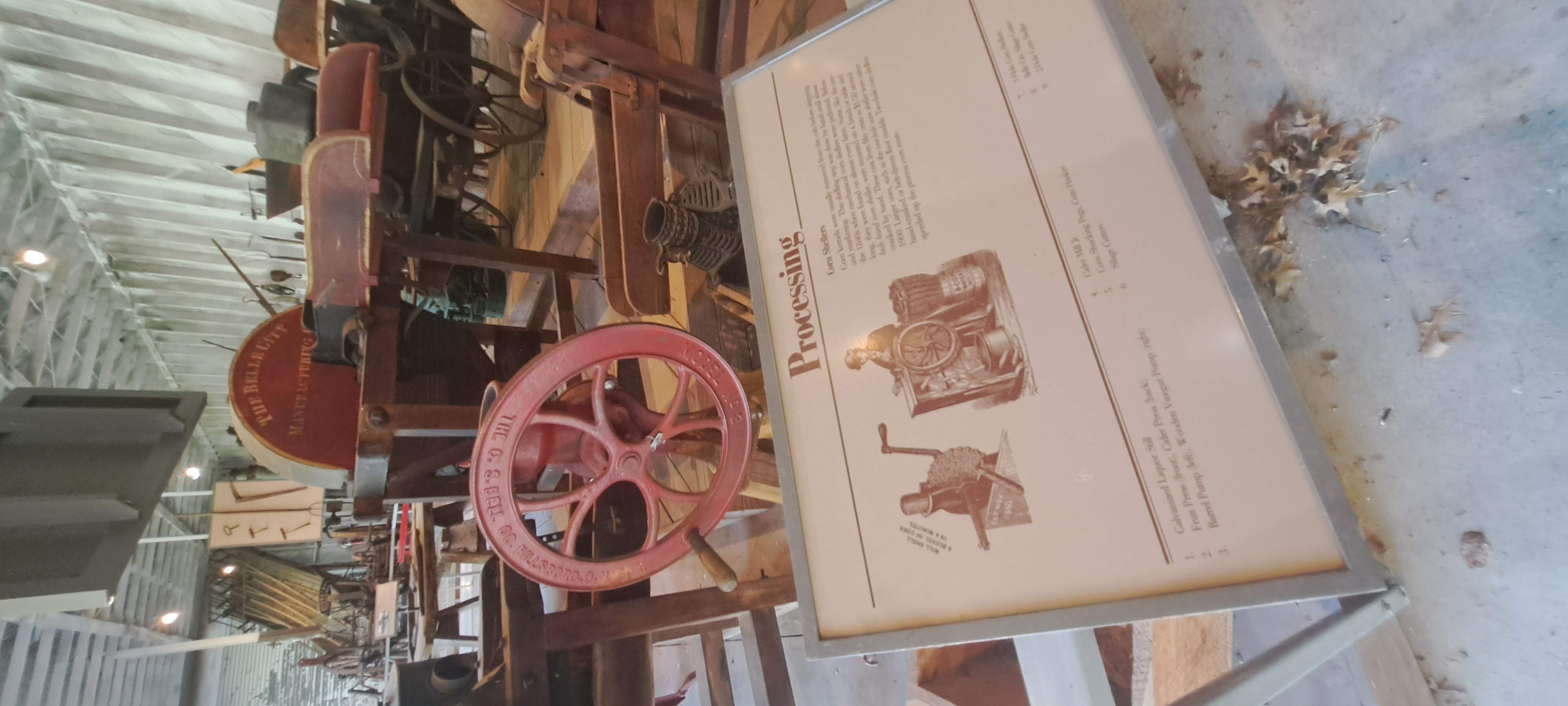
Chippokes is a literal (and mostly outdoor) museum of farm and forestry: tools, implements and all the cooking items used at one time or another are here. Things from a millennia ago- like mortar and pestles and arrowheads until the WW2-era are on display. Pepper mills, flour grinders, mason jars, cookie sheets… all kinds of kitchen tools used until the mid-1900s (when this was still a private home and farm) are on display.
There’s large diorama displays of the Chesapeake Indians that lived here before English and other settlers arrived.
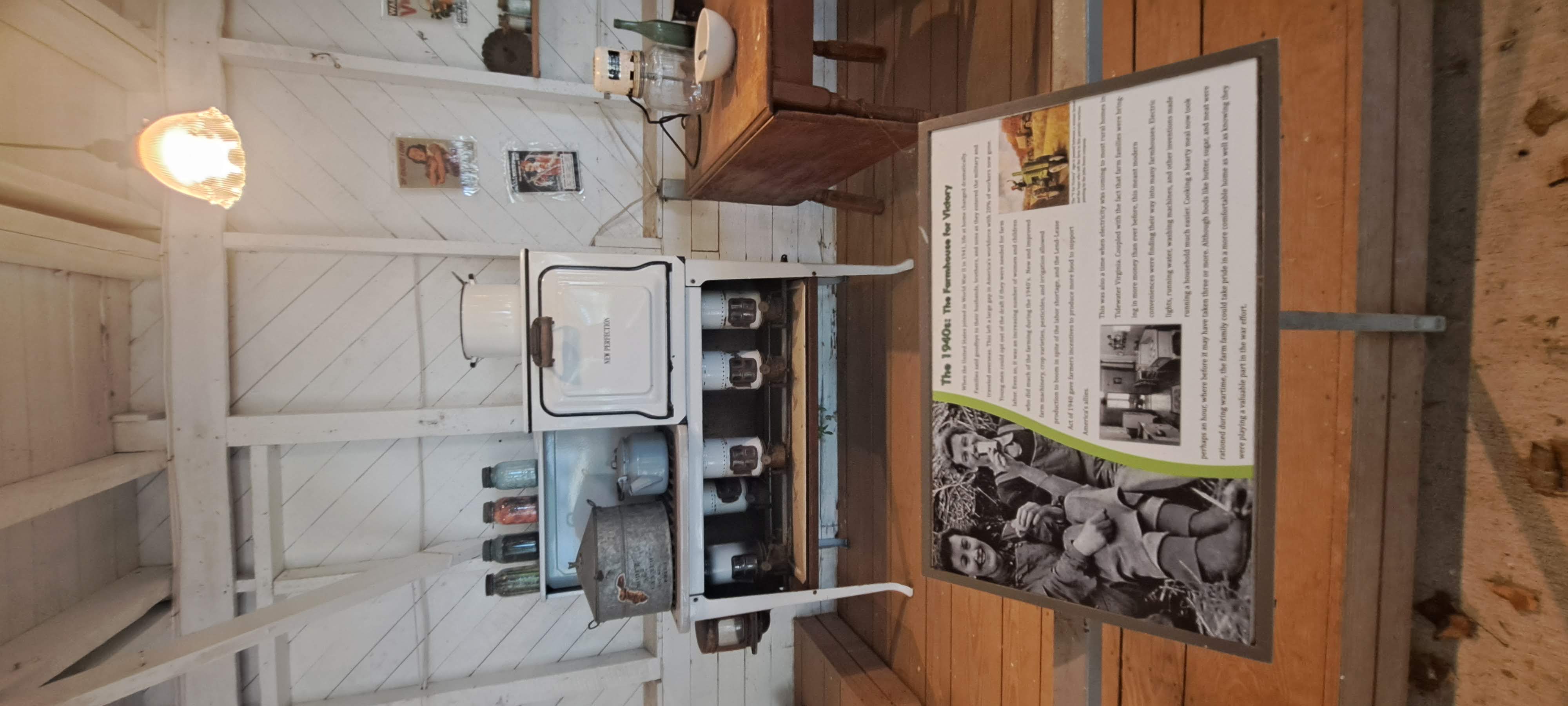
Chippokes doesn’t just cover post-1607 farming implements. There is a fair amount of information about native agriculture, culture and dress here.
One can see a corn dolly and corn brooms, because corn “the golden weed” was (and still is) a major crop in this fertile part of Virginia. Millstones and tools that were used by Native Americans for farming and cooking are respectfully displayed, with excellent signage.
I love seeing words from people who were already here more than a millennia ago: Chippokes, Chesapeake, Werewocomoco. Living history is not just in the soil and buildings. Language is a living history at Chippokes State Park that endures longer than many other remnants of existence.
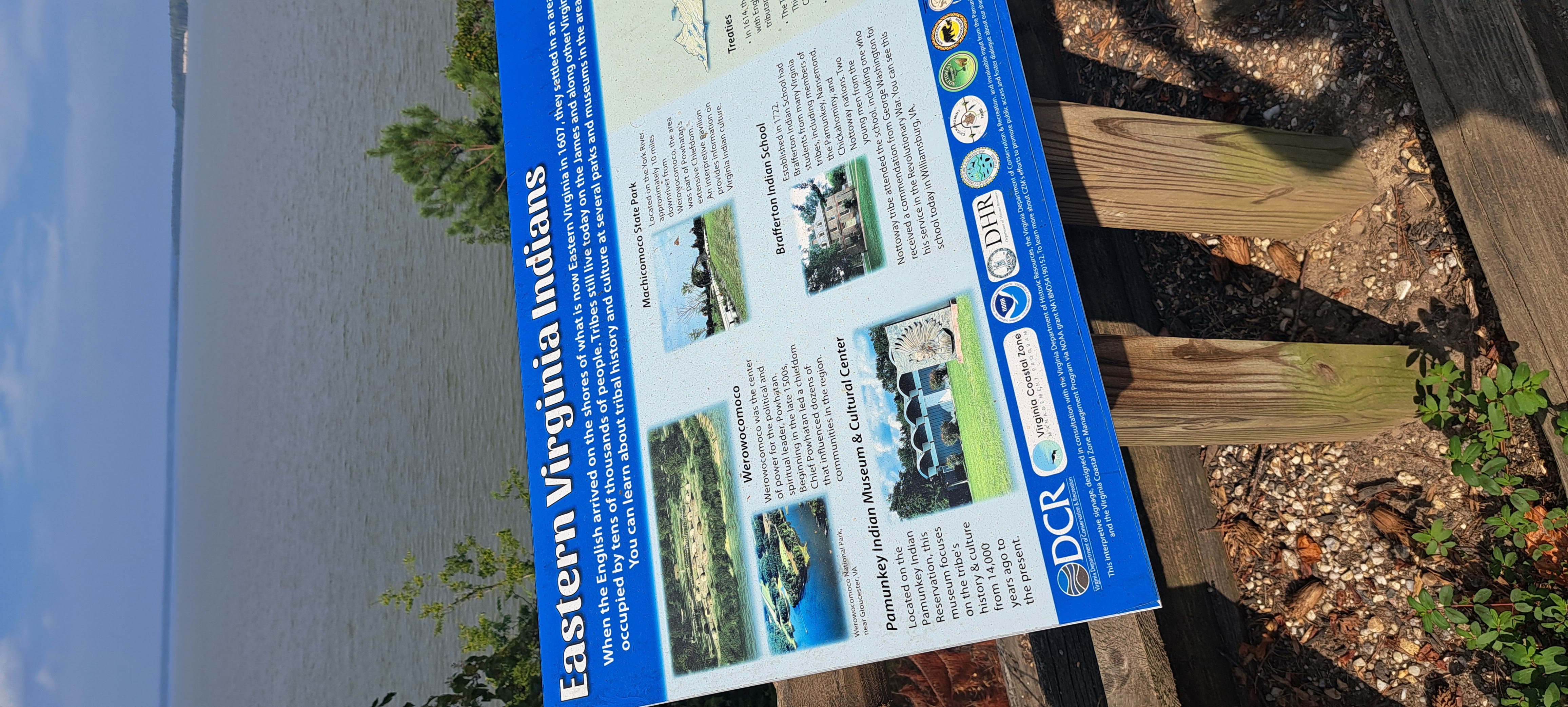
Then and Now
For any farm tool or tractor enthusiast, this place is gold.
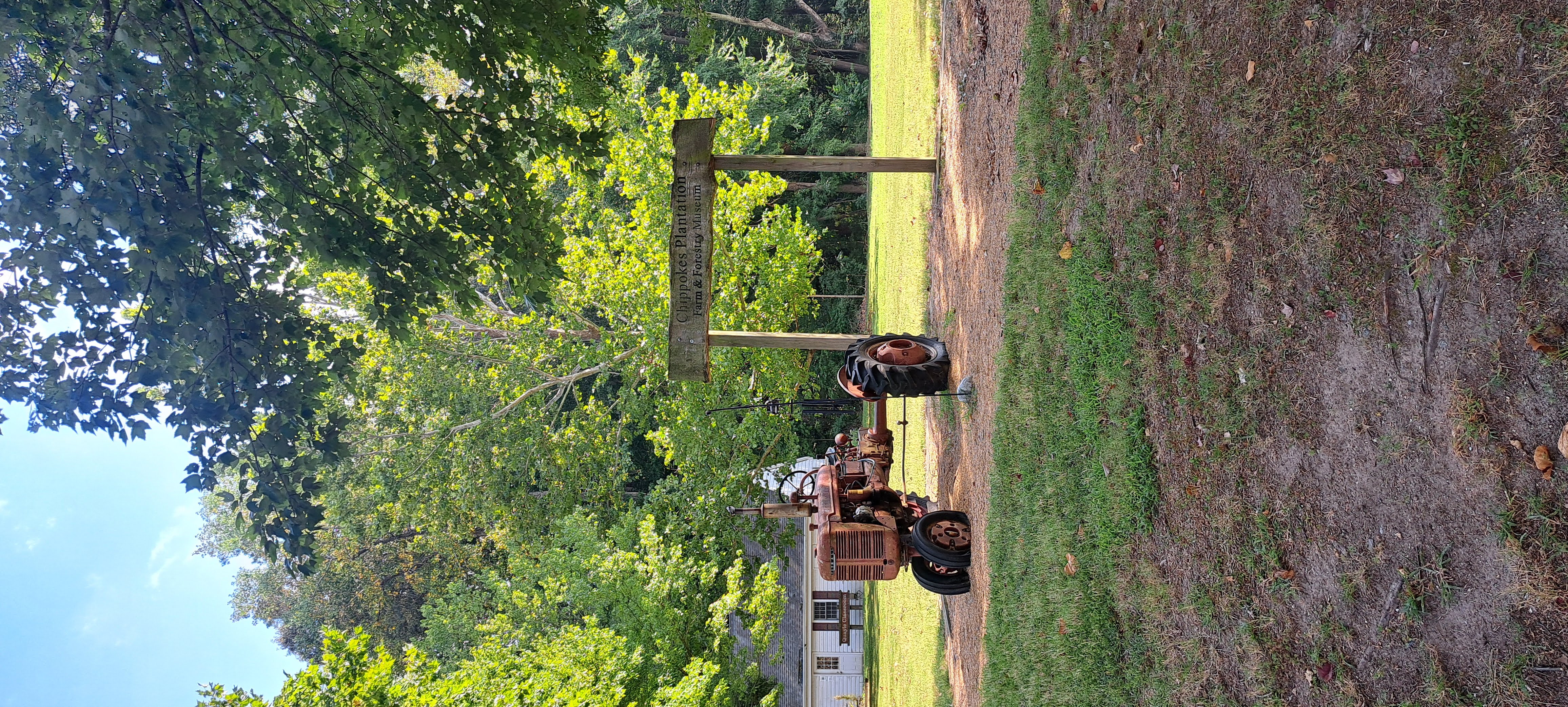
I will admit I didn’t know what most of the things were, but I did meet a really nice interpreter (who is also a musician based in Hampton Roads), Ronny Jones. Ronny explained some of the things I saw that still help run the farm there in the last few minutes the museum was open for the day.
If you’re interested or if you’re a farmer who wants to find living history, Chippokes is one of the best places to see the evolution of tractors and crop processing equipment.
So many machines, invention and contraptions that were used to get food to Americans and keep us alive into the 21st century are here. Many of these types of things are still used on farms, albeit more modern versions.
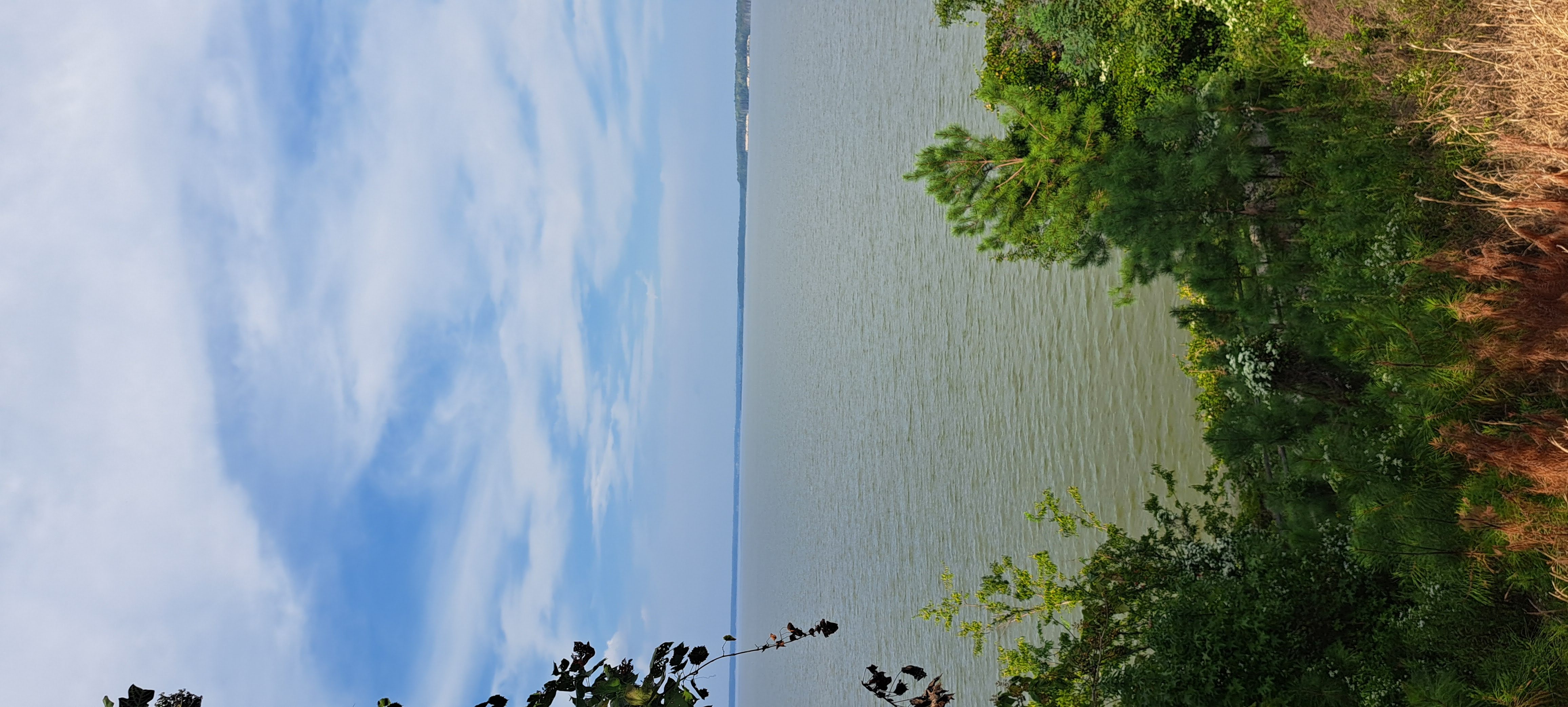
If you want to enjoy a fresh air museum, interpretive farm and garden, the might James River, and historic homes, fields and living history, Chippokes has it all. Camping available.