This is an ode to all women who live in the country, and chronicle the exciting and the mundane, and entices the rest of us to raise a lamb, plant a bed of asparagus, aspire to grow an entire meal’s worth of food, or at least eat locally for a year.
These women have been indirectly and directly affecting my life and lifestyle (and that of my family) since I was little…beginning with Louisa Venable Kyle’s “Ram Lamb.”
Please be aware that if you purchase from some of the links on Virginia is for Gardeners, we may receive a small percentage of that sale. Your cost will be the same, regardless! Thanks for reading:)
Virginia Beach history
I’d read the history Ms. Kyle had recorded of my own city (at the time, Virginia Beach). Old brick churches, black sheep, former farmsteads where suburbs of hundreds now lived, and even the country’s first witch trial all happened here.
These things happened, but now were just remembered as road and neighborhood names. If these women living in the country had written their research and carefully (or whimsically) recorded journal writings, I might have never known about the land all around me.
“Ram Lamb,” a book by Ms. Kyle of Virginia Beach, is the book that put seeds in my head that one day I would really like to have sheep.
Of course, it is really rare to spot sheep in places other than petting zoos and bonafide farms. Occasionally I spotted them in weird places like the intersection of Kempsville and Witchduck near Norfolk. Or on Main Street in Williamsburg.
The Kempsville location harkens back to days when the area was actually a thriving seaport. Today, it is mainly subdivisions and strip malls, with a mere ditch, marking this former commerce hotspot.
The important history of Women living in the country here
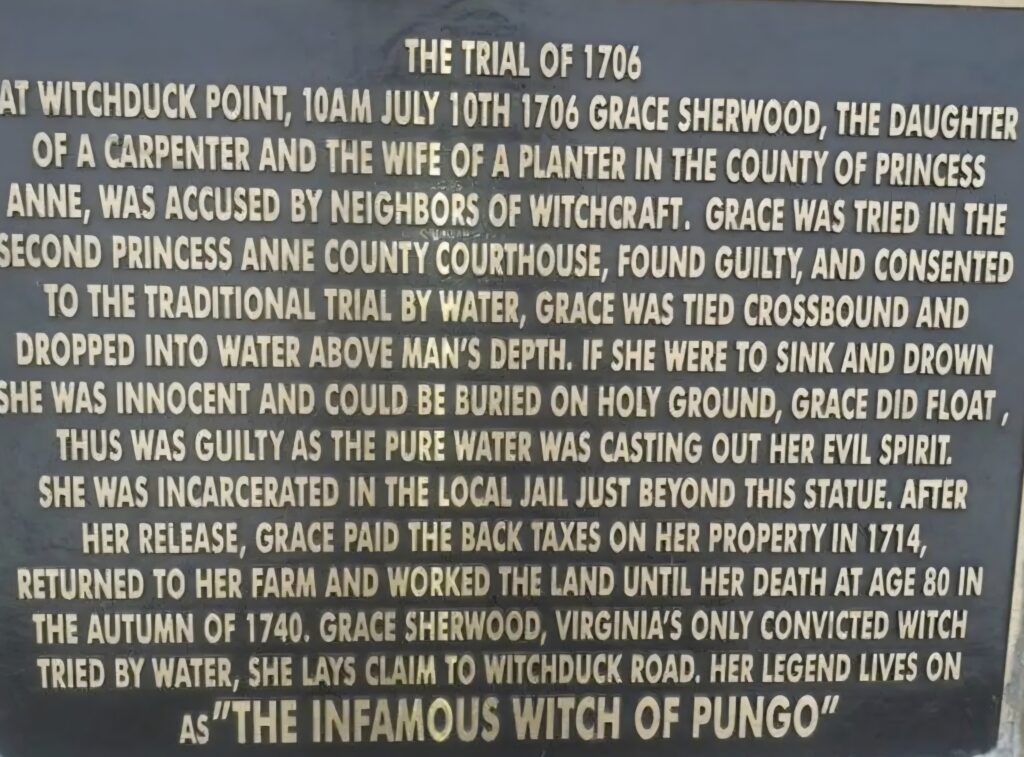
On that note, the very name “Witchduck” was so integral to living in the area, that I took it for granted. Until I found out it was actually named for the place where Grace Sherwood (also known as “the Witch of Pungo“) was tried by ducking.
She managed to escape and swim away just as a thunderstorm erupted out of a seemingly clear day. This didn’t help to dispel ideas that she had supernatural assistance. She subsequently did jail time, until the Governor of Virginia pardoned her after ten years.
I thought of Grace a lot when we moved to Pungo in my twenties. The land on which I lived in 1995 actually was once part of the same farm where she’d lived back in the 1600s.
Living in Pungo, learning to garden, I’d think about how strange it must have been. Grace inhabited a time, where, if you had Rosemary growing on your plot, then you probably had “sailed to England in an eggshell overnight,”. This is what she was accused of. So, of course she must have therefore been a witch!
Witchcraft was a serious charge in the 1600-1700s
This, of course, proved the necessity of a trial by “ducking”. Of course, this was a time when most women could not swim. It was a miracle she emerged alive. The very spot is now only marked by the name on the road which traverses it.
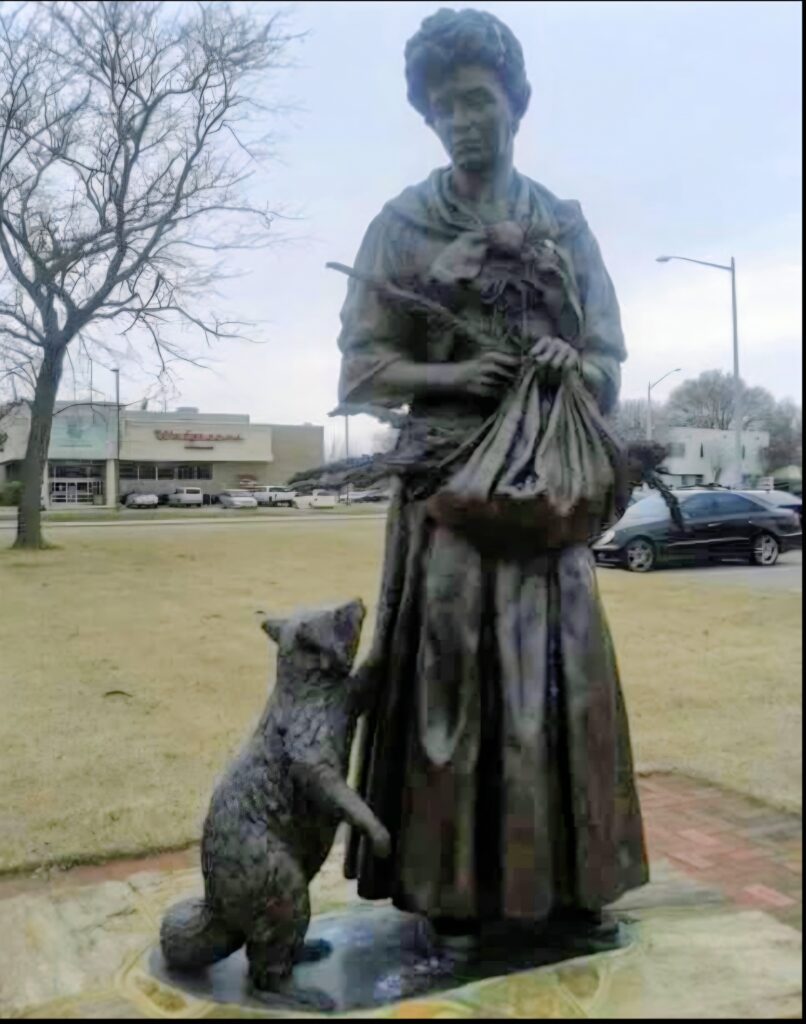
Nearby, at a hospital in Pembroke, there is a statue commemorating Grace and her affinity for nature. Local historian Belinda Nash worked for the commemoration, and to get Ms. Sherwood exonerated by the Governor, after hundreds of years.
The tree from which she was ducked lived hundreds of years but died sometime late last century. Due to over-development in the area, not much was left but some sheep and three very old houses which have since been moved.
Where Country women lived and wrote
Across town, three hundred years later, Ms. Kyle grew a large garden and planted an orchard. She tended sheep and three girls on a much smaller farm that is now obscured along Great Neck Road. Her sweet farmette is now hidden amongst many McMansions, but no sheep.
Both of these women would have benefited greatly from the book written by the revolutionary farm woman, Carla Emery.
Ms. Emery wrote (according to the Guinness Book of World Records) the “longest book written by one person” called “The Encyclopedia of Country Living”. Carla Emery’s book and all of Barbara Kingsolver‘s writings, contain themes center of self-sustenance, human rights, rural living, and the environment.
As a former biologist, Barbara Kingsolver’s work contains just enough technical detail to balance her characters motives and stories. You can trust what you are reading has been thought out and either socially or scientifically proven.
What women write about while living in the country
Ms. Kingsolver, does not, for instance, advocate sailing to England on an eggshell just to get Rosemary. Especially not in her book “Animal, Vegetable, Miracle“. Written with help by her entire family, this book is a journal of their attempts to eat food grown and produced within 100 miles of their home in Southwestern Virginia for an entire year.
They are not purists, though….they took two delicious-sounding trips to Italy and New England, and recorded those efforts as well. It’s okay; they still ate food grown within 100 miles of where they found themselves.
Carla Emery’s 900+ page tome made this type of effort easier with all her sensible advice.
An Encyclopedia for the Ages
Indeed, she raised nine children while writing it. This encyclopedia contains comprehensive advice on such random items as growing salsify, quail, or your own chicken feed.
In 1998, I was happy to host Carla Emery at our local Farmers Market on Dam Neck Road. She signed my own copy, but I was saddened to see people pass her by. I may have been her only customer that day. Didn’t people realize a National treasure was seated right before them, ready to give advice on all manner of things? She ended up doing no demos and left early due in part to the uninspired turnout.
I was happy to learn that the following year, 1999, Ms. Emory’s book became a bestseller. Likely it was due to the hype about Y2K. She is now deceased, but the book still has a proud spot on my bookshelf. I am glad she lived to see the appreciation she deserved for writing it.
Here’s to Country Women
Unlike Ms. Kyle and Kingsolver, Ms. Emery was never a Virginia resident. These women’s’ efforts writing about living in the country vary in proficiency and scope. But they are all cherished items in my library 25 years after purchase. As I attempt to eke out a living from growing or writing about our own country living, I think of all three country women often.
I am thankful that they wrote their truth. Or they at least were honest in reporting what could be fiction. Above all, their words, knowledge, and memories enhance my life and inspire my dreams.