One year, while turning our kitchen into a bedroom and our former bedroom into the kitchen, it finally happened. I had a very strange desire. Though I had three children under the age of five, I somehow wanted to live a pioneer style. This new obsession meant I wanted to do almost everything by hand. I even wanted to start learning (and loving) how to cook on a woodstove.
All of a sudden, things like having outhouses, cleaning clothes manually, tending large gardens, and having livestock appealed to me. Or maybe ‘appeal’ is not quite the word. These things began to intrigue me.
I wanted to wear aprons and live (minus the sexism and racism, of course) like it was 1899.
Please be aware that if you purchase from some of the links on Virginia is for Gardeners, we may receive a small percentage of that sale. Your cost will be the same, regardless! Thanks for reading:)
Innovation, mothers and necessities
When it finally happened, we were that much closer to me living out these ideals. The “it” I refer to is the breaking down of our geriatric electric stove.
We decided against getting a brand-new stove to replace it right away. Instead, we waited it out a few months so we could save for a gas stove and the necessary installation items. We reasoned we’d be using the woodstove any ways because it was cold outside.
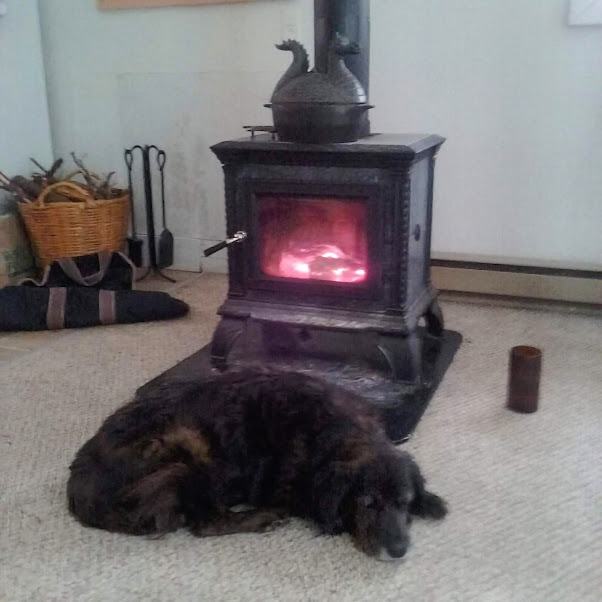
Our woodstove at the time was a fancy “Lincoln Parlor Stove“. It had a nice, flat surface and removable pot lid burners, so it clearly had been made for cooking.
For the duration of winter, though we also had the undeniable benefit of electricity for lights and music, we were beholden to our fire-building skills if we wanted coffee, tea, soup, or even baked goods.
Ideals versus reality
At first, I delighted in the deliberate nature of cooking on the woodstove and enjoyed “earning” my morning caffeine. But some mornings were very tough. Or they were warm enough that I did not really NEED to heat the house, but I WANTED my tea (caffeination). Priorities!
Eventually, I learned to make use of the stovetop for simmering soups (easy) and baking (somewhat harder). Comically (or not), a few other appliances in our kitchen also broke at this time.
Friends began to become concerned, alerting me to sales at Sears, unaware that the stove issue was, at least, my choice. Life at this time epitomized the saying “when it rains, it pours.” However hard my pseudo-pioneer dreams were, my quiet mornings by the woodstove hold a special place in my heart. They are some of my best mom memories. (Cheesy, but true).
Learning pioneer skills
My five-year-old absorbed this slower lifestyle. They would say very poetic things to me, like: “Mom, when you are angry, you are like a kettle that is about to boil!” Another time: “How does the fire eat the wood?”
The kids enjoyed building a fire, and I recognized in them my own five-year-old self that LOVED to play with matches (before I got found out). I was glad they could have the actual experience, so I would introduce the match to animate it, and then warm us. The woodstove, advertised in Lehman’s Amish catalog as a ‘good’ one, but not a ‘better’ or ‘best’ one, brought out the cook within my middle kid, especially.
Learning to use the woodstove as a stove
Tired of not being able to bake like in our former stove/oven combo, they devised a method and a recipe to make brownies. The way, we discovered, was to use a lidded cast iron pot on a trivet. (recipe to come).
This made the pot a miniature oven, with heat coming from the bottom (but not direct flame, and adjusted by moving the pot lids), and the lid locking in the heat.
Are we loving cooking on a woodstove yet?
By the time we found a cute 1950s-era Wickham gas oven/stove to replace the former electric model, I admit I was relieved. It would be hot soon. Yet we’d still want tea or rice, without having to heat up an entire stove, chimney, and house. I slowly no longer wanted to do what my great grandmother (the Farmer’s wife) had done much any more.
I was sad to know my pioneer days were ending; with more modern options would also come the ability to waste more resources. Soon enough, it was summer, and sweltering. That small tinge of regret rapidly dissipated.
The upside of experience with modernism versus manual labor
Looking back to Winter 1998, I realize I was not nearly as worried about Y2K the next year as many others were. Because I had seen how we could both heat our home and cook our food with just scrap twigs from the yard I felt pretty strong going into the new Millennium.
My family and I may not have ended up living like exactly like the pioneers did. But we certainly had some warm memories from trying.