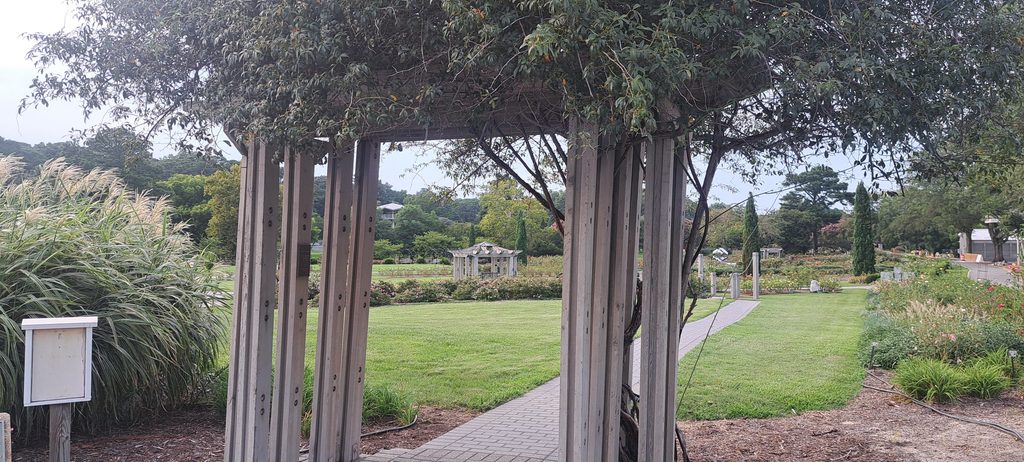
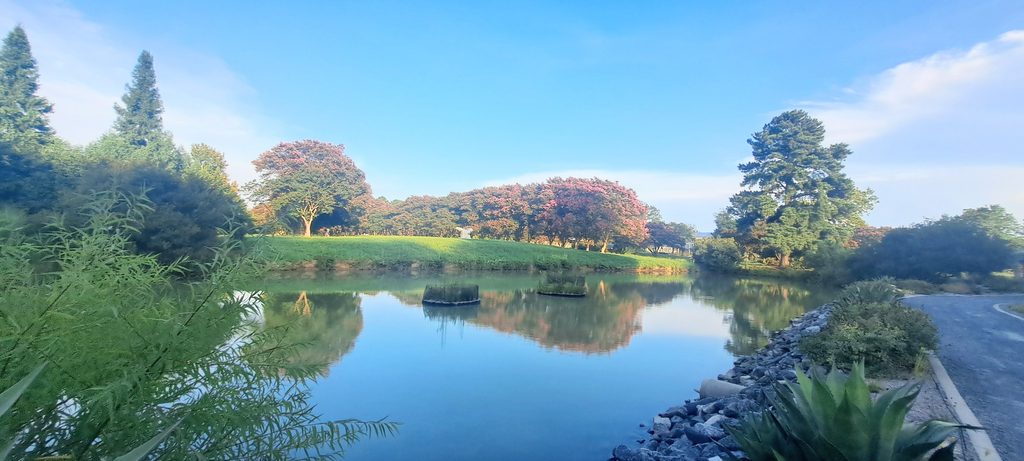
I recently had the pleasure of going back to my hometown to take a wonderful walk around the plant world in Norfolk, Virginia.
This place- Norfolk Botanical Gardens–is a place that’s near and dear to my heart, because I grew up less than two miles away, off Azalea Garden Road, where I used to feed the ducks with my mom and dad.
Today, however, my mission was to check out the gardens (sorry, ducks!), and I was not disappointed. It’d been a few years since my last visit. According to their website, NBG is “Virginia’s Largest Botanical Garden, powered by 100% renewable energy and was named #3 BEST Botanical Garden across the United States 2023 by Fodor’s Travel.”
First and best impressions
Even so, I always get a thrill driving in on the long driveway with the beautiful the tall Loblolly pines. And now they have a coffee and food truck out front, with nice umbrella-ed cafe seating. Double thrill! I availed myself of the clean bathrooms in the Welcome center, enjoyed the gorgeous art displayed there on rotation (today’s was all by the same artist), then headed back out to take what was a wonderful walk around the (plant) world in Norfolk, Virginia.
Please be aware that if you purchase from some of the links on Virginia is for Gardeners, we may receive a small percentage of that sale. Your cost will be the same, regardless! Thanks for reading:)
A Good Garden Welcome
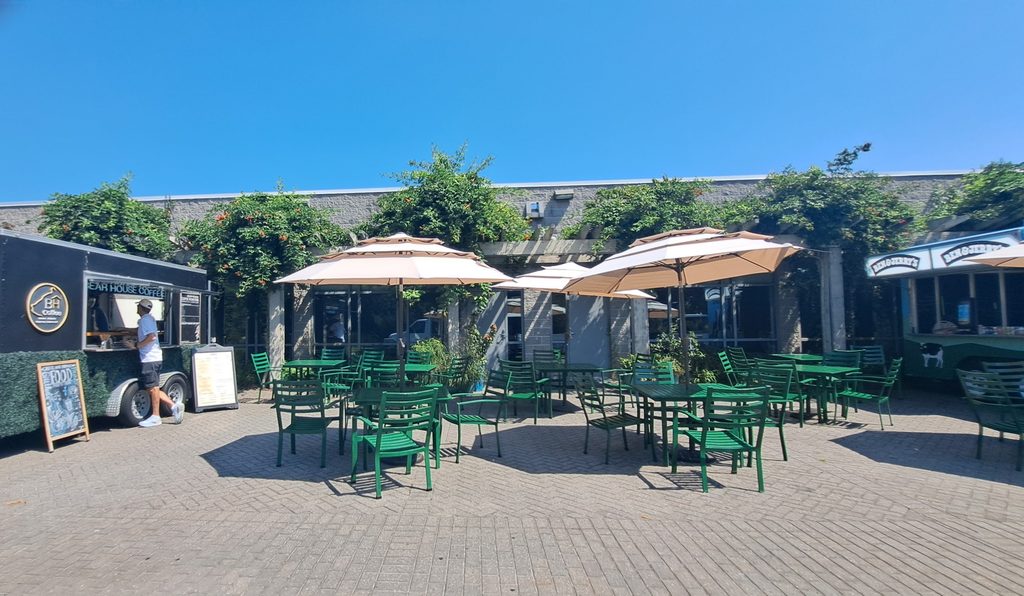
I was able to get an iced-chai and then hop right on the train, included with admission (the train ride, not the chai!).
All Aboard!
The tour guide and train driver Stephen was affable, knowledgeable and apologetic as we passed by the now-open as of September 11, 2026 (I missed it by a week!) Gardens of Tomorrow. It’s an incredible looking conservatory that is dedicated to the people that built the gardens almost a century ago.
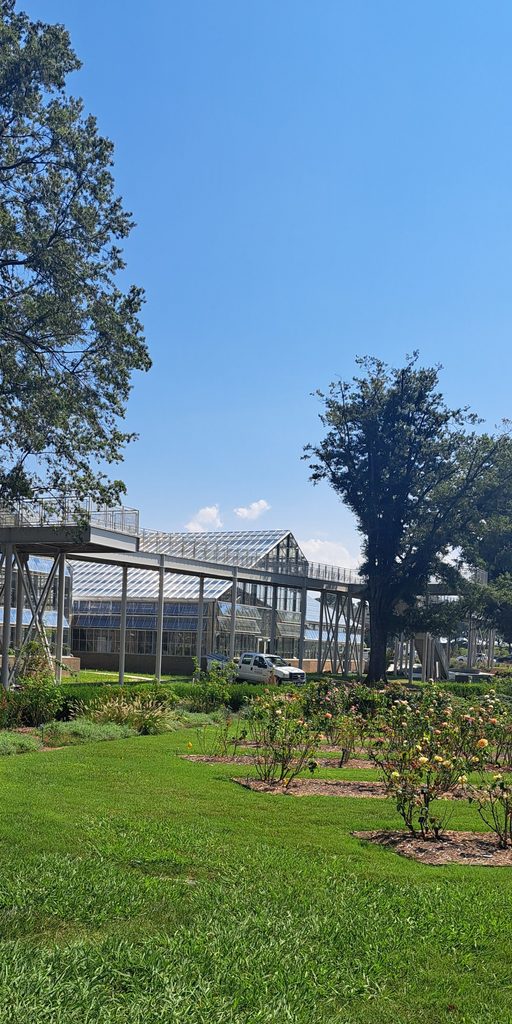
Today, the site boasts over 60 themed gardens, but when it was created, it was a much different place. Almost a hundred years ago, many people (mainly women of color) worked in harsh and dangerous conditions, hauling heavy loads and in wet conditions, often with snakes (some of them poisonous) to create Norfolk Botanical Gardens (originally Azalea Gardens).
Most of these people’s names have been lost, but there is a statue honoring the original gardeners as you drive in on aforementioned pine-lined lane. There is an active search by people affiliated with the gardens to properly document and honor these workers whose names were (almost) lost to history.
The statue to honor the original workers is near the entrance. Stephen pointed it out at the beginning of the tour. This set the tone for my day. As many times as I’d visited, I had never heard this story before.
Late-season bloomers
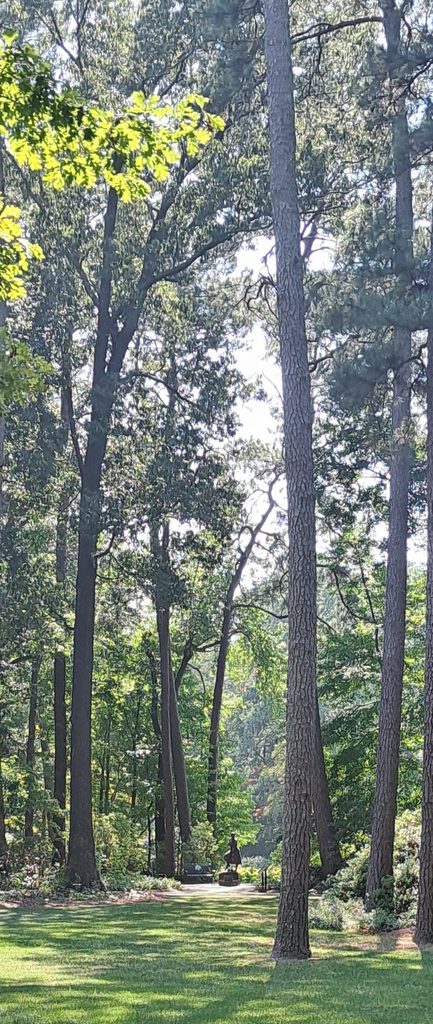
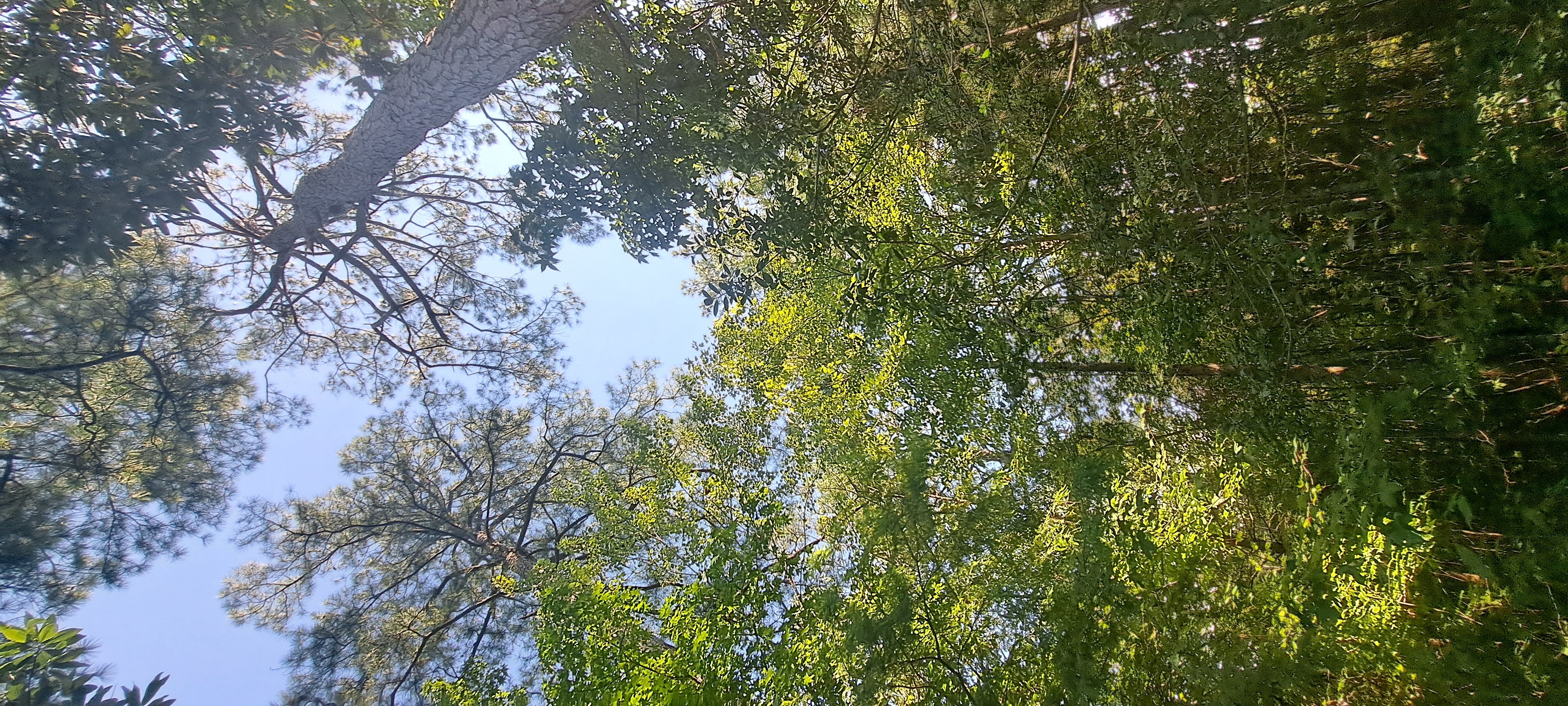
The tall Pines, like I said, have always been a focal point for me. They are emblematic of the entire region, and they do not disappoint. They remind me of palm trees in some ways, only better, and they are in abundant supply at Norfolk Botanical Gardens.
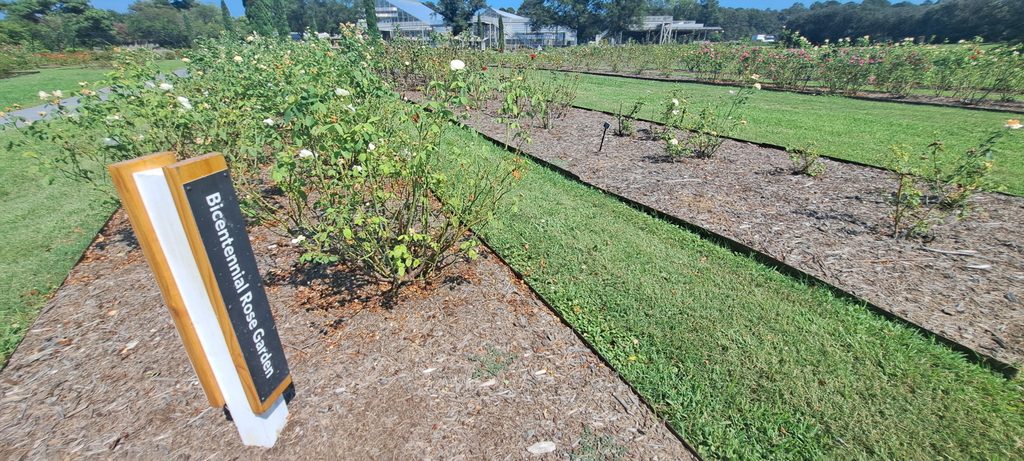
Many things (Crepe myrtles! Zinnias! and ROSES!!!) were in full bloom; early September is still late summer. The roses in front of the new conservatory constitute 200 years of America, as the Bicentennial Rose Garden.
Now that it’s been 50 years since that rose garden was installed, it’s interesting to visit. I’ve been going there since before the first installment, and America is, as of this writing, now 250 years old. (But how am I fifty years older???) Time is a strange sea.
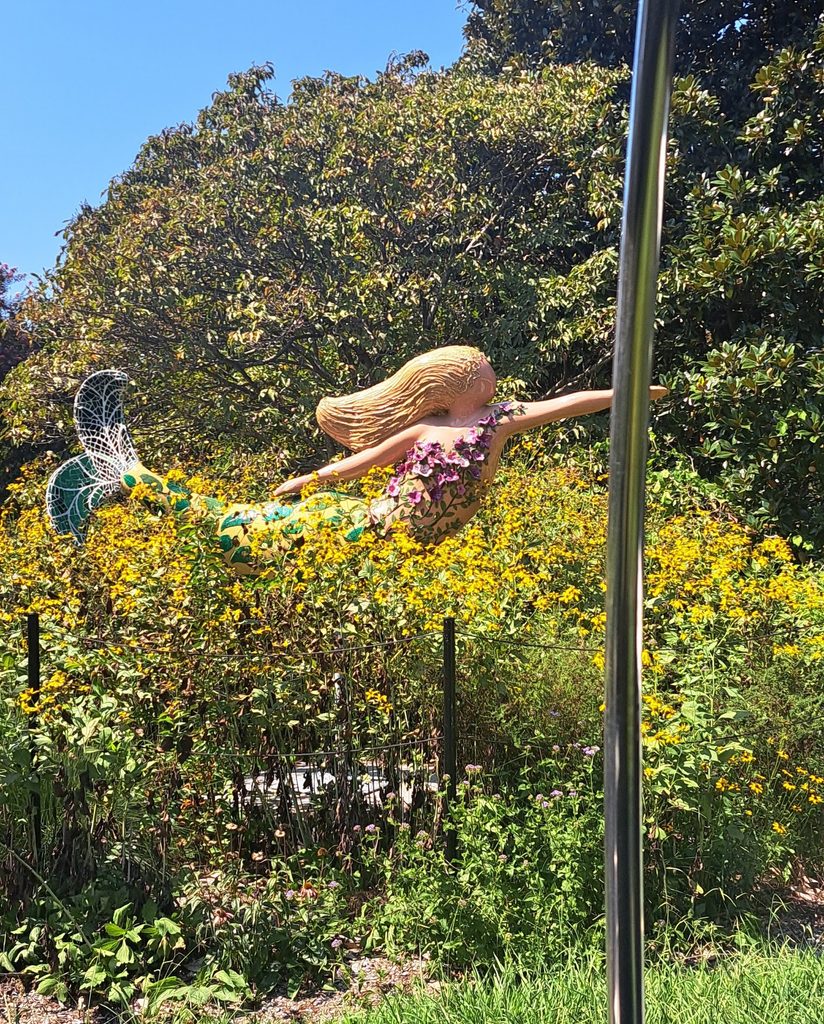
You’ll see several mermaid statues that represent Norfolk throughout the garden. The artist behind these statues was Georgia Mason. Norfolk’s unofficial mascot the mermaid adds a whimsical creative touch here in several key spots.
Stephen directed a fantastic train ride, and did a great job. He led us through much (but not all) of the gardens. He mentioned places not on the tour, so we could make a point to explore them on foot after it was over. There is also a boat ride for additional charge during the growing season. It was not available on the day I visited.
You are welcome to disembark from the train when stopped at any time, but the complete ride lasts 20 to 30 minutes. The relaxed approach was appreciated on this day because though it was September, it was still hot. I was there on an almost cloudless day. Despite it being a holiday weekend, I was surrounded mostly by plants, not people. (And beautiful blue skies).
Location, location, location
The airport is nextdoor. The gardens actually used to be much larger, but a decent portion of the original land was transferred to make way for Norfolk International Airport. This took place in the late 1960s-earlyb1970s, when there was more air traffic there than LaGuardia Airport in New York.
If you like to watch planes take off, this may be your new favorite spot. I’m pretty sure you can see them from the platform of the new conservatory, too. You can definitely see the planes wherever you are not under a tree canopy. There is a delightful mix of open and shaded areas here.
A wonderful walk in the world of plants in Norfolk, Virginia above and below
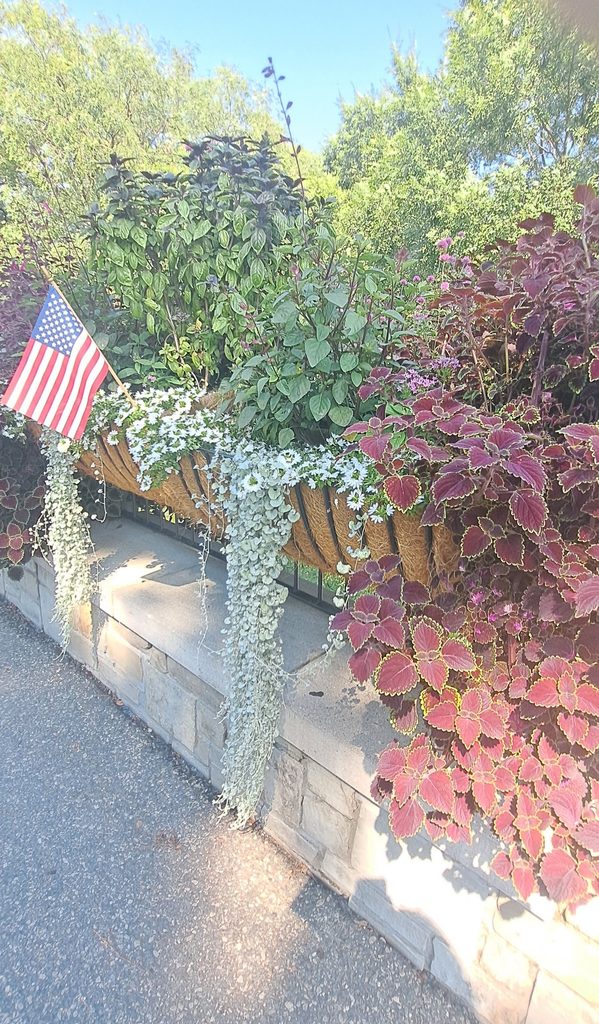
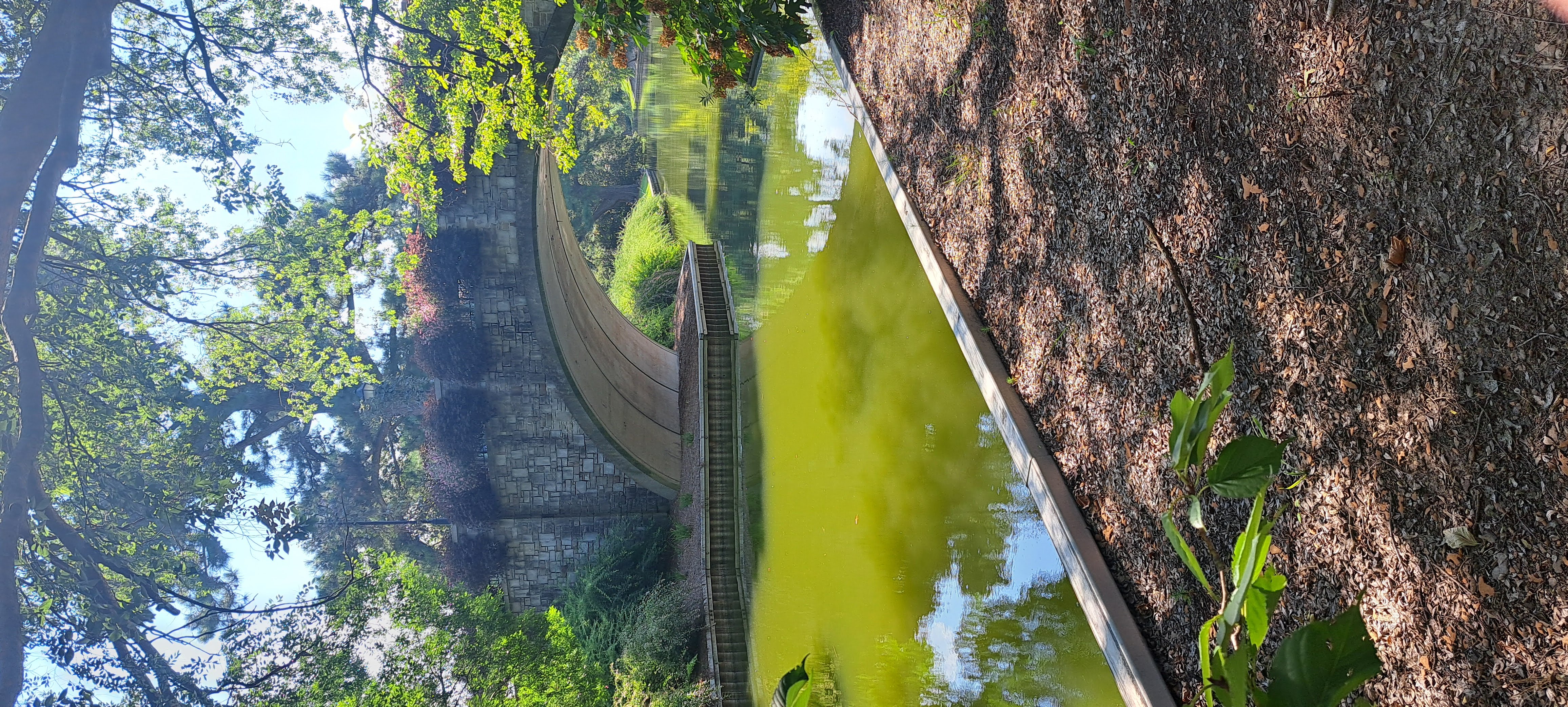
The bridge over the main Waterway is adorned with gorgeous baskets. It’s a master class in what to put in your plant containers.
I appreciated the romantic and winsome views. I plan to return to visit the Gardens of Tomorrow SOON, and definitely take a boat ride next summer or before then, if weather allows.
The pollinator meadows were abundant with goldenrod and all kinds of native flowers. There are many informative signs about the local plants in the meadows and along the wooded walkway, which I enjoyed.
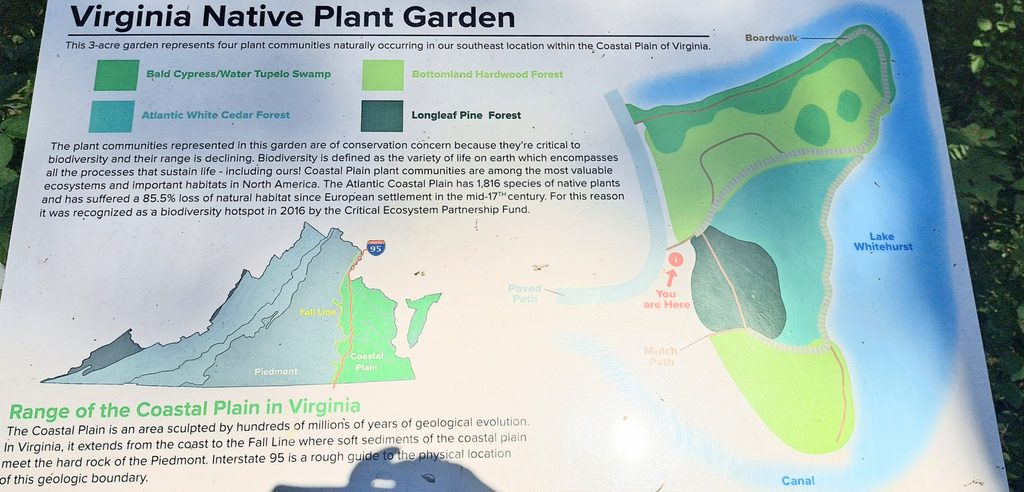
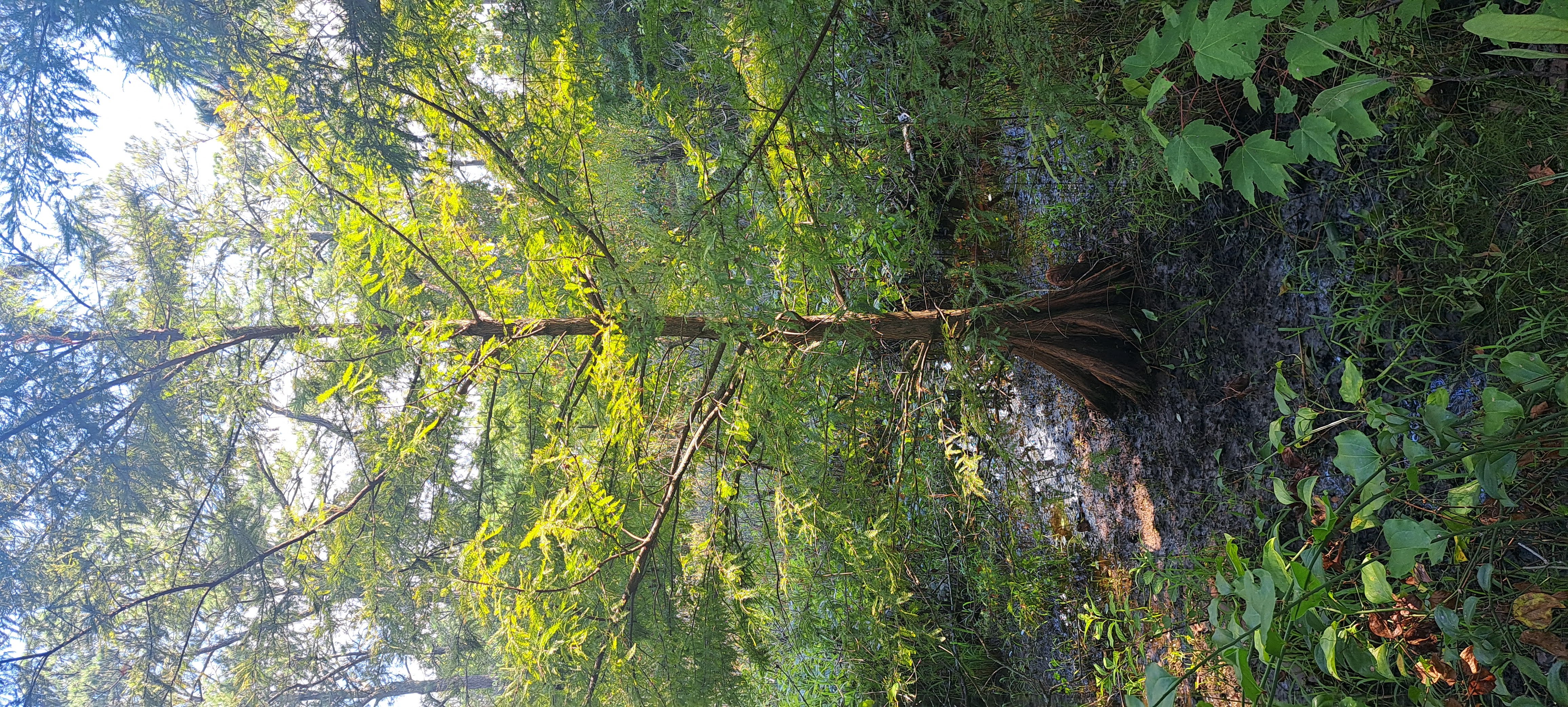
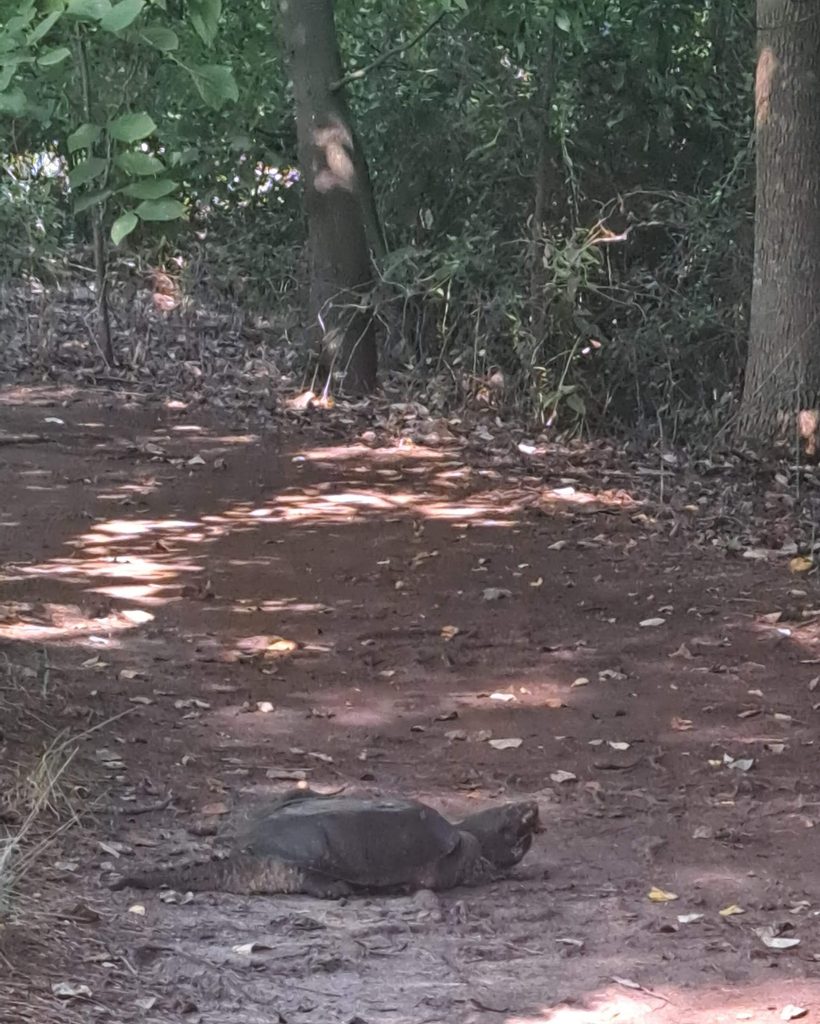
Bald Cypress with their cute knobby knees live here. I’m always happy to see them. I also spied a snapping turtle creeping along the forest path at a leisurely pace, which was exciting. I love turtles!.
I had just been talking about snapping turtles with my mom that morning, and then…I got to see one! I wondered if the people that were cruising up the path after me even noticed that there was a snapping turtle.
I give them a wide berth, because they DO snap!!! And this one was huge (simular to the size of a large sack of potatoes).
Benches, woodlands for a wonderful walk around the (plant) world in Norfolk
The woodland walk is expertly done. I appreciated that the boardwalk was constructed to accommodate the trees. There are many dedicated benches for people with loved ones they wanted to honor or memorialize. You will see these mostly cedar benches along the trails, and throughout all the gardens.
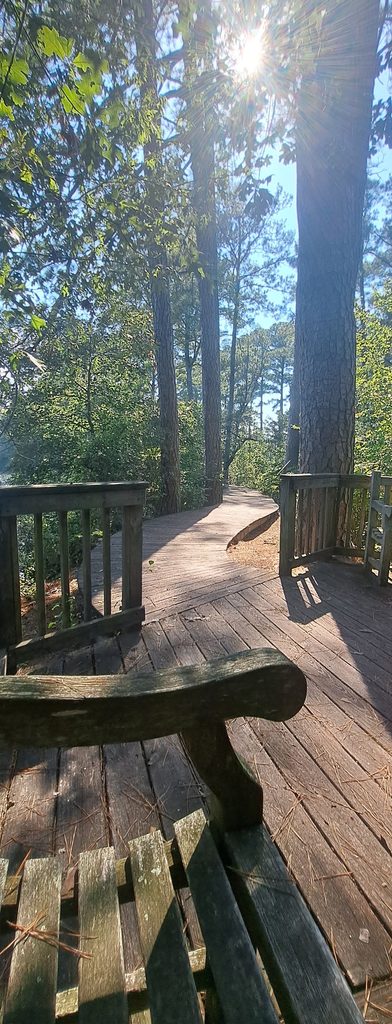
The benches are all great places to sit and look at the water, which is abundant in Hampton Roads. This wet lanscape is something I don’t get to see much, because I live in the mountains.
I enjoyed that there’s just enough signage so you can find out if a tree is a southern red oak, or a vine is a Carolina Jasmine. The signs include scientific names, important in a public garden.
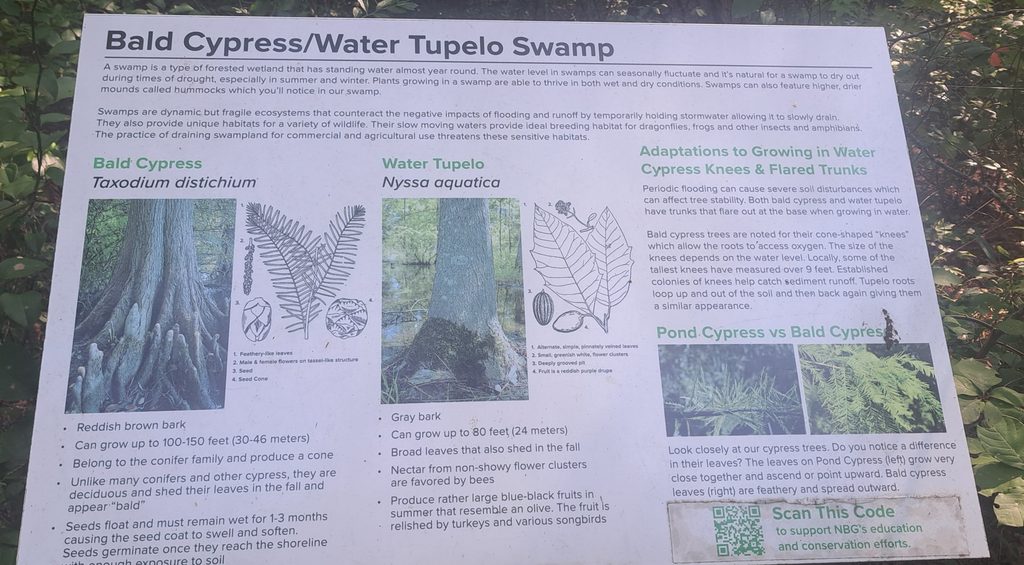
Who needs labels? Me, and many others!
Some people might think labels on plants are obtrusive, and I understand that viewpoint. But…if you are in a public garden, people visiting like to know what’s what. It makes it easier to learn what exactly is blooming or growing well a certain time of year, or has interesting foliage, or smells good, etc. etc. When you know, you can add it to your landscape at home. Or purchase the plant as a gift.
Plant labels here manage to be both integral and unobtrusive. Clearly, this place is aware of it’s mission as an outdoor education center. Because of the understated signs, NBG also manages to be a wonderful place to walk around the (plant)world, and a peaceful space for nature meditation.
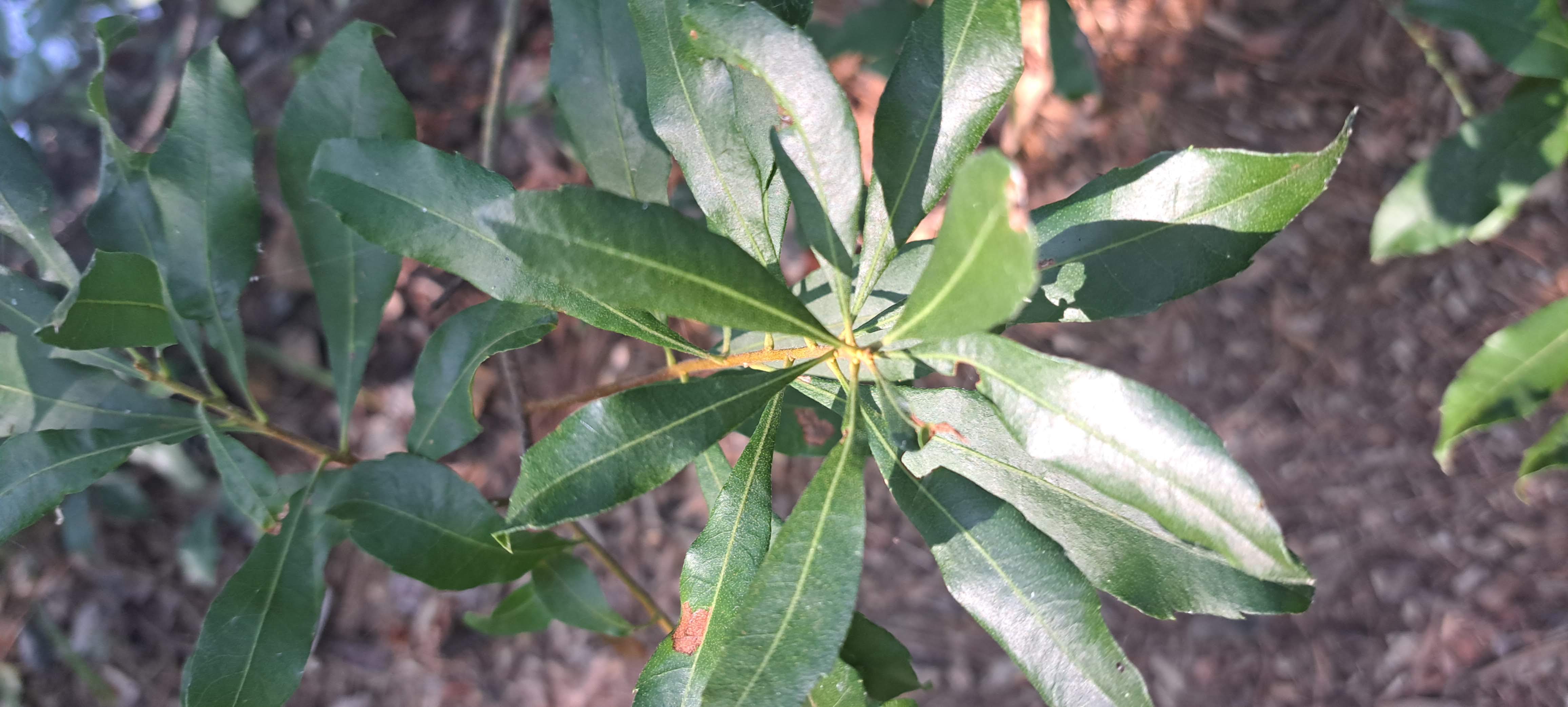
The Wax Myrtle (Morella cerifera), also called Bayberry or Candlberry is abundant. It’s a plant that means “home” to me, like Loblolly and “Gumball” trees do. Plants that I really love, but don’t or can’t grow in the mountains, two growing zones away.
A place for refuge
Sometimes, you just want to sit and look up at the sky. Breathe. Watch the clouds. This view from one of the benches was a great. place to do just that.
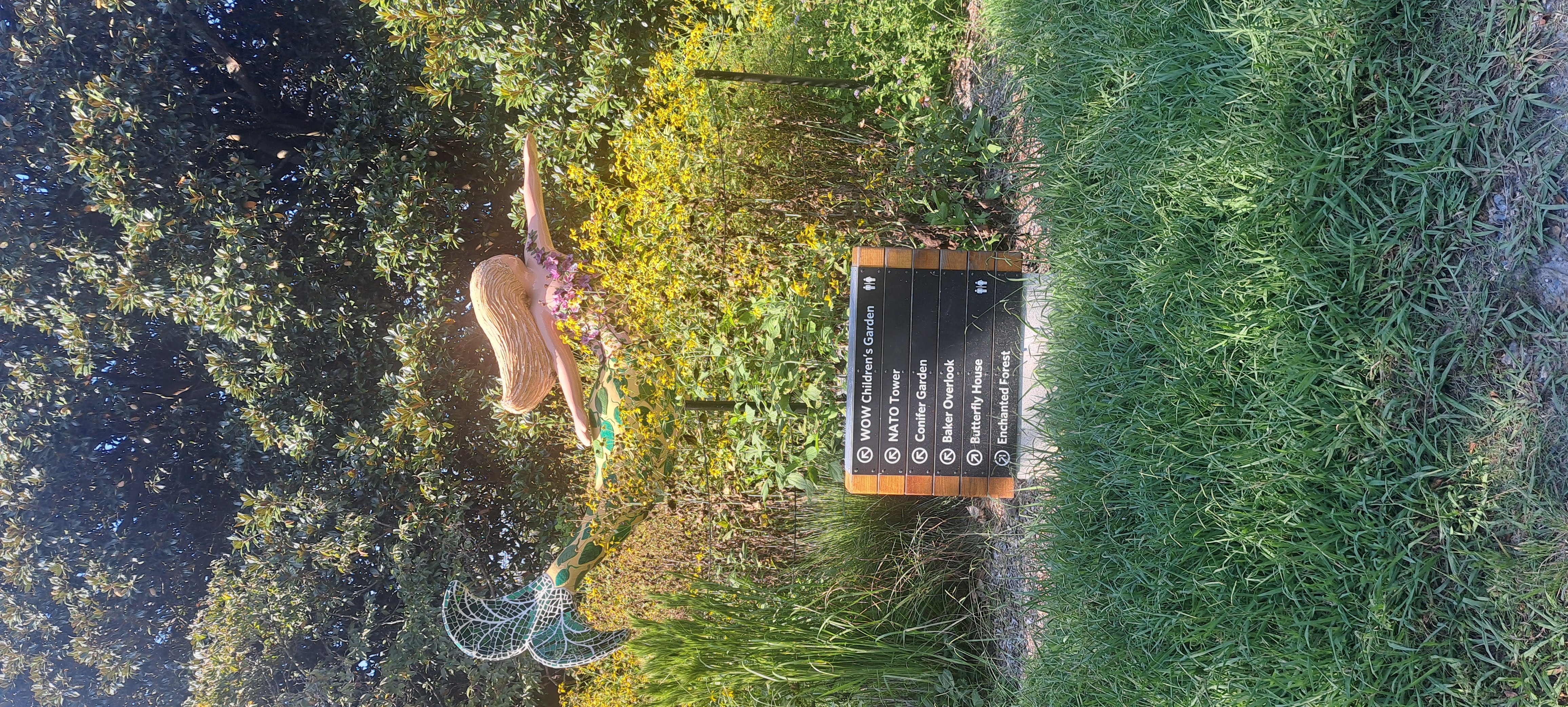
Heading on past a sizable zinnia and sunflower plot, and an extensive meadow, I am greeted by another mermaid sculpture. “Lily” tells me which way to head, if I want to go to the NATO tower, overlook or the Butterfly gardens.
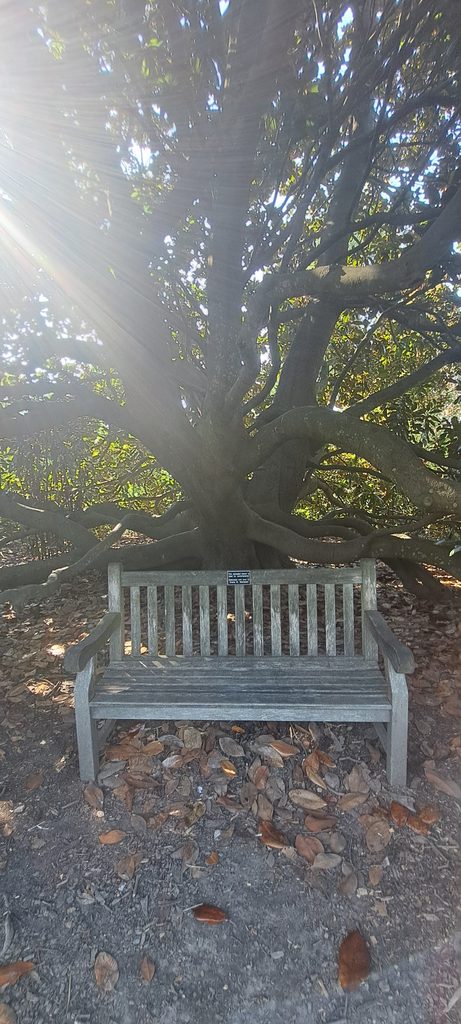
When I came across this beautiful bench, the sun was just right. Every picture I took of this bench had some ethereal images in them. I think the spirit of the person for whom this bench was dedicated is definitely present here.
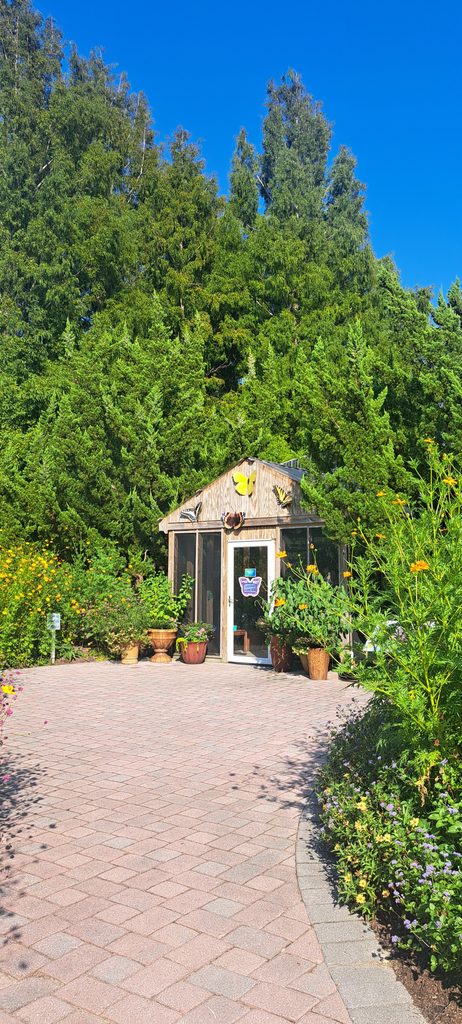
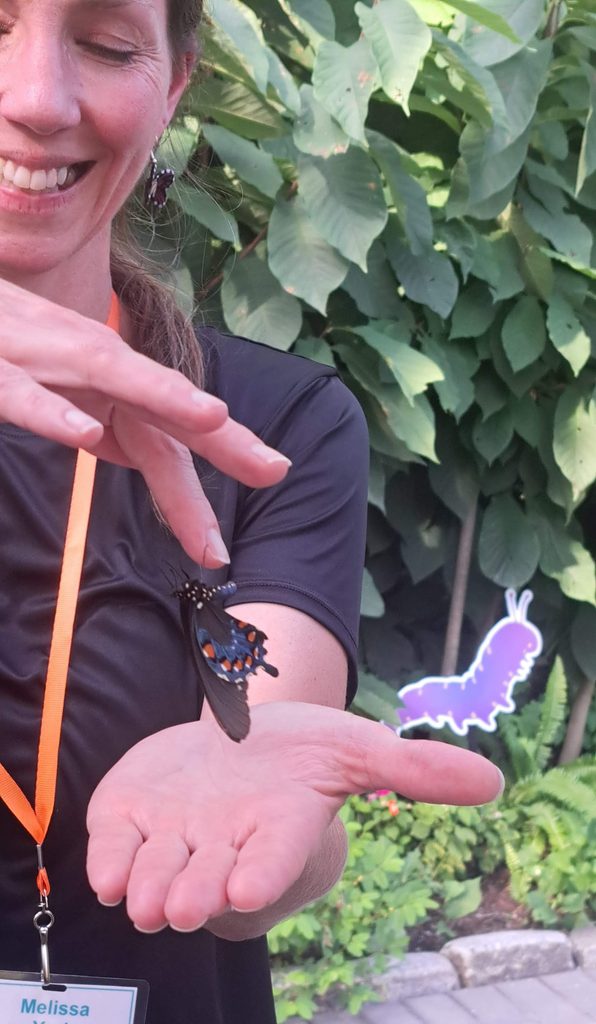
Heading on to the Butterfly garden, (which is often voted the best in the United States), I was happy to make a new friend (hi, Melissa!) The two guides working in the butterfly house patiently explained the differences amongst different species of butterflies that live in this part of Virginia.
We wondered about the pollinator-less behavior of Luna Moths, appreciated the cooling fans, blooming flowers, and the beauty of a newly-emerged Piepvine Swallowtail.
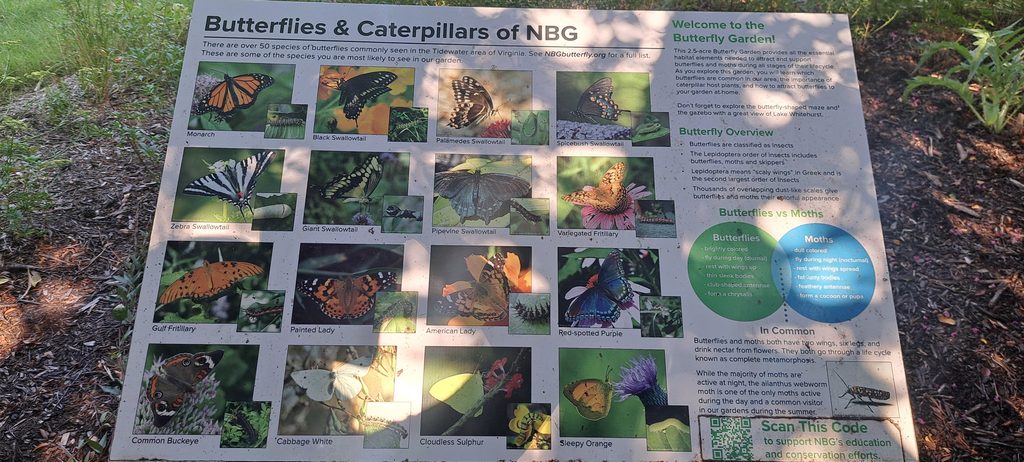
You can easily spend an hour in here talking to the people about the butterflies. The gardeners, docents and volunteers are truly passionate about this space.
Or, you can just sit quietly and watch butterflies, remain in awe, and enjoy watching other people watch the butterflies. That is pretty amusing as well.
The Butterfly House isn’t open year round. So you’ve got to catch it when butterflies are there!
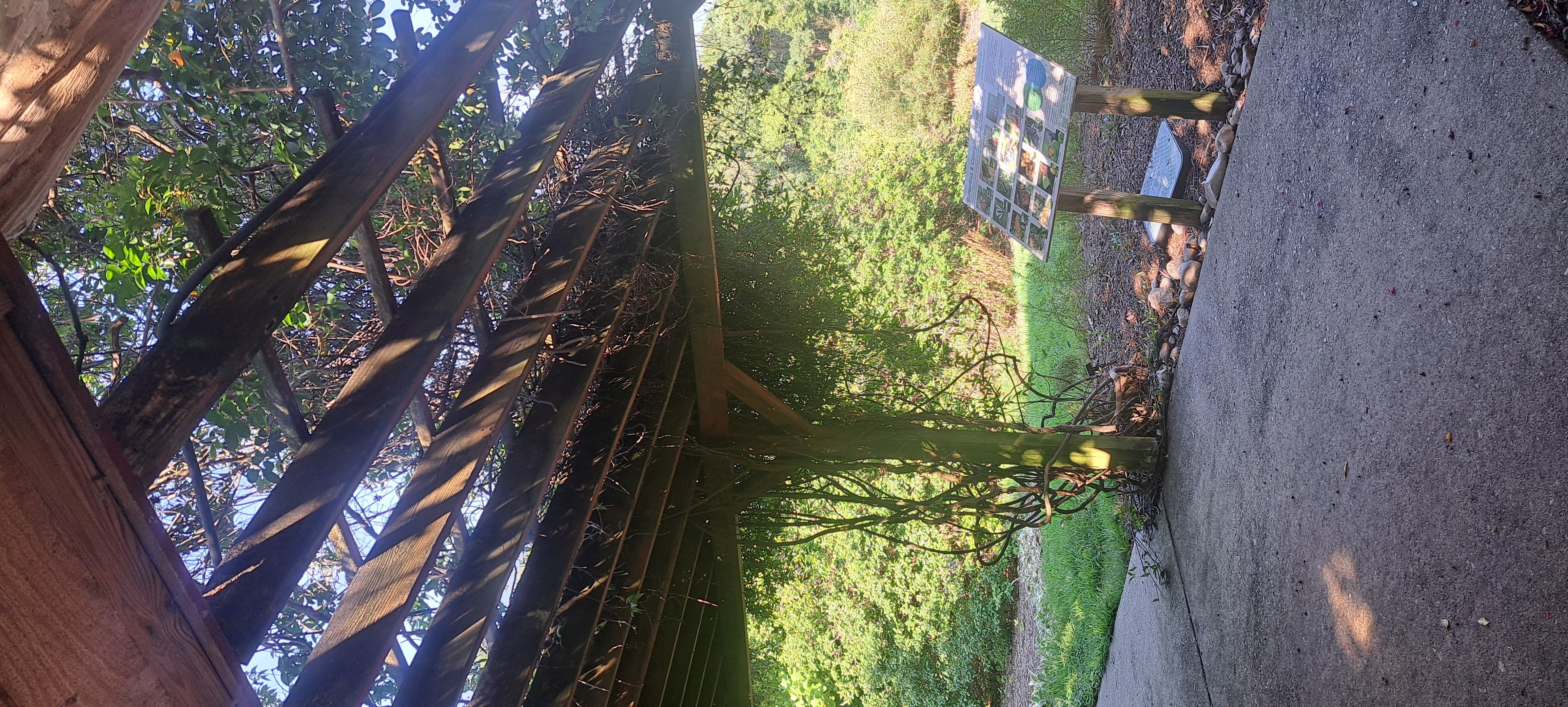
I would like to add that bathrooms are accessible throughout the grounds. There are three clean facilities available to visitors. The one closest to the Butterfly House and Gardens offered really nice shady pergola, snack and beverage vending machines, recycling, and comfortable seating. Another fine place to just relax and watch more clouds pass!
So many reasons to return! Even more reasons to join!
There’s really so much to see here. If I lived closer, I would definitely join the Norfolk Botanical Gardens. Not just to support local environmental education, but for many other reasons.
When I return, I plan to:
enjoy the seasonal art in the welcome center
check out the gift shop
take note of what is blooming
Draw and paint (I did draw a tree in my perpetual journal near the lake)
Visit trails and parts of the gardens I missed during this last visit.
I live three hours away, so I don’t visit as much as I’d like. I do want to see the newly-opened Gardens of the Future. It is an indoor conservatory area. I look forward to returning in winter, when I need a tropical pick-me-up. A two-story conservatory will be a good stop. (At the top of my list, actually!)
So there will be a part two (and, maybe a part three!) to this article in near- future. Winter is (distressingly) around the corner.
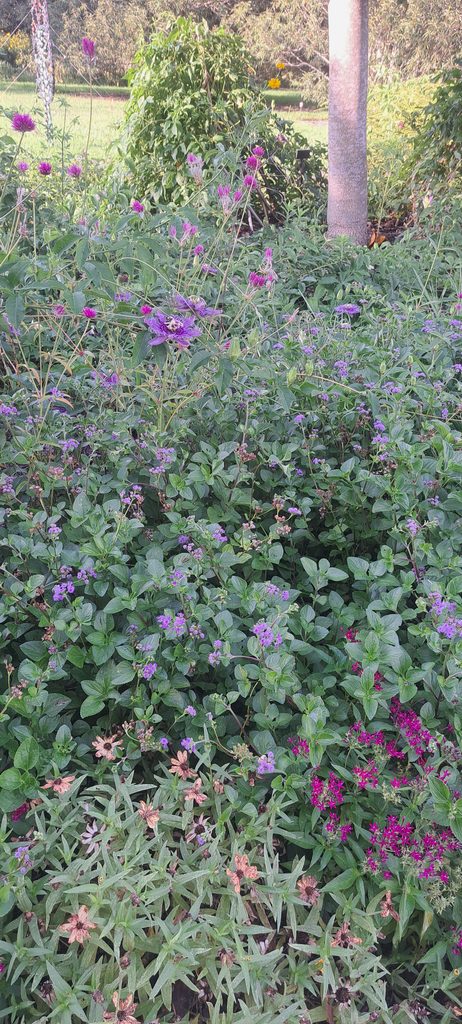
Continuing past the Butterfly Garden. I walked along more wooded trails (some landscaped, some natural) again. It was a great day to alternate warming up, with shade-sitting, to get out of the direct heat.
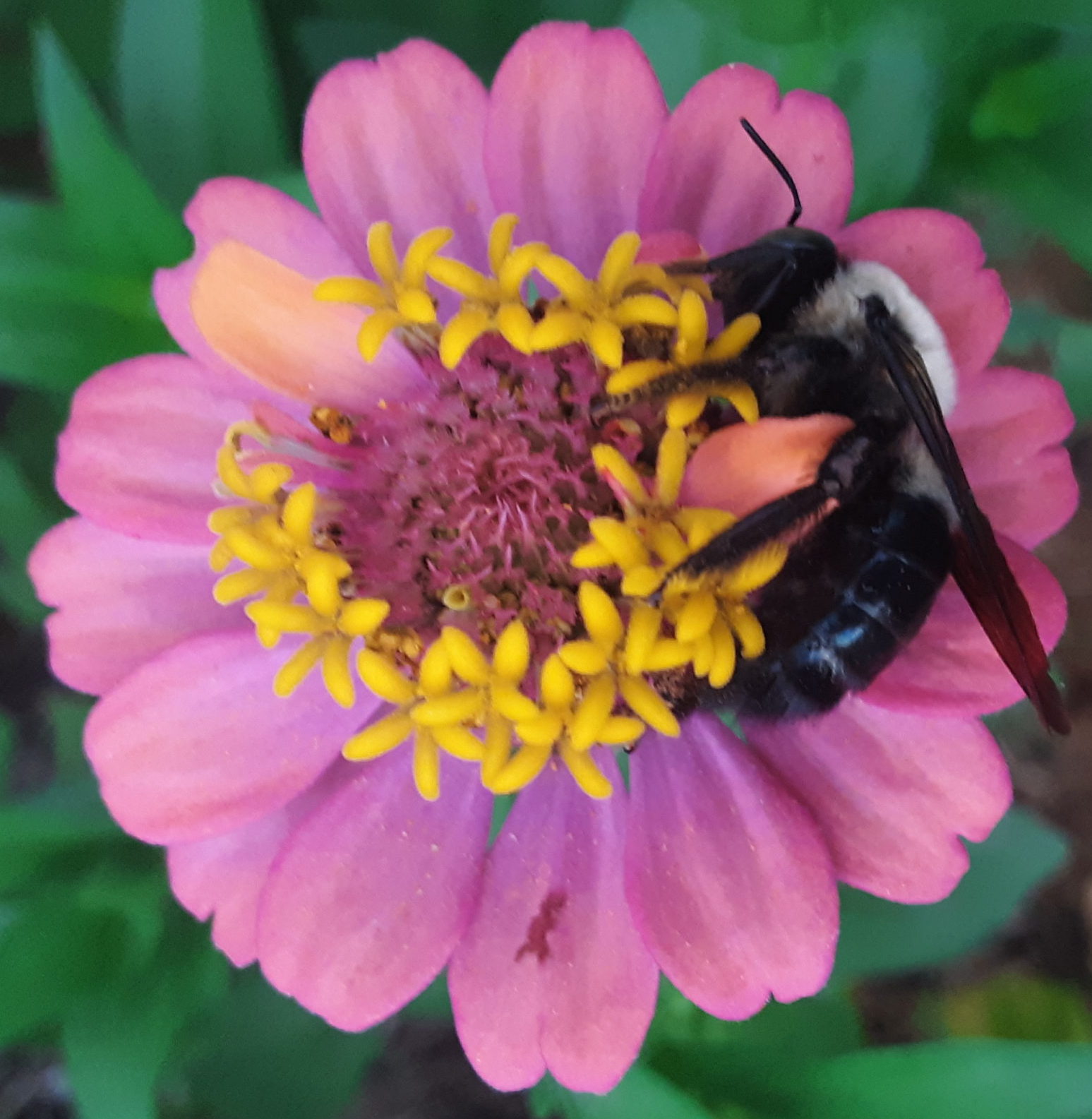
The full sun was great for watching butterflies, but some shade is nice too when you’re trying to switch it up. I appreciated so many different-themed gardens. There were beautiful different purples (above) like Ageratum, Vervain and passion flower just in one small area. Prince himself would’ve been proud!
Ageratum, Bees and Composters!
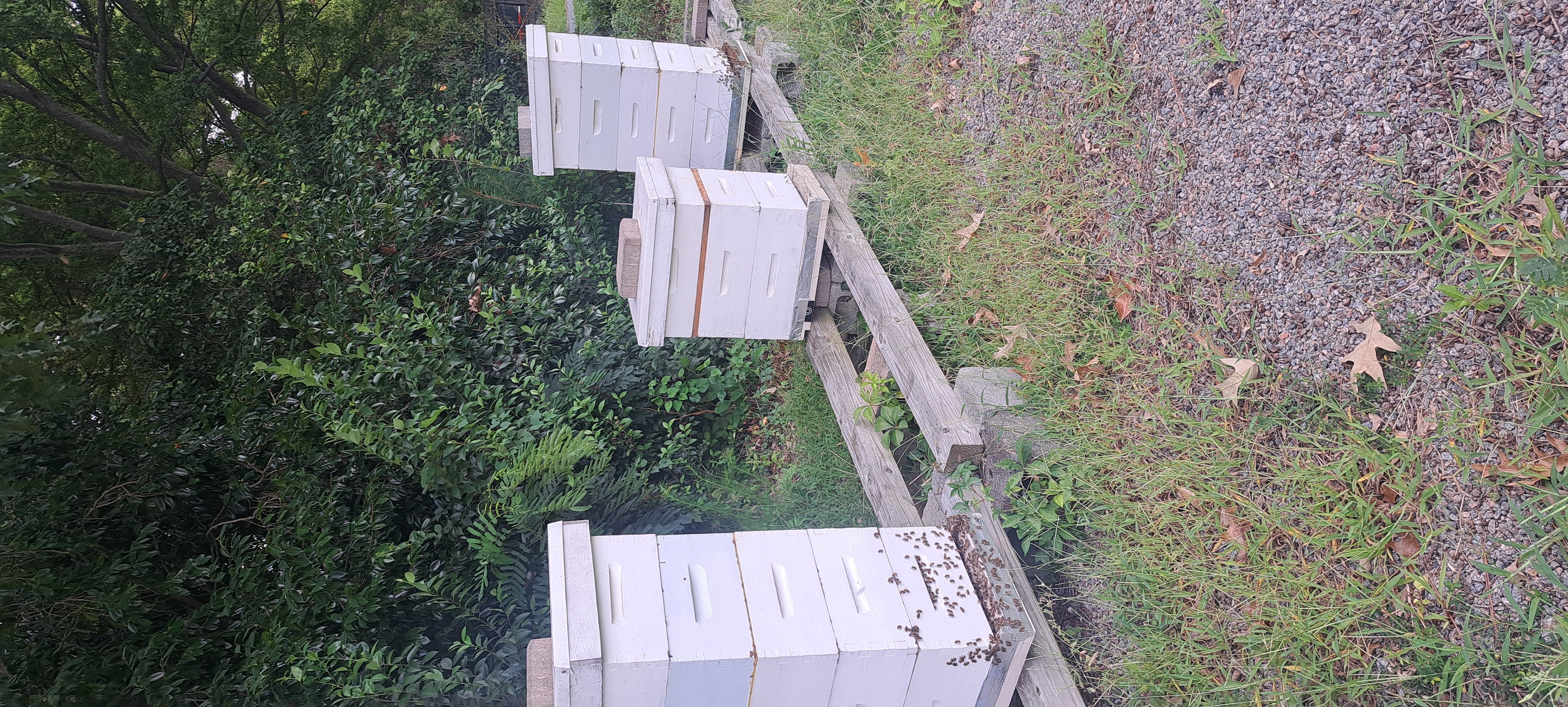
I came across a beekeeping display complete with signage. As a former beekeeper, I know the importance of these golden angels for the pollination of food plants and flowers.
This area showcased very healthy hives, and you could see many bees (apis mellifica) coming and going. Its fascinating to watch them return with large tufts of pollen on their little legs, like Standard poodles’ ankles.
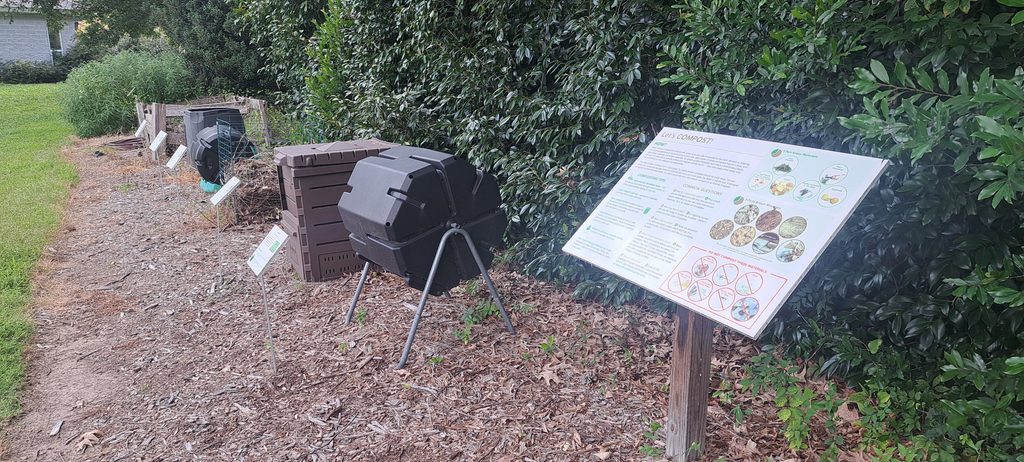
They also had a great display of different kinds of composters. This is really helpful if you’re trying to decide what will work with your backyard, home, farm, or budget.
‘V’ for (vegetable) Victory!
There was a “typical” home vegetable garden. (Except it is in great shape because they have a staff, and a lot of knowledge at their disposal, as well as a greenhouse and expert use of rain barrels, mulch and microclimates). This is the NBG Victory Garden.
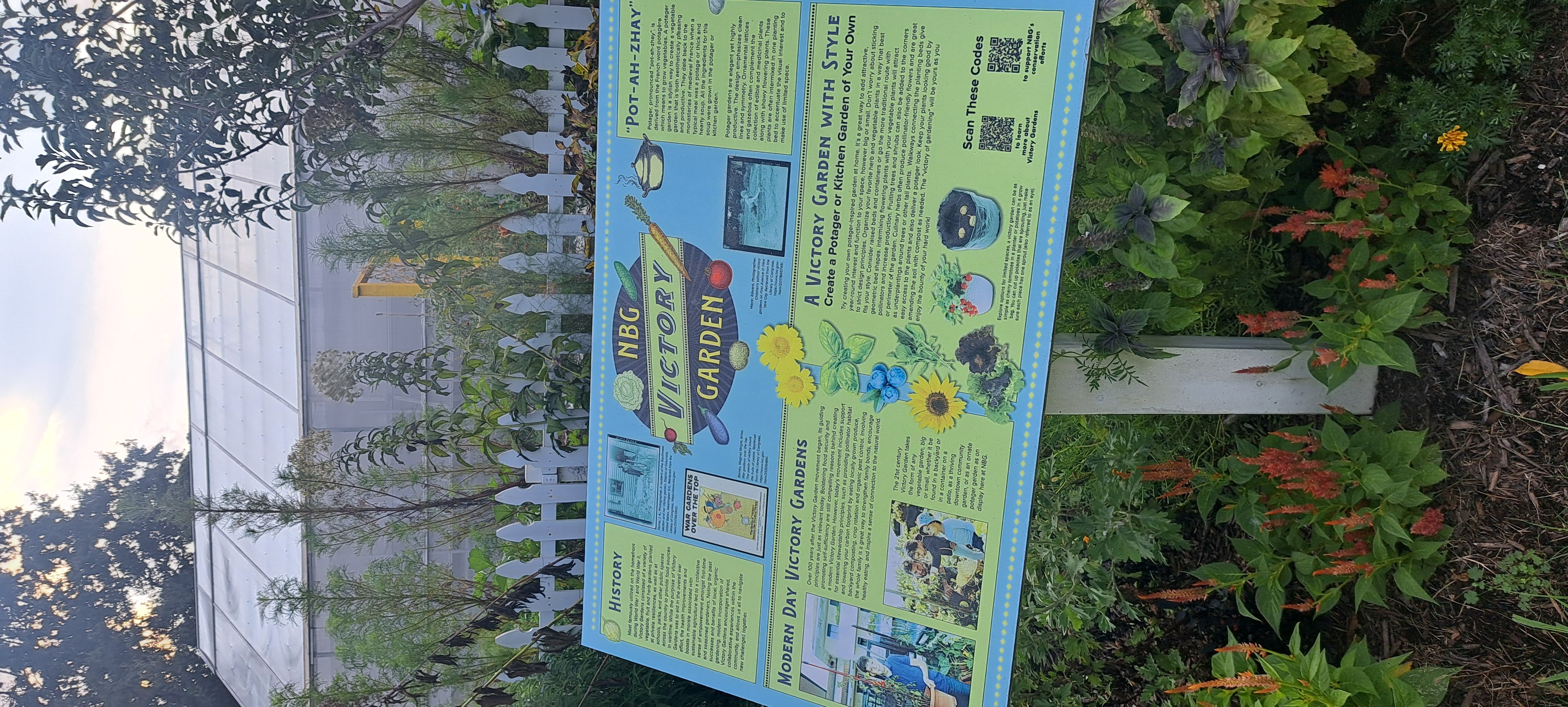
Everything in the Victory Garden looked wonderful, even though it’s been a pretty dry summer. All was lush, vibrant, colorful, and really inspiring!
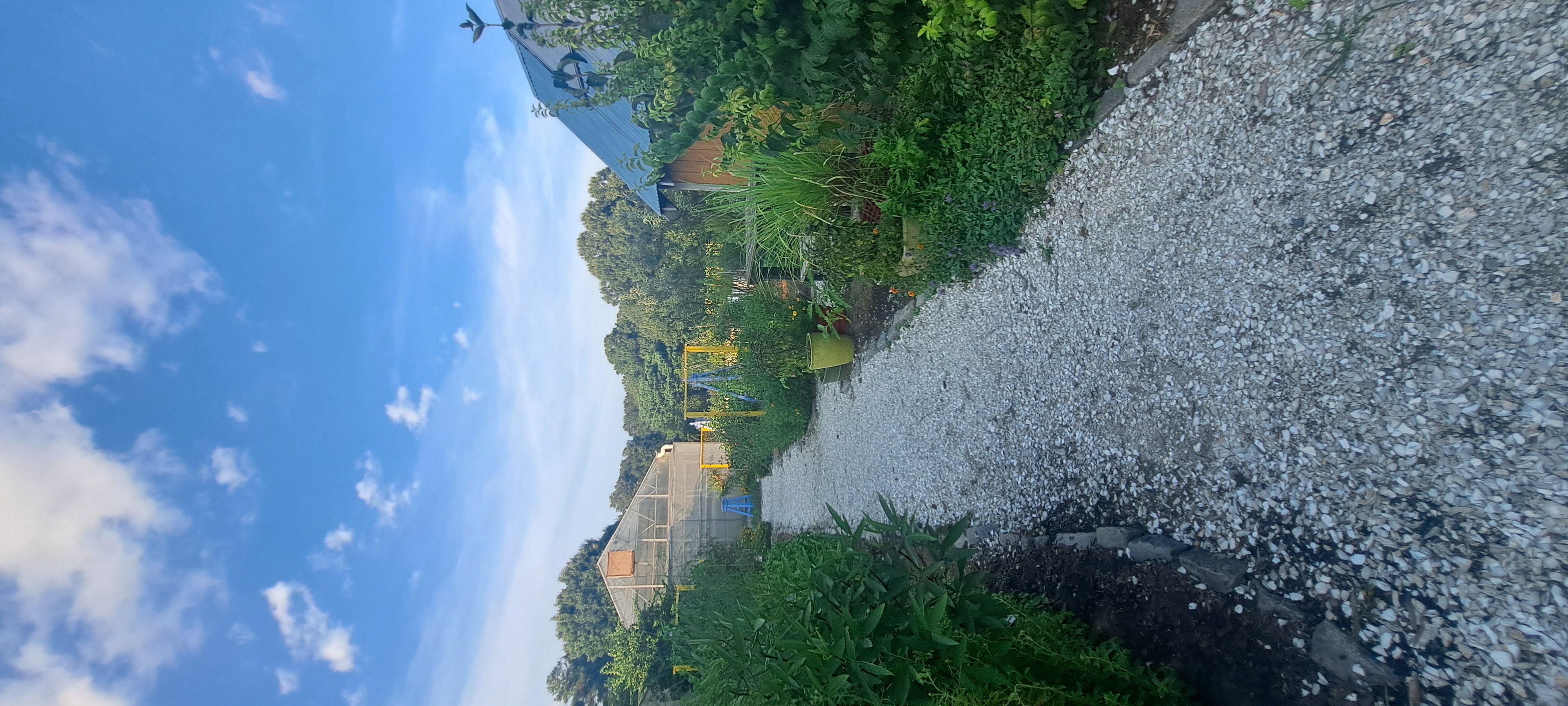
It was just beautiful to see a really beautiful edible landscape there. I appreciated that they were also employing rain barrels, adjacent to Pomegranates (Punica granatum) loaded with fruit!
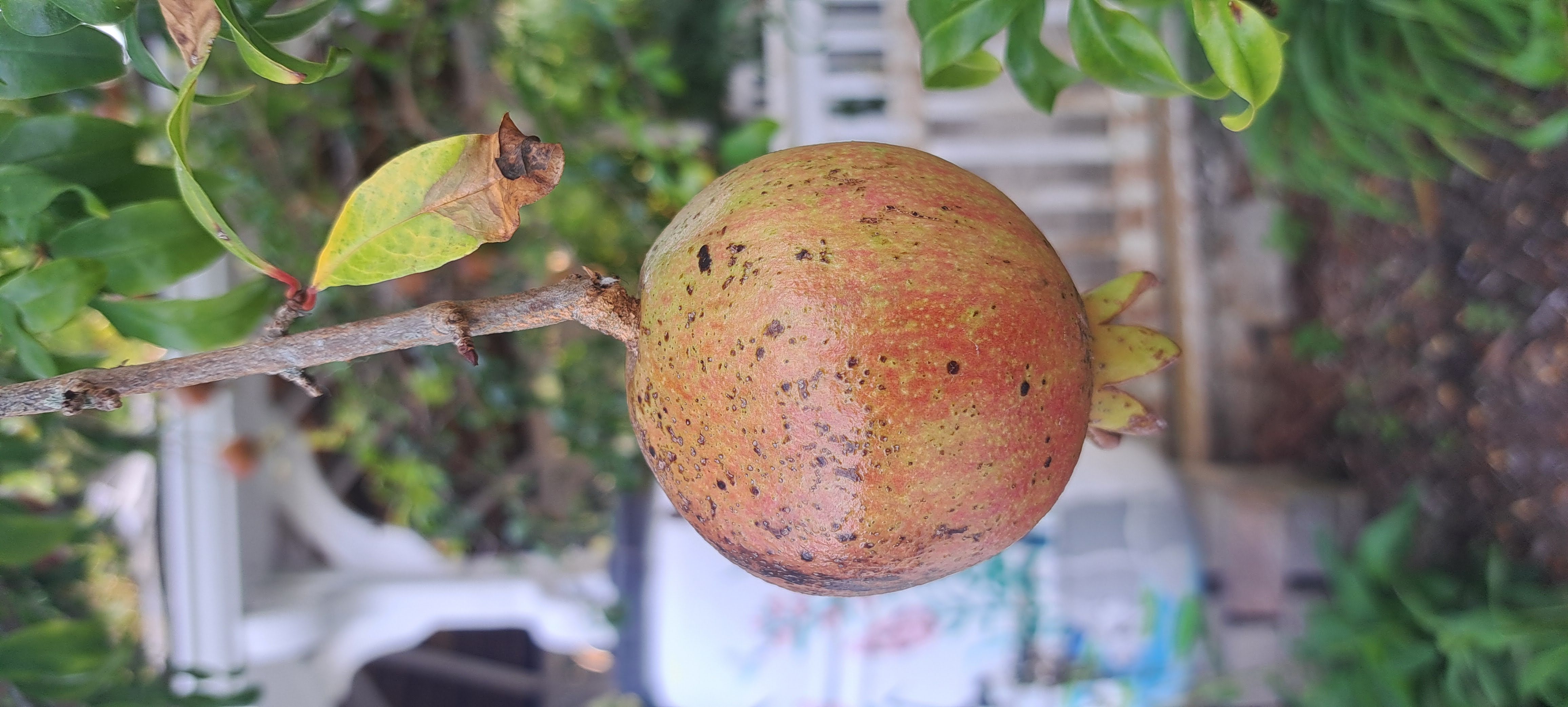
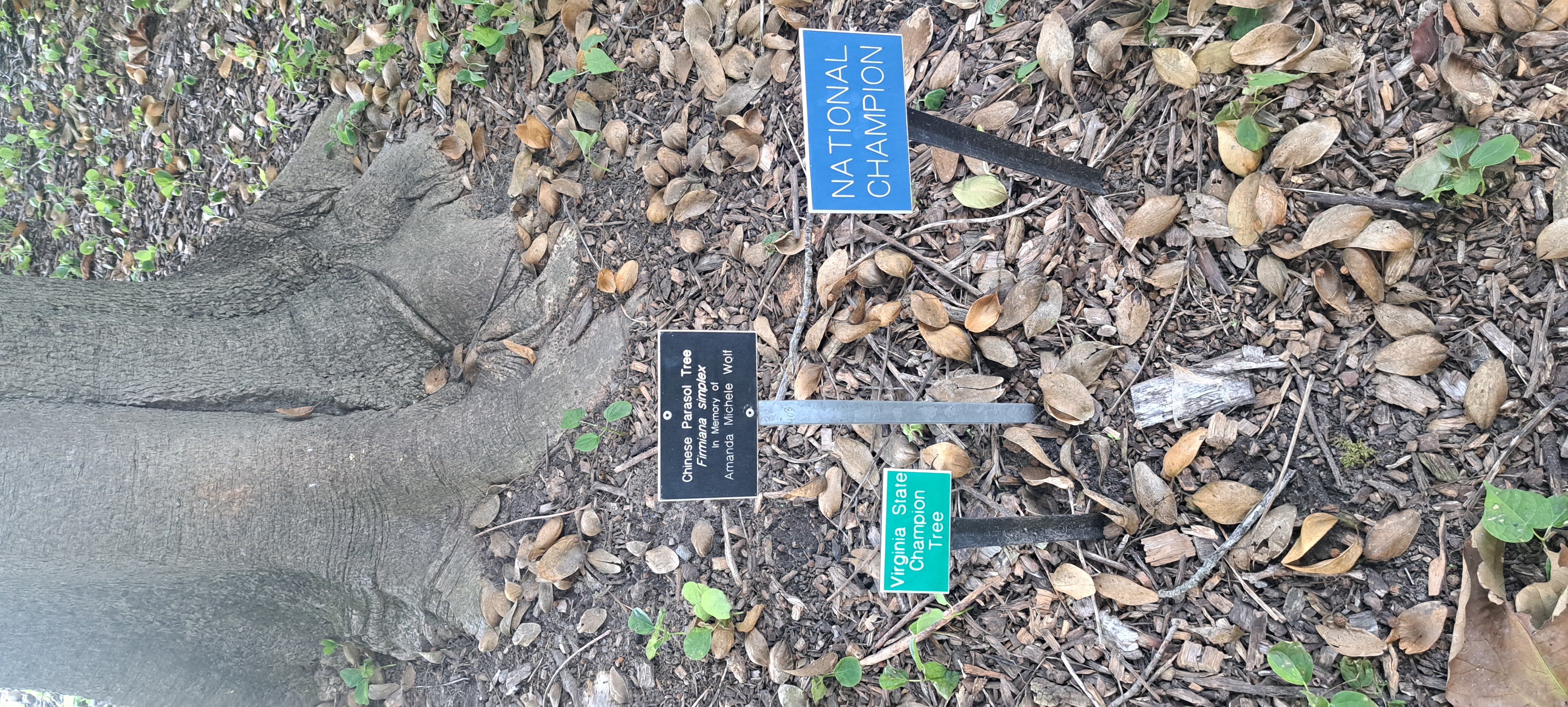
The labeling on almost all of the plants was clear and well-done. If you had any questions, of course you could take a picture of it, and look it up on your phone. But for people that don’t have plant ID apps handy, or don’t want to have to keep referring to their phone, I feel like they’ve done a really good job labeling things.
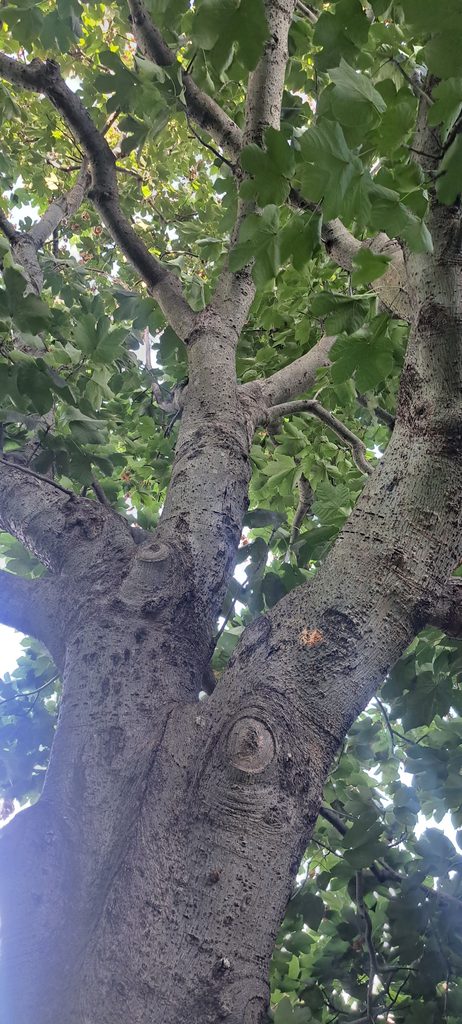
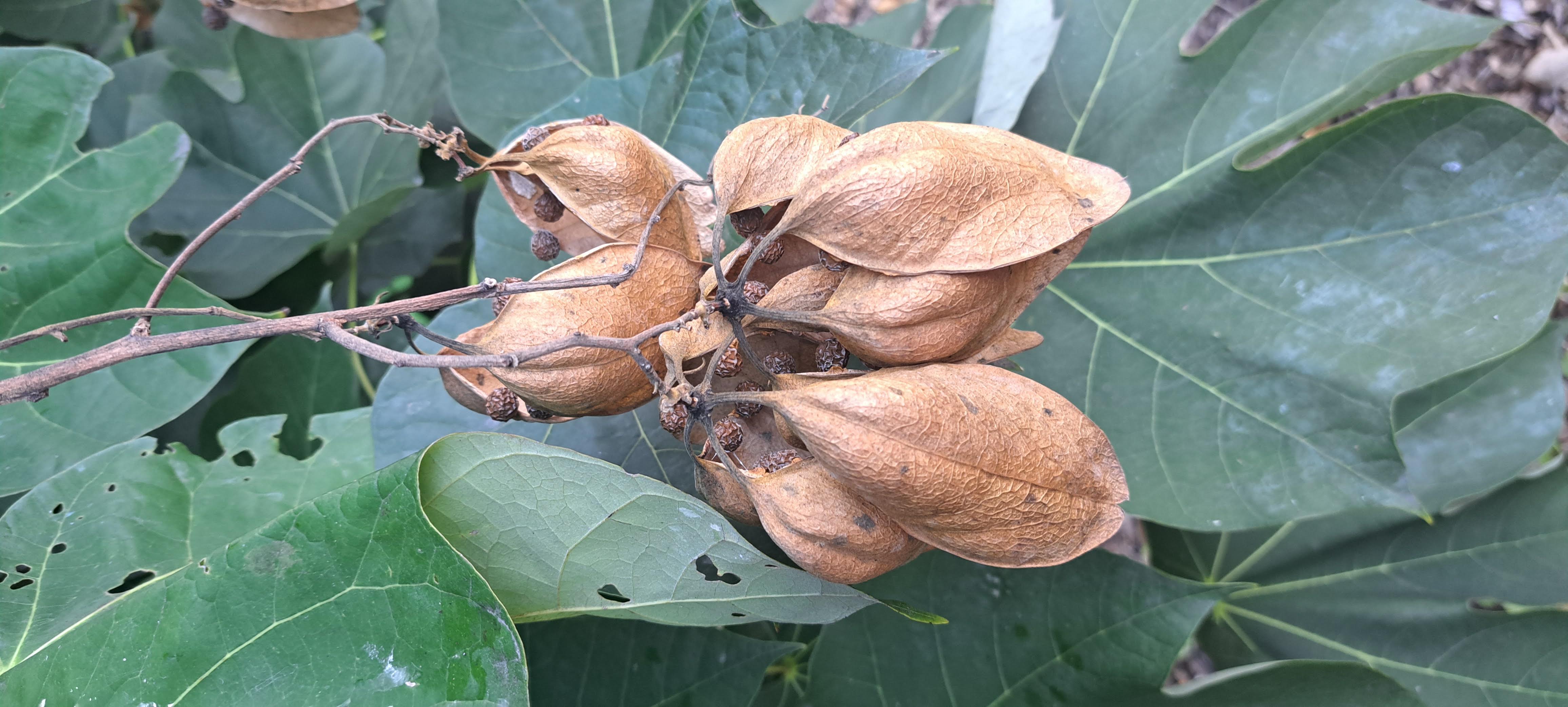
There are quite a few notable trees here. I was delighted to see the national champion Chinese parasol tree. That was really cool. It’s a beautiful tree.
Not for Kids only
That takes me to the Children’s gardens.
I think I’m becoming a children’s garden junkie. Just like elementary schools are so much more colorful than middle or high school buildings ever are, children’s gardens evoke more joy than most other public spaces .
It’s not that the other gardens at Norfolk Botanical don’t inspire wonder. But aside from the butterflies, the other places are just, you know, comparatively understated. You can hear this garden before you see it: laughter, water, more joy.
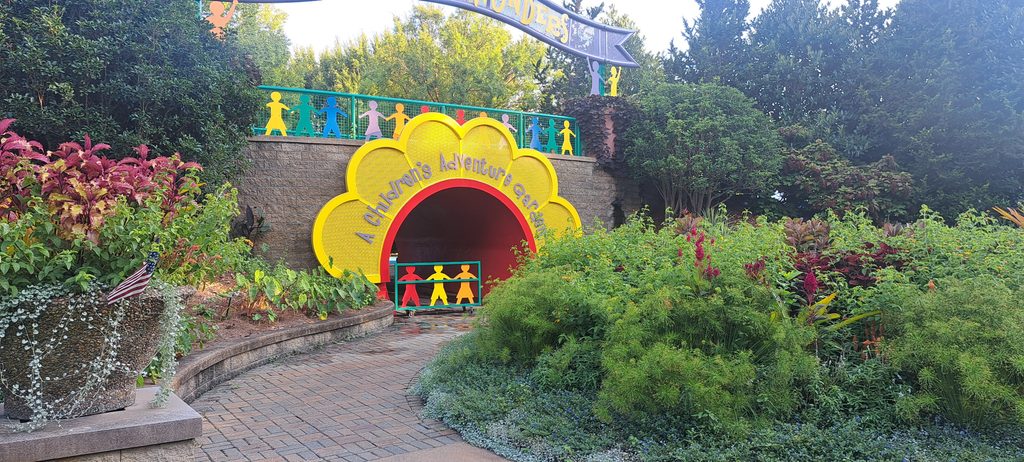
Somewhere under the rainbow
But the Children’s Gardens have several entrances that are brightly painted and marked. There are mosaics, metal garden-in a pired sculptures, many swings. There are all kinds of ways to include children of all ages. There’s a huge sundial. This place is how to inspire your kids to garden.

Take them to Norfolk Botanical Gardens and let them run amok. There are banana trees, many kinds of tactile plants, and water options. There’s a fountain that several people clearly visited to whilst away the summer day. It made me happy, seeing young ones (and young-at-heart) jump around with siblings and friends in swimsuits, before summer faded away.
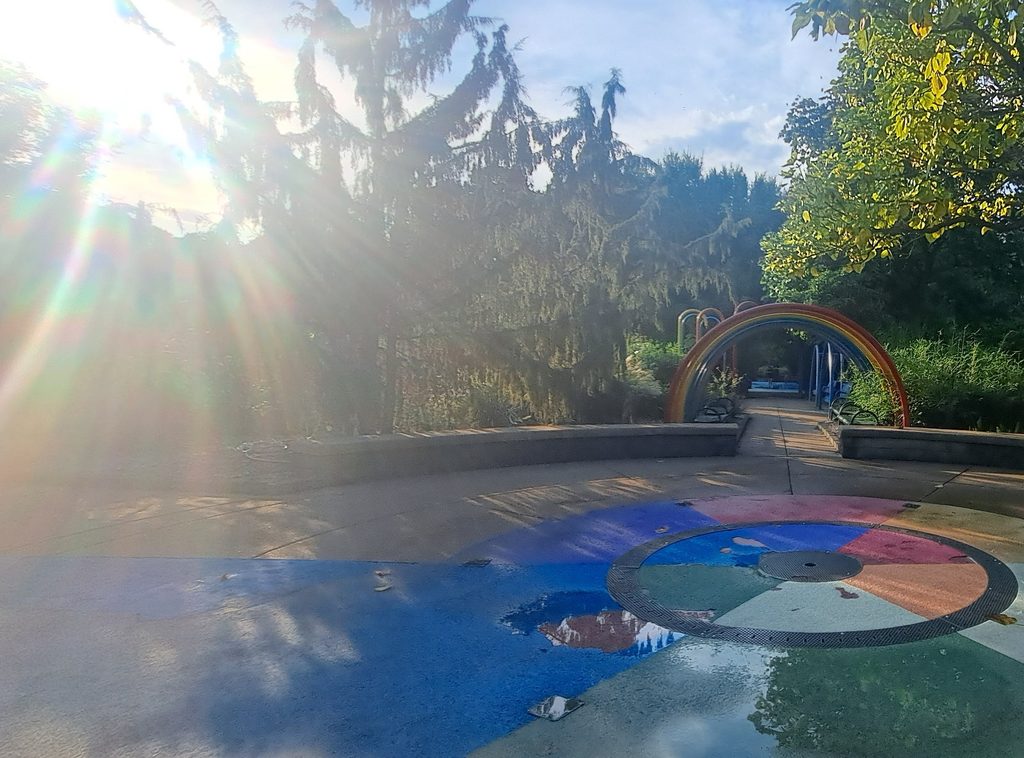
You could tell people had come just for that, and they probably had a membership so they could enjoy being in the gardens with their kids, which is great.
It reminded me of my childhood when the garden was not quite as elaborate. You know: hop, skip and jump, go feed the ducks, then we’d walk around the gardens. I did this many different times, many moons ago.
Design of Delight
Rainbow colored archways, trellises, dragonfly benches, different textures of plants. I found myself asking “what did the designers of this garden forget?” Not anything I could think of!
There’s little they left out, truly. A Farmyard exhibit without actual farm animals, but that’s fine, because there’s all kinds of cool sculptures.
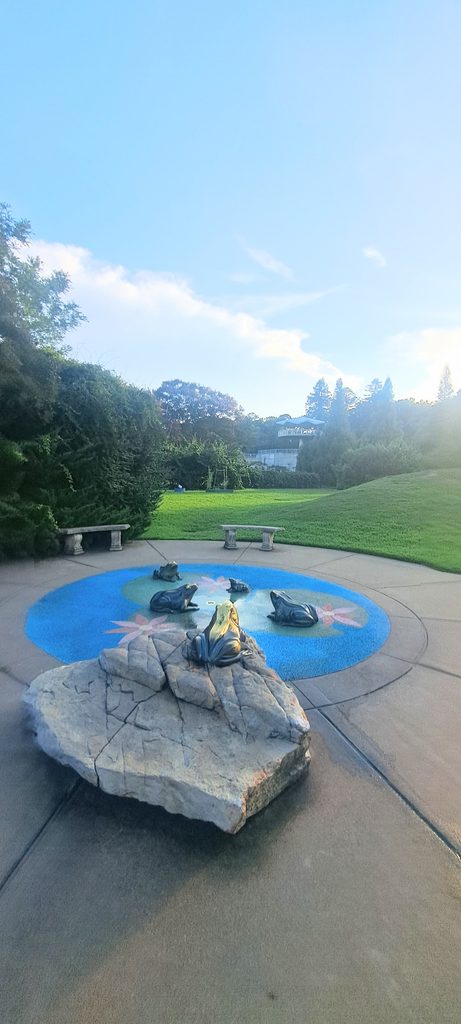
There’s a big frog lily pad sculpture that I thought was adorable, which serves as either a great welcome to the children’s garden, or an equally fantastic send-off.
The iconic NATO tower
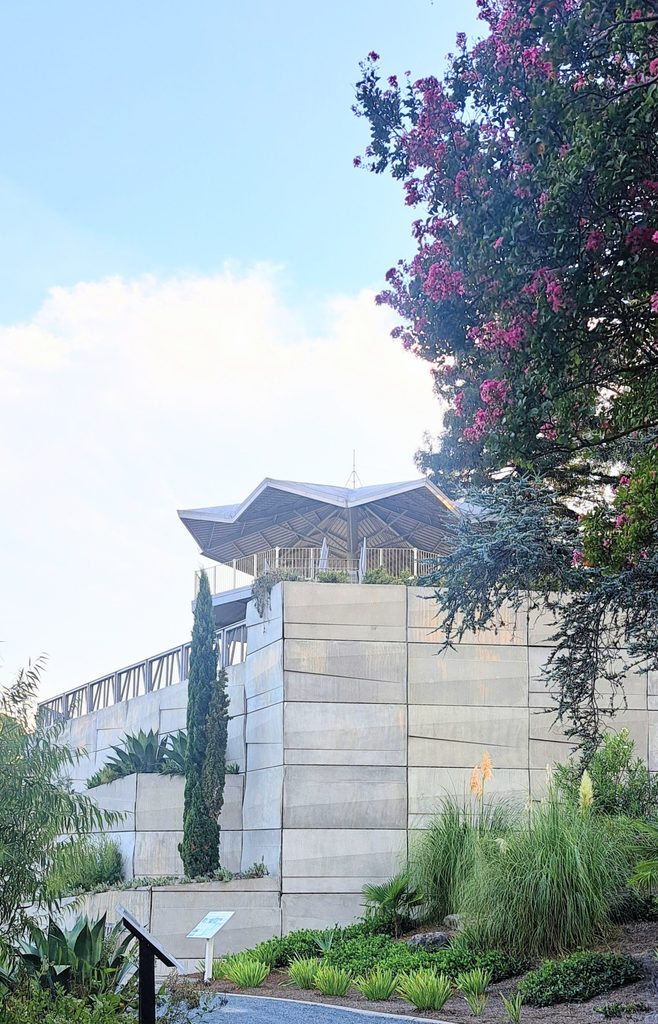
Finally, we come to the NATO Tower. This place truly looms large in my earliest memories.
Built back when the place was called “Azalea gardens” and hosted a very big affair called the Azalea festival. This is where a daughter of one dignitary or another would be crowned as “Azalea Queen”.
Like I already mentioned, I’d consider a membership if I lived nearby. Arriving at the NATO tower is the end of my day, but it’s been no means exhaustive. There’s so much to see! I took my time, but felt like staying, looking and observing things for much longer.
Re-engineering a popular local landmark
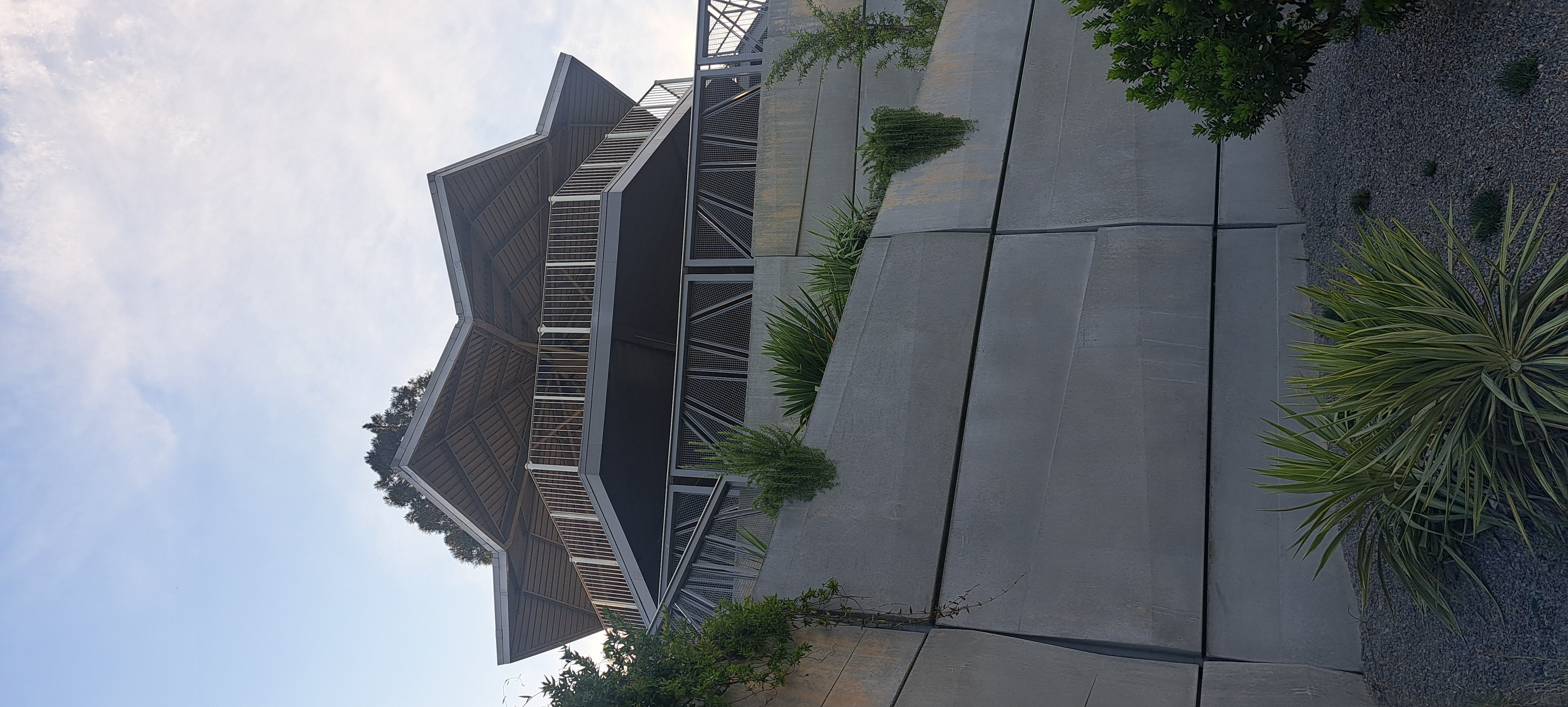
The tower has been redone in the recent past. On the path up to the tower, there is a wonderful sign of the process of how they shored up the land around the tower and used the new addition of materials and introduced microclimate to redesign the plantings around it.
Opportunistic landscape renovation
It’s definitely adorned with more plants than when I was growing up. Quite honestly, I don’t remember what all the plants were there in the 1970s. Cactus, Weeping willows, Azaleas and Crepe Myrtles? Because I was five, I didn’t pay attention to plants like I do now.
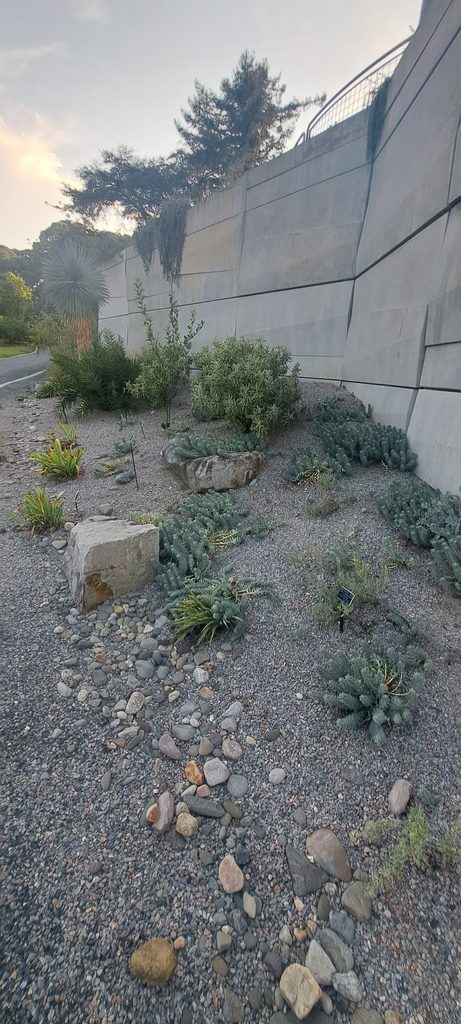
The amount of care and landscaping around the tower is phenomenal. Shoring up the bunker created a very concrete-heavy area, which can be arid and dry. The way they used the new microclimate was inspiring for someone who lives nearby, or a visitor from California.
They chose to incorporate a lot of succulents and cacti and things that grow in high heat sink area similar to concrete. The interpretive signs are well done.
Three cheers for Chinampas!
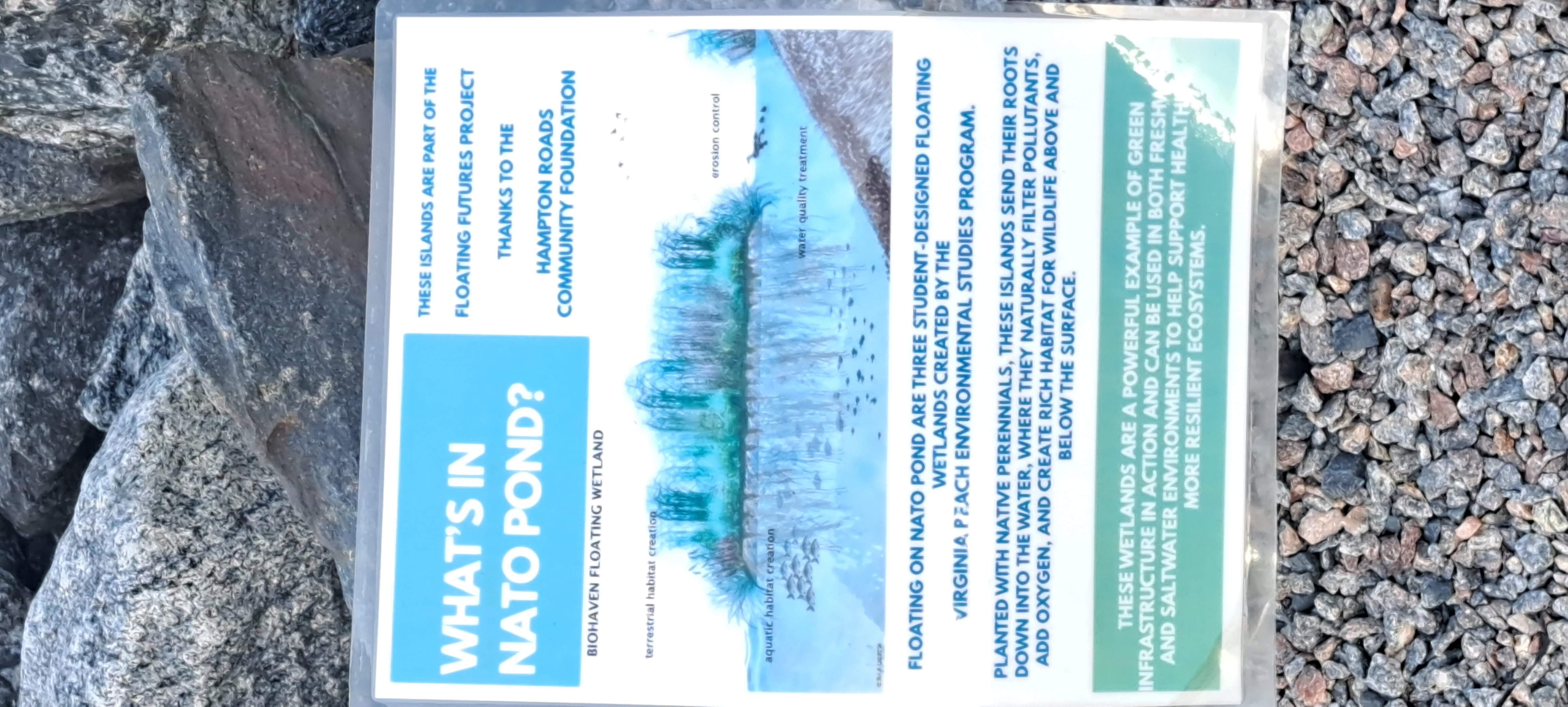
I appreciated the NATO Pond’s chinampas. ‘Chinampas” are just another word for floating gardens. I’ve added the sign here so that you can read about it. However, I encourage you to visit in person, because they are just really cool! It’s an interesting way to garden, especially if you have a nearby pond, or would like to create one.
Bye-bye, Botanical gardens!

All in all, a wonderful walk around the (plant) world in Norfolk, Virginia
I didn’t go all the way up in the NATO Tower because a raven rested on the ramp up. It was beautiful, and I didn’t want to disturb it.
Also, yeah… I’m a little afraid of heights. I didn’t have anyone to cajole me into walking up the tower. So, I just enjoyed a wonderful walk around the (plant) world in Norfolk, Viriginia: the grounds, the signs, and the lingering light of a late afternoon well-spent.