What you need to be doing in July in your Virginia garden
Please be aware that if you purchase from some of the links on Virginia is for Gardeners, we may receive a small percentage of that sale. Your cost will be the same, regardless! Thanks for reading:)
Wet & Wild
Hello and welcome to July in your Virginia Garden!
First up. The most important thing to do this month is pay attention to your watering. It’s really important. Especially if you’re still establishing new plants and trees planted in the spring
In July and August, you’re trying to make sure those vegetables you tended and planted can make it through to harvest. You’re going to water deeply at first and try to let the soil dry out in between those waterings, so that they will establish strong roots.
The best time to give your plants a drink is early in the morning (before eight a.m., preferably) OR after 8 p.m., so that water gets a chance to soak into the soil overnight. When I say “deeply”, I mean that you want to count to 15 when you’re watering trees and you want to go over your vegetables a couple times. (Even three times, especially if you’re not going to be able to water until later the next day. Or if you’re going out of town.)
Under cover
And you’re also going to mulch those plants if possible.
You can use grass clippings, you can use wood mulch if it’s around trees or straw. Consider getting a rain barrel or using your rinse water (aka “greywater”) from your dishes as long as it’s not really oily.
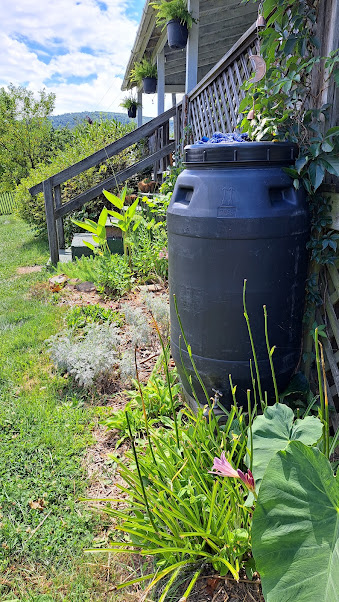
Using rain or greywater serves two purposes: It puts less strain on your own water system if you have a well or the city system. It’ll cost you less money. Also, the water will have nutrients in there that aren’t in typical city or well water that are in rainwater and rinse water.
Seed time! (Again)
You’re going to buy or order your fall seeds.
See my link for my favorite Virginia seed sources. You’re going to harvest your garlic and onions that you planted last October and November. You’re going to buy any needed tools for the fall or next year, because they’ll probably be on sale. You’re also going to add compost or fertilize your heavy feeders. (I prefer compost).
And if you don’t have a lot of compost, you can make compost tea. Compost tea is basically fermented. Compost with water added and you let it sit for a couple days.
It’s the simplest way to put it and then pour a little bit on each plant. And repeat in a few weeks. If it’s a heavy feeder. Or Harvest. all the stuff that you have that grew well, because you added compost!
Sow-sow, you know
You’re going to replant lettuce seeds every week. Red lettuce tends to do best in July. It does better with the summer heat.
You’re going to replant corn down in Hampton Roads. You can have three separate crops of corn if seed is planted in April. June, and then August.
If we have a long season, and no early frost up in the Piedmont and closer toward the mountains, you can still get more seeds in; just plant in an area that gets a fair amount of moisture and water.
What else, what else?
Summer and winter squash and beans (both bush and vine) can be planted by seed directly in the soil. Sweet potato can be planted by “slips” (similar to the shoots that come out of potato eyes), and it is not too late to plant pepper, tomato and eggplant plants in the ground.
You can also plant cucurbits this time of year. (Cucurbits are melons, squash, zucchini and cucumber). In my gardens at UVA and at home, there’s heavy pest pressure, especially from groundhogs. So, you’re probably going to want to spray those new seedlings with something that repels plant pests. Putrefied egg-based sprays like Plantskyyd are organic, but they DO smell horrible.
Just make sure that you are not downwind of these putrefied egg solutions when you spray! Also, you can plant okra. Okra is beautiful, it’s edible. It makes a good cut flower, too. It’s in the hibiscus family which becomes clear, once you see it flowering. It is a really beautiful, and bountiful vegetable!
So, time to sow:
- beans
- corn
- cucumber
- eggplant
- lettuce
- melons
- okra
- pepper
- squash
- sweet pepper
- tomato
Time to cash in
Harvest your herbs regularly. Even if you don’t use them now, you will appreciate having mint tea in the winter, or other medicinal herbs. Your time spent now gathering thyme and oregano is a good investment into the near-future.
Oregano is better fresh, as is cilantro, which probably will have bolted by now, unless you planted it in a place with winter sun and summer shade. But don’t neglect harvesting your herbs regularly, because herbs are generous. They grow more when they are cut.
So for abundance, Harvest them!
And if you’re not going to use all of them, you can always give some to friends or make herbal vinegars as a treat for yourself and for gifts at Thanksgiving or Christmas.
If you celebrate those holidays, you can also mulch your more vulnerable plants with the herbs that you cut to help them deter pets. Culinary herbs have really great smells… to us. BUT, if you’re a groundhog or a rat or even deer, you probably don’t like the smell of oregano or thyme.
So, use herb clippings as a light mulch around your plants. The smell will deter pests and you’ll have more vegetables. Also, use your grass clippings if you have a bagger on your mower, and as long as your grass is not treated with chemicals. It will help you conserve water, as does other mulch.
Something in the water
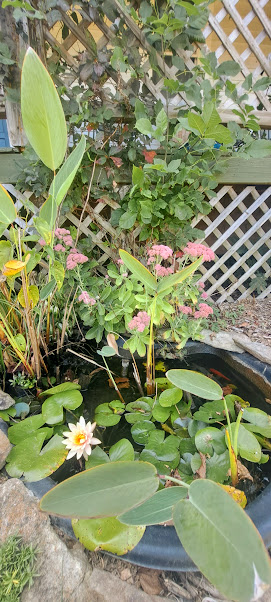
If you really, really want to install a garden, and you don’t know what vegetables to plant, you could build a pond.
It’s a fun summertime activity. Ponds are like one of the easiest gardens to deal with this time of year, because they don’t really require weeding, and you can just sit and look at them most of the time. Look at the fish, look at the plants.
Occasionally, you can harvest a little water from the pond and use it instead of your compost tea or fertilizer.
Pour the water on your plants and voila, you will have healthy, generous growth!
Okay, that’s July for me in the Virginia garden. From Hampton Roads all the way up to the mountains, Virginia is for gardeners!