Where are some great community gardens you can see in Virginia? I love gardens of all kinds. Public. Personal. Container. Greenhouse. Backyard. Farms. Orchards. You get the picture. But of all the gardens that I’ve seen, usually the most delightful ones overall tend to be community gardens.
Why are community gardens so wonderful?
The reason is multifaceted. There are usually so many different kinds of styles represented. Things are combined that never would usually exist from just one person’s vision.
There’s a unique kind of energy that goes into a community garden. The beds, the art, the decor and the plants? They usually are from hand-me-downs, discards, divisions, donations, and sometimes, even dumpsters. You can just see and feel the love when you walk into one.
Visiting community gardens all over Virginia
Throughout the past year, I’ve enjoyed visiting several kinds of community gardens. From the Atlantic coast to the Piedmont, the Blue Ridge to the Shenandoah Valley, I’ve seen about a dozen. Each have their own style. In Virginia Beach, Richmond, Charlottesville and Staunton, strangers become neighbors, and gardeners become friends in the garden. Cultivation creates community.
A special place in this gardener’s heart
Virginia Beach: the garden at the farmers market has a special place in my heart. The area was adjacent to my friend’s organic produce store at the time. I remember planting potatoes there with Michele Shean, owner of Virginia Garden (who saved the garden from closure in 1996, and who also started the garden there), my three kids, and her daughter Erica in March 1998? 1999?
Early spring, we set out red, white and blue seed potatoes that we planned to harvest on the 4th of July. Ever since, that time frame has been my rule of thumb for summer spud harvests.
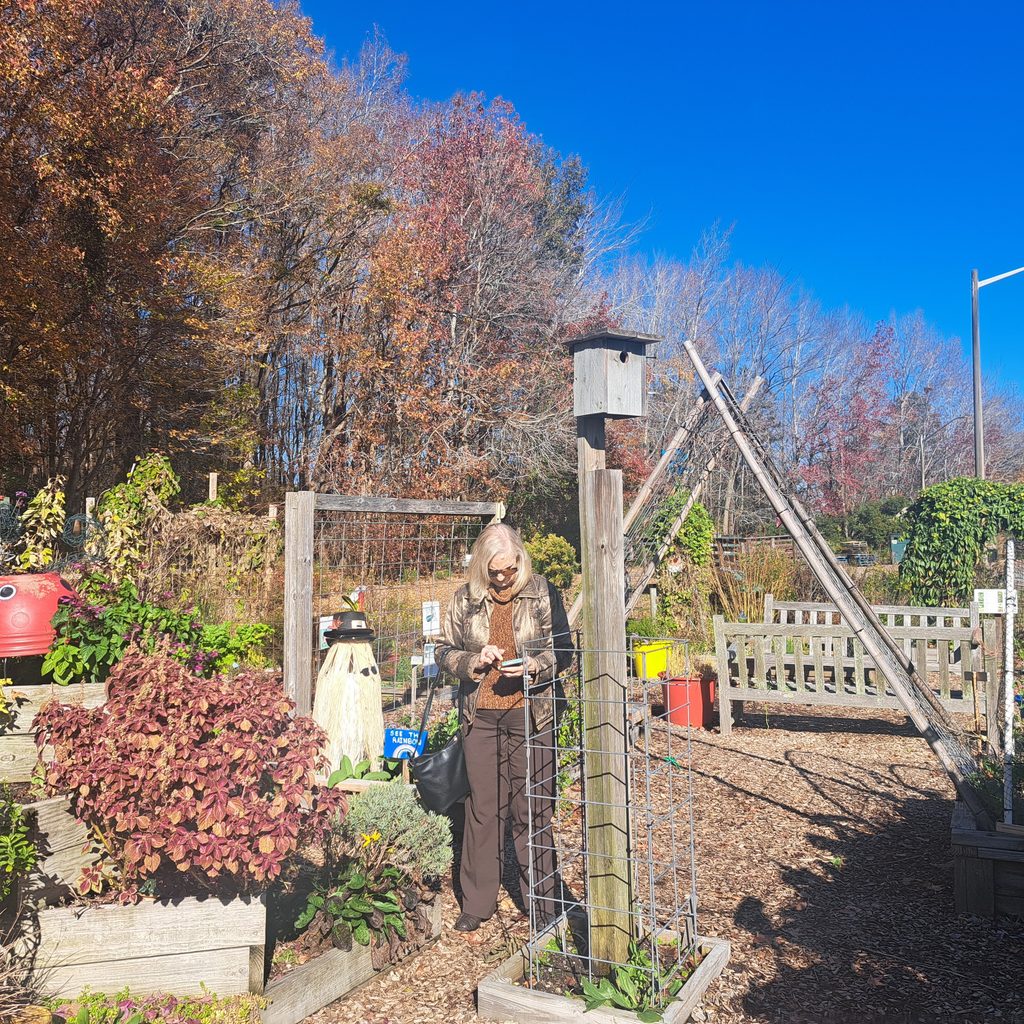
Imagine my surprise on a trip to see family last fall when I learned: that garden is still there. Almost 30 years later. And it is gorgeous.
According to signage there, its managed mostly by the Virginia Beach Master Gardeners. There are fruits, herbs vegetable gardens, trellises and a backdrop of tall pines. A garden growing food so close to the year-round Virginia Beach farmers market (where I used to thump watermelons with my Nana decades ago) is the perfect placement for a community garden.
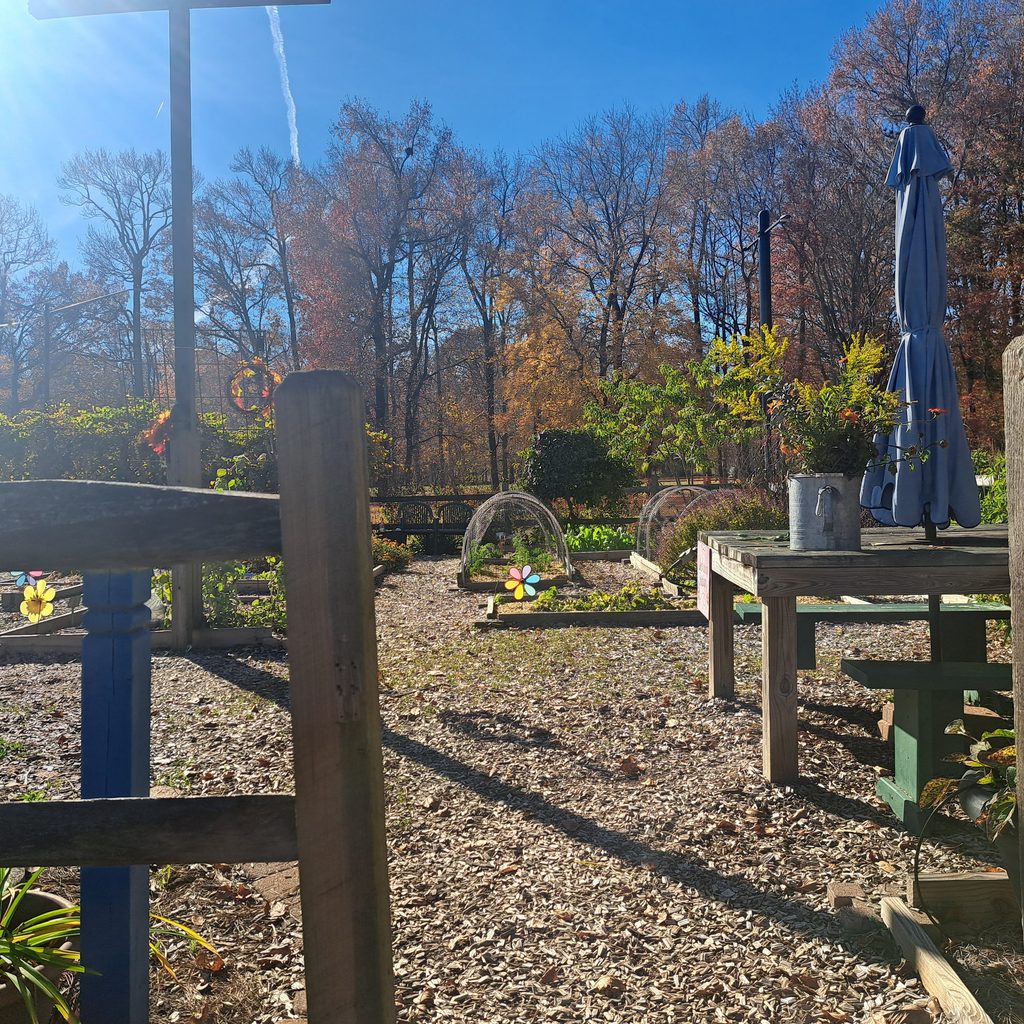
I know they hold classes for people of all ages there throughout the year, and there’s a whole element speficially for children, too. Gardens that have special areas designated for kids add another level of vibrancy to these community spaces.
Gardens for the youth
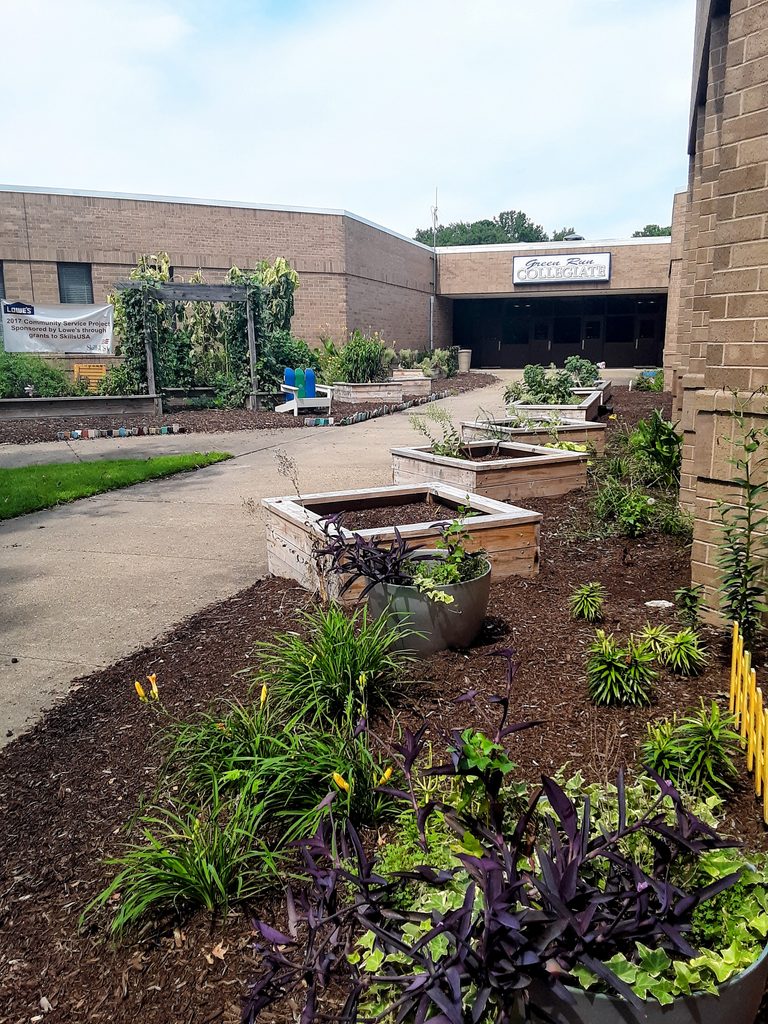
School planting beds are community gardens as well. I was thrilled to learn that Green Run High School, where I graduated some time last century also features a school garden! (As does Field Elementary in Canton Michigan, where I attended from grades 2-6)! Happy happy HAPPY DANCE!!!
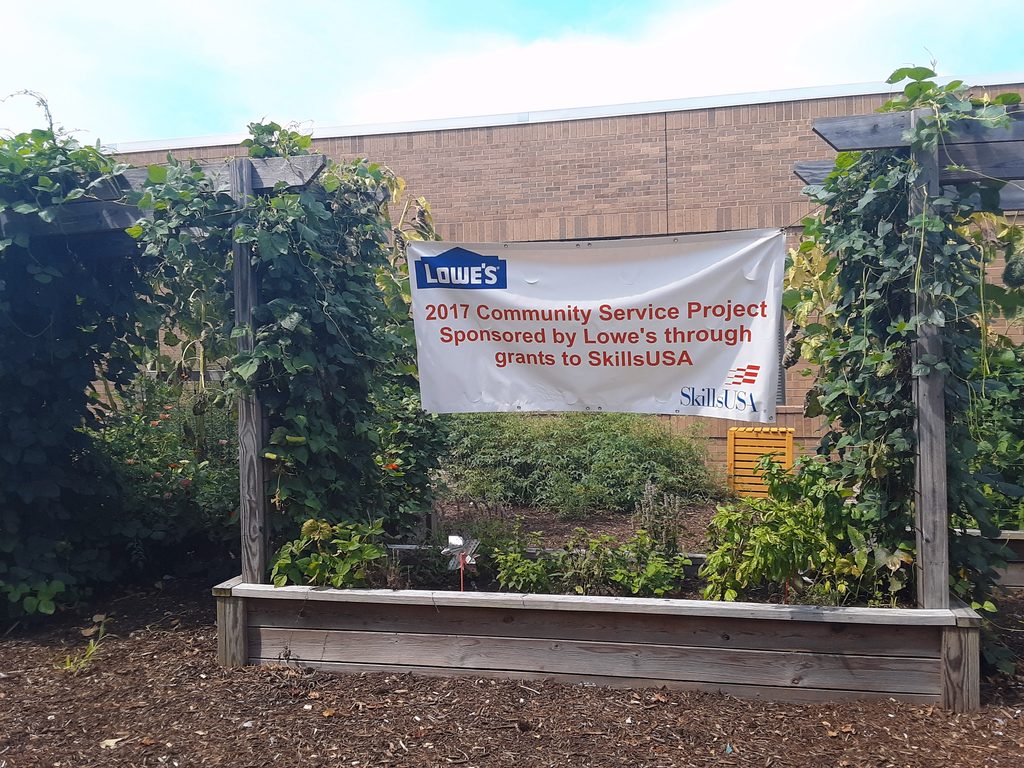
The beds at Green Run show that with some well-placed planting structures, you can turn an otherwise bland industrial-looking space into a welcoming, colorful and joyful place. Those beds were not there when I attended. I appreciate the sponsors (Lowe’s) that set them up with some raised beds and tools. Bravo!
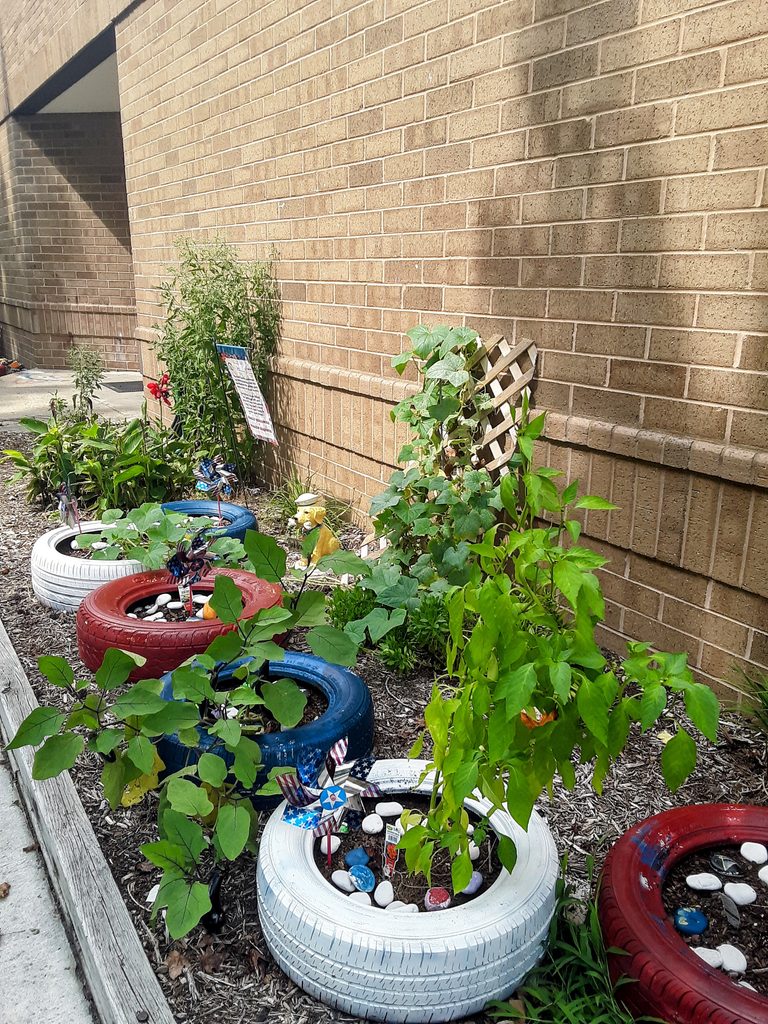
The garden flowers and vegetables growing in August when I visited both Virginia Beach and in Michigan really dressed up both places, and made me proud of my alma maters.
Fertile ground & tools
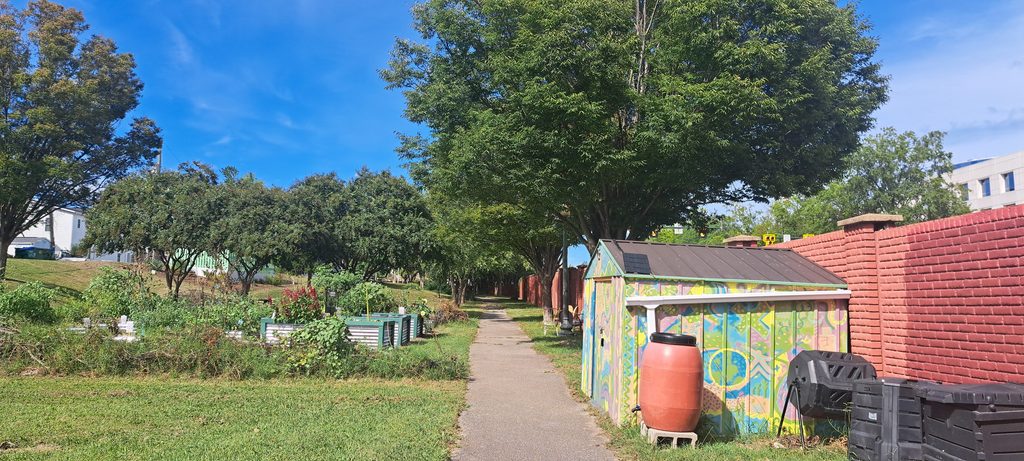
I visited four community gardens in Richmond recently. Though they were all located within just minutes from each other and shared many of the same elements that I appreciate in gardens, they all had wildly different vibes. That said, I realized, through my own work in community gardens, there are certain features that help make these kinds of spaces successful.
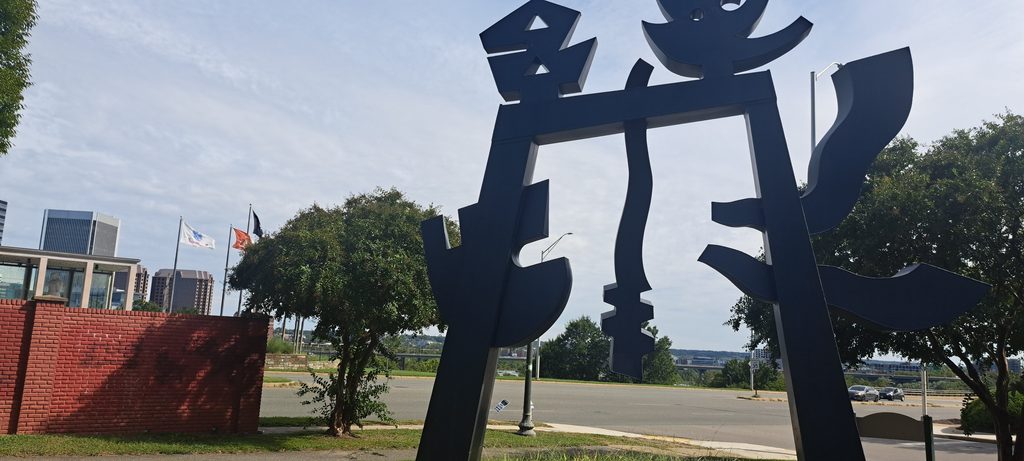
First and foremost, you need an entrance. It doesn’t have to be expensive, or grand. A sign, an arch, a trellis, a cute gate (or an imposing one). It needs to be something that lets you know you are entering a space set aside from regular life to do (in my opinion) some sacred gardening.
Other elements of a great community garden
But I’d like to take you on a journey of other things that I saw in several community gardens that I thought were elements of a beautiful community garden.
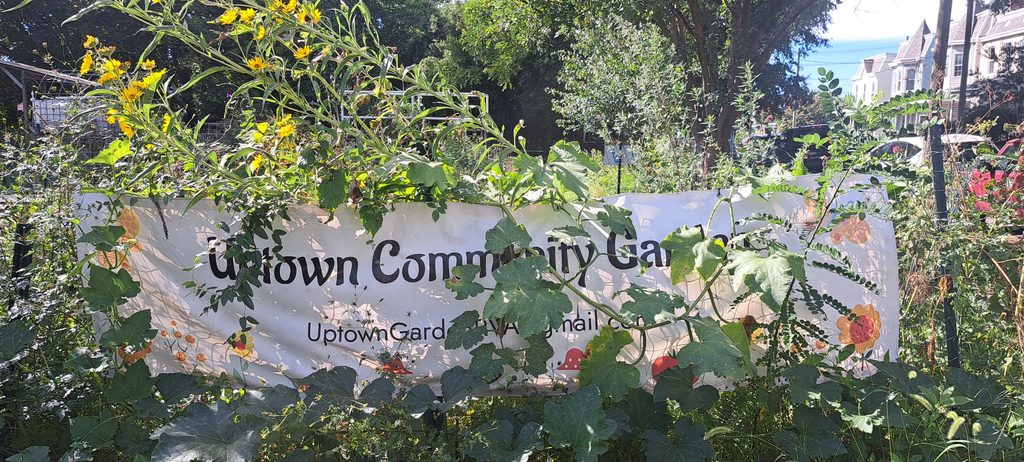
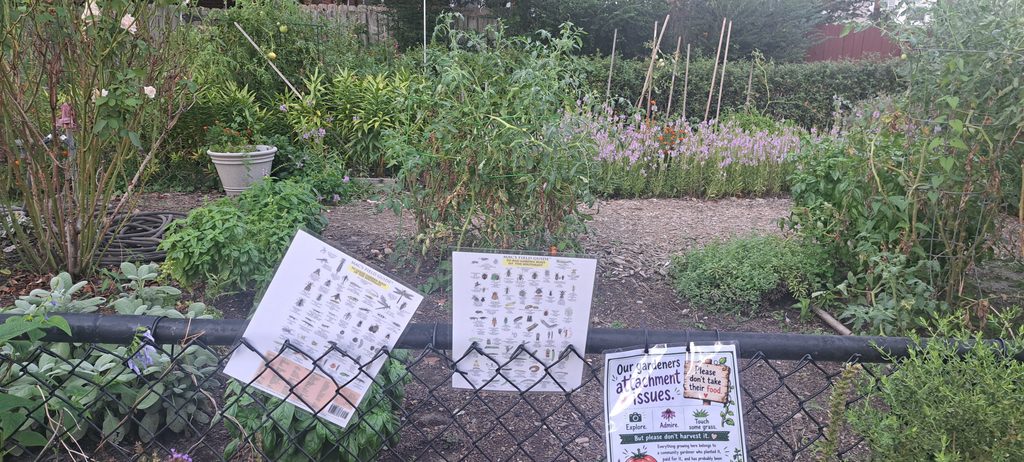
It helps to have signage so that people know what they’re looking at if they’re visiting or if they’re a new gardener and to keep the garden organized a place for seeds.
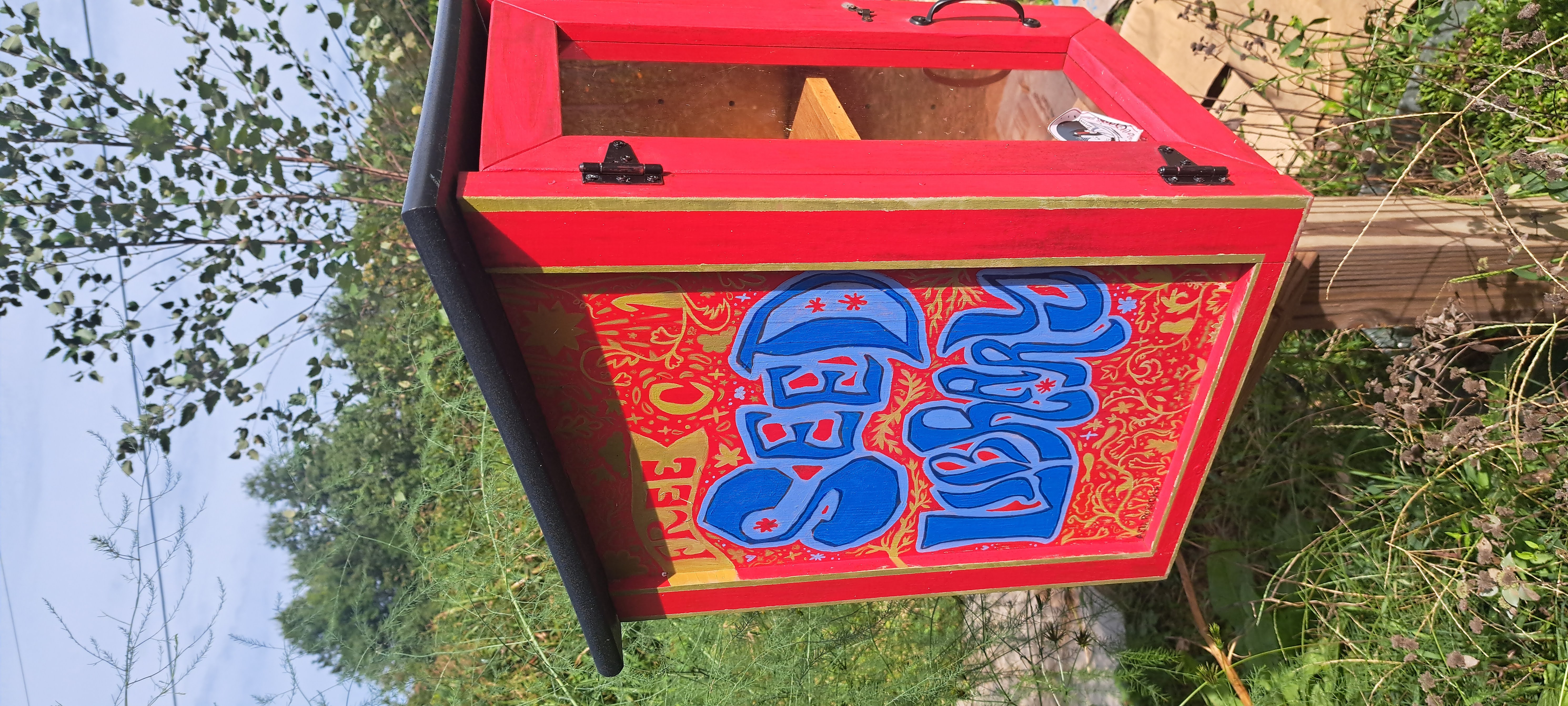
Several community gardens had seed libraries, which I thought was very sweet so that people could save seeds right on site or they could find something to plant that they hadn’t brought anything and visitors to the garden could take a souvenir home for free and maybe drop seeds off themselves. I love that addition.
Sometimes the seed libraries are the same thing that you see the little free libraries in and sometimes you see both.
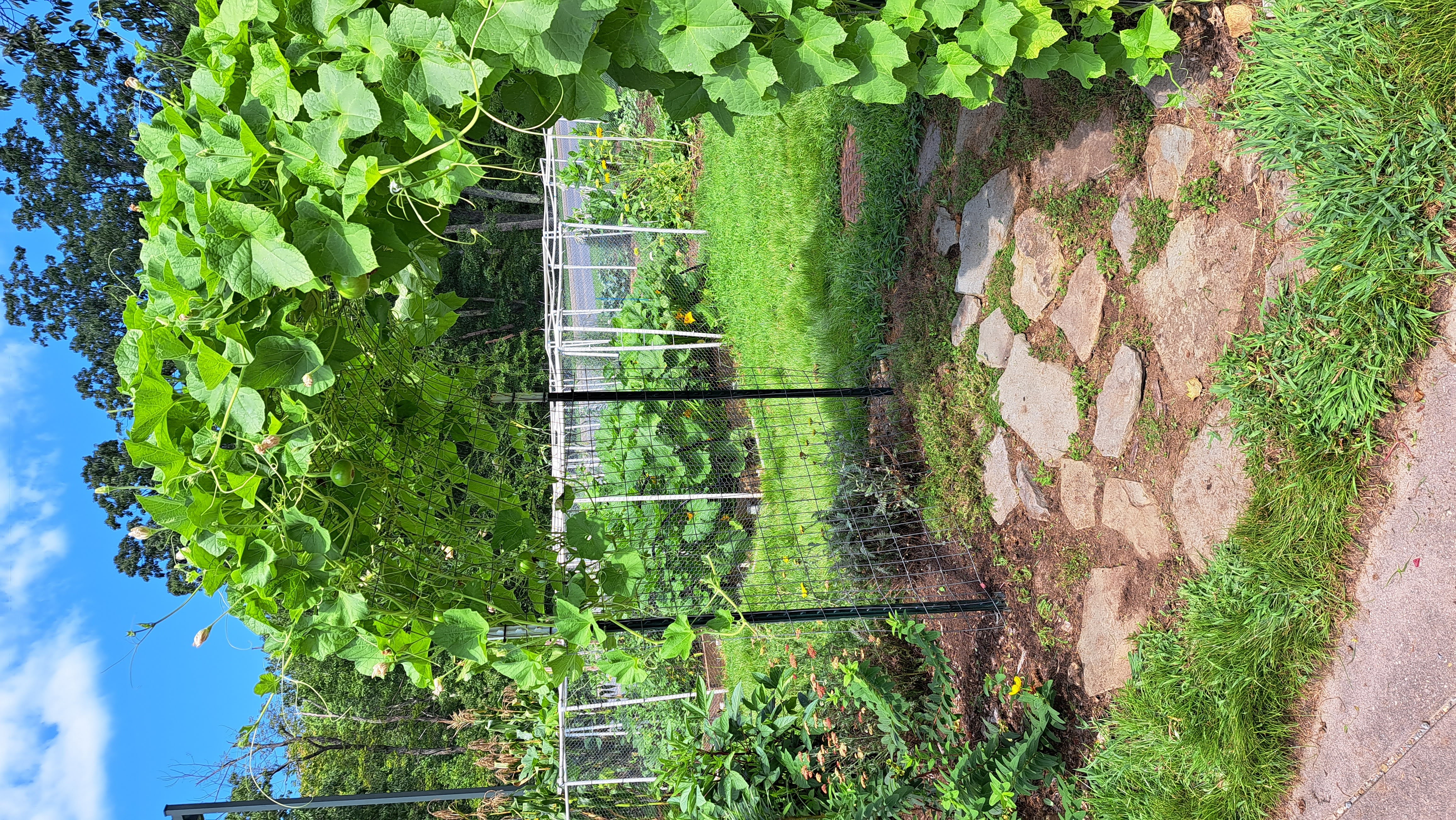
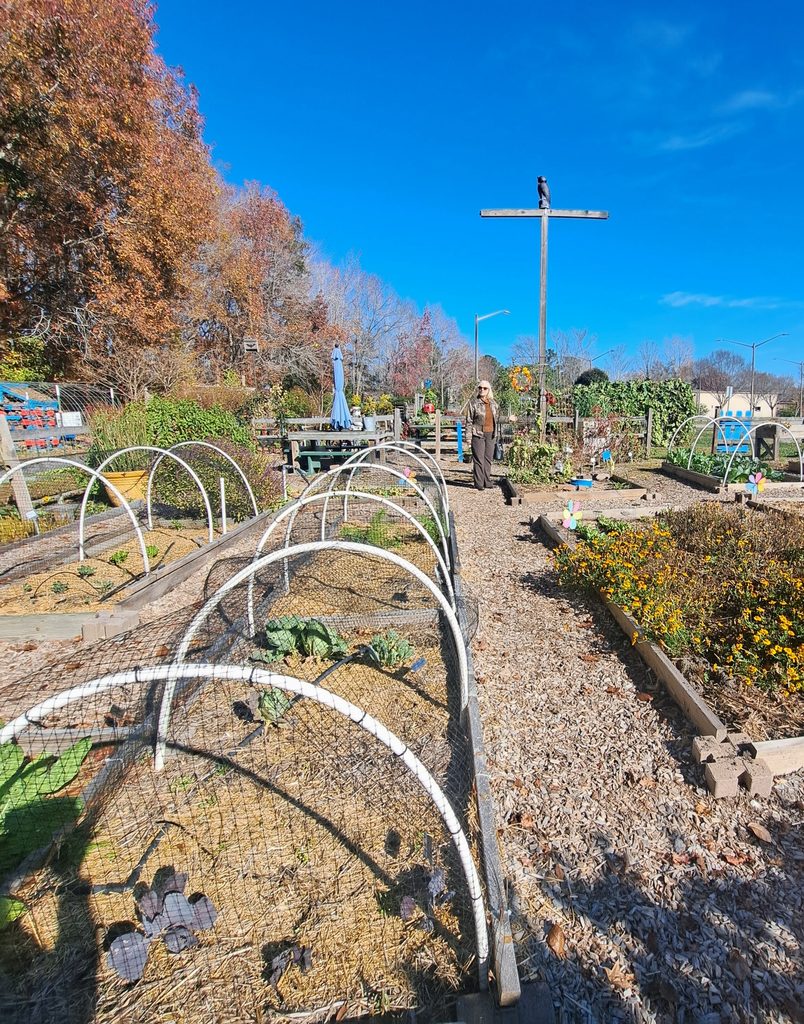
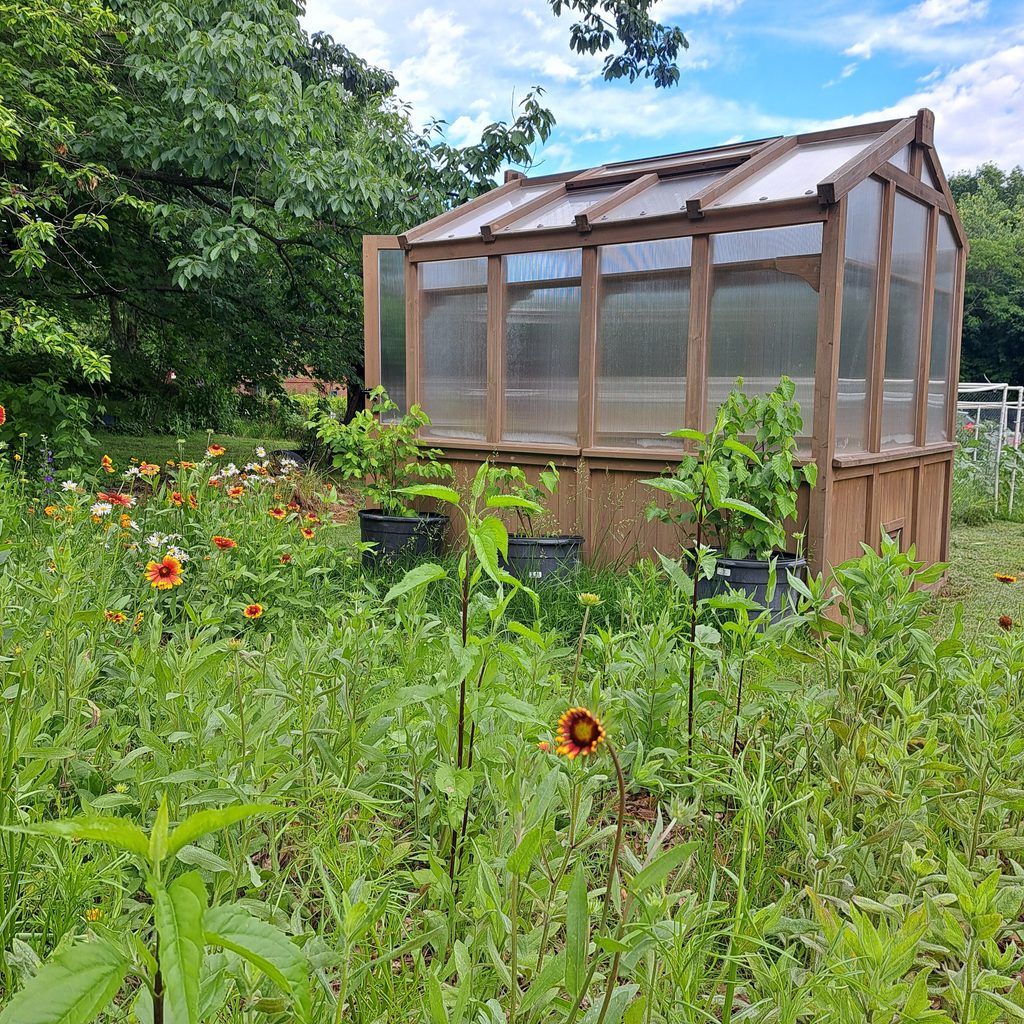
I’ve seen some gardens that have bean teepees, trellises and arches. Some of the luckier ones have greenhouses on site. And you see garden art. That’s really nice.
I like when there’s signs in more than one language. That is a beautiful touch, especially when signs are colorful murals. One of the gardens I went to was actually next to a skate park! That was really cool; it was near Maymont in Richmond.
Accessibility to various forms of recreation near a garden
It helps when a garden is near an area that a lot of people walk by, so they can see it and be inspired. Also, they can get to the garden easily, whether via driving and parking, or if it’s in a pedestrian area.
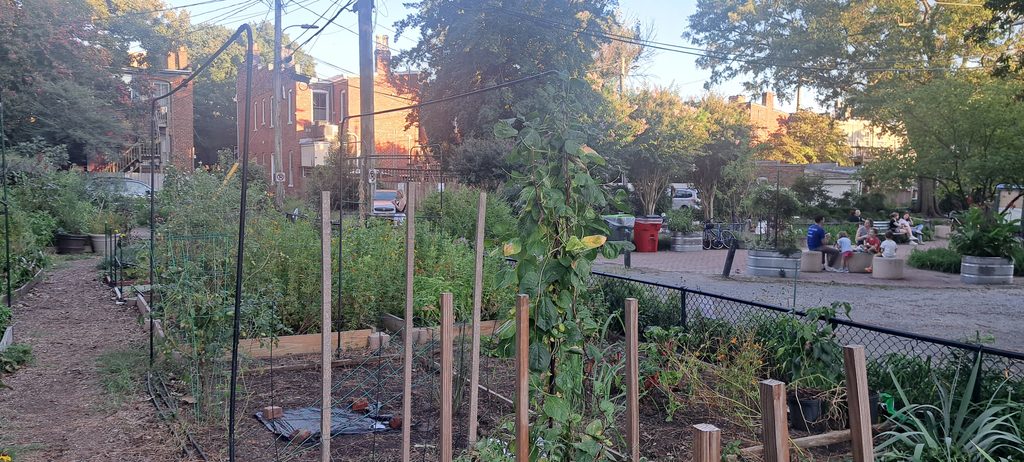
The garden above, near the popular ice cream shoppe Scoop in Richmond, Virginia, was beautiful. It was right next to a community park. So there were literally people across the street hanging out and of course coming over and hanging out in the garden, too. I loved that.
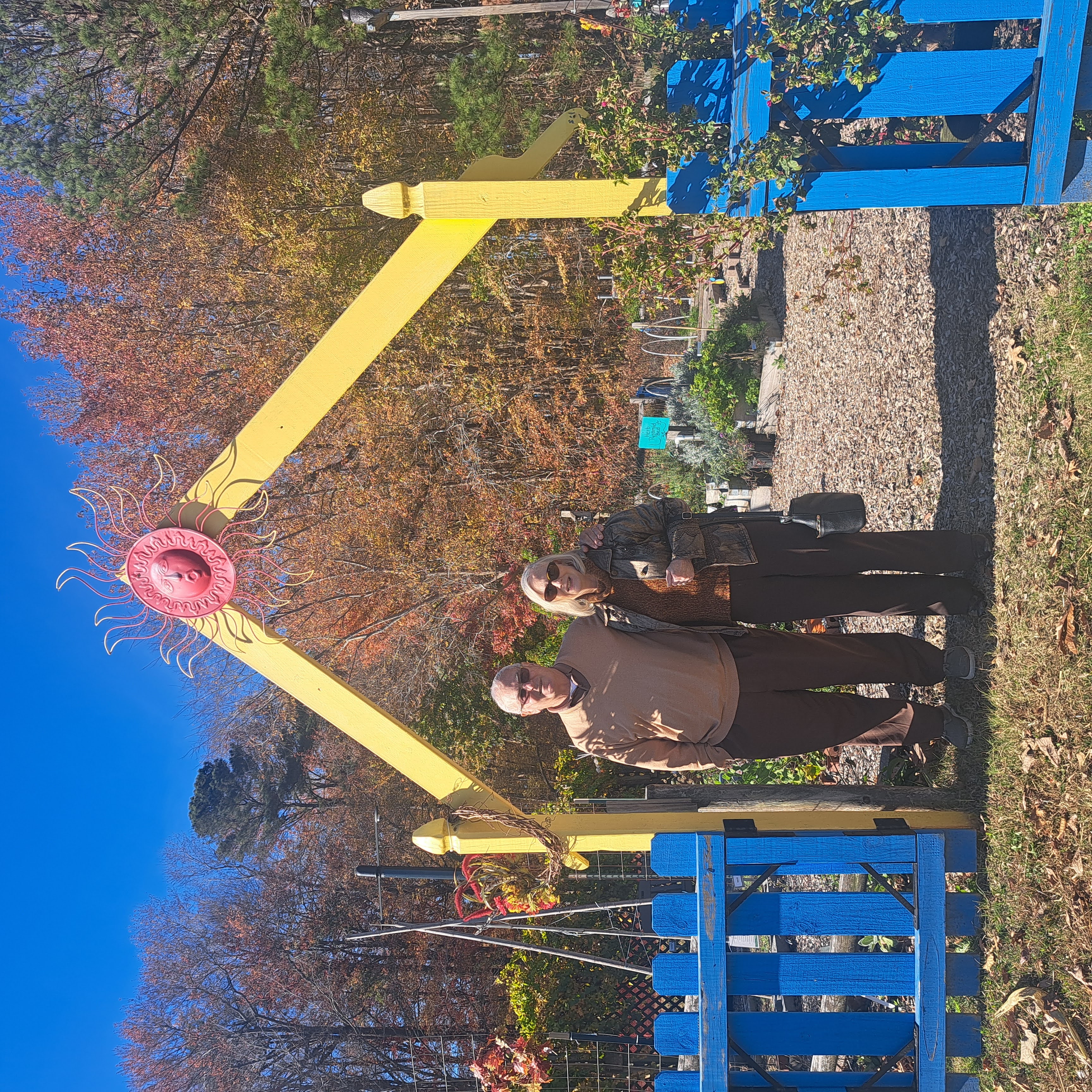
You want a gate that can shut, maybe not be lock, but at least close, so that you don’t get animals in and out if you bother to fence the garden.
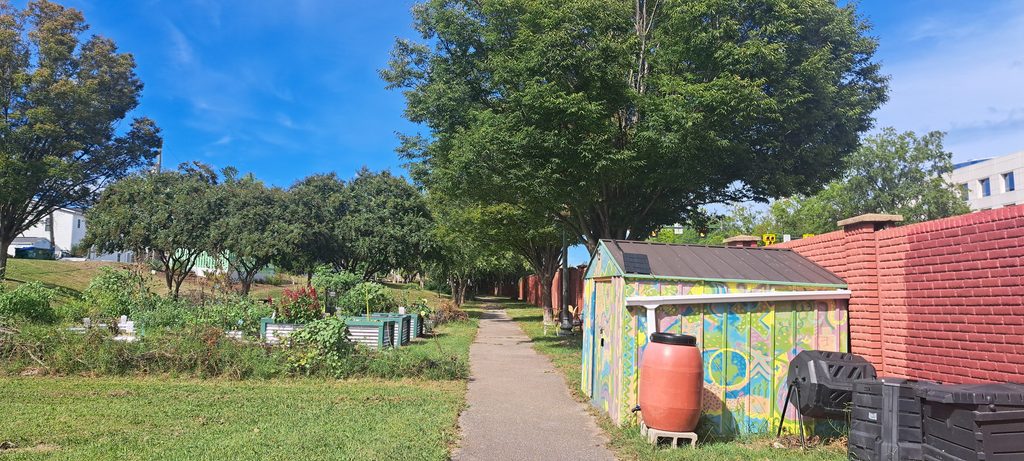
Have a place to store things that might be needed later in the season, whether it be potatoes, buds, garlic and onions to dry so that you can put them in the ground later.
Bales of straw can be kept undercover with a shed roof or tarps, so that you can mulch with them. It helps to have a great soil, either done by amending the soil starting off with good soil in an area that maybe floods sometimes but isn’t in danger of becoming ruined.
Or you might want to work with a local compost company. They might be able to donate some if you add put a call out or just out of the goodness of their heart.
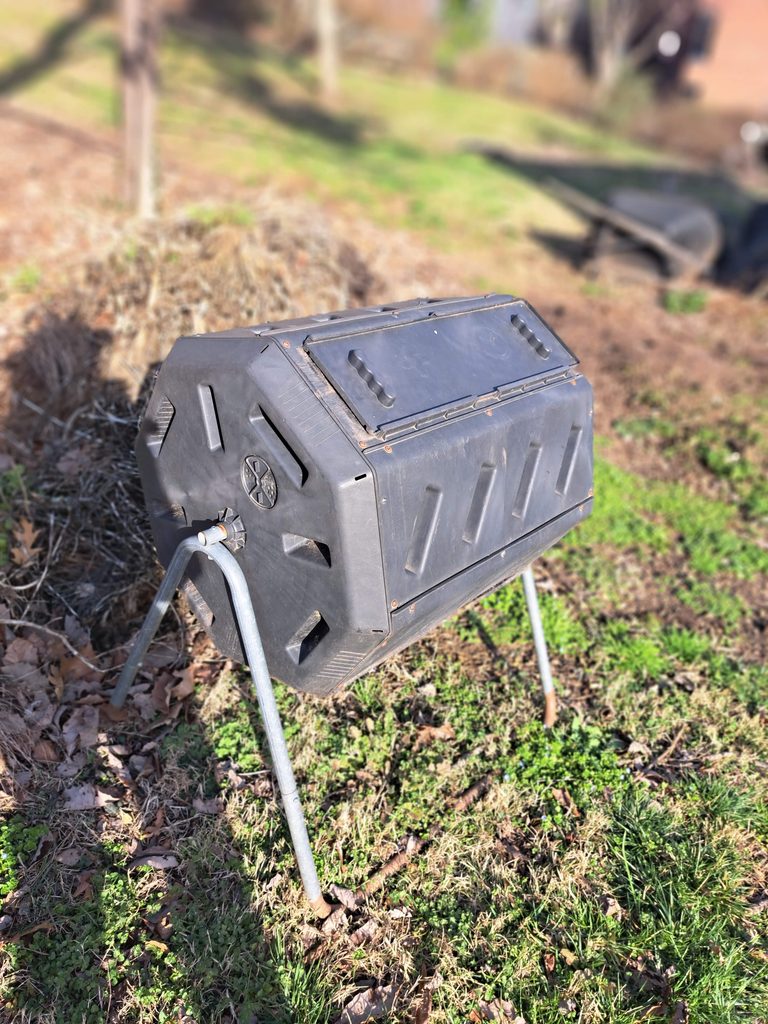
More things thqat are helpful in the garde? Compost turners. I think I mentioned this before.
But really, when you have an area that has a kid’s section, it really helps; you can bring your kids to work, and normalize gardening. It just adds the whimsy that is typically more present in community gardens, too.
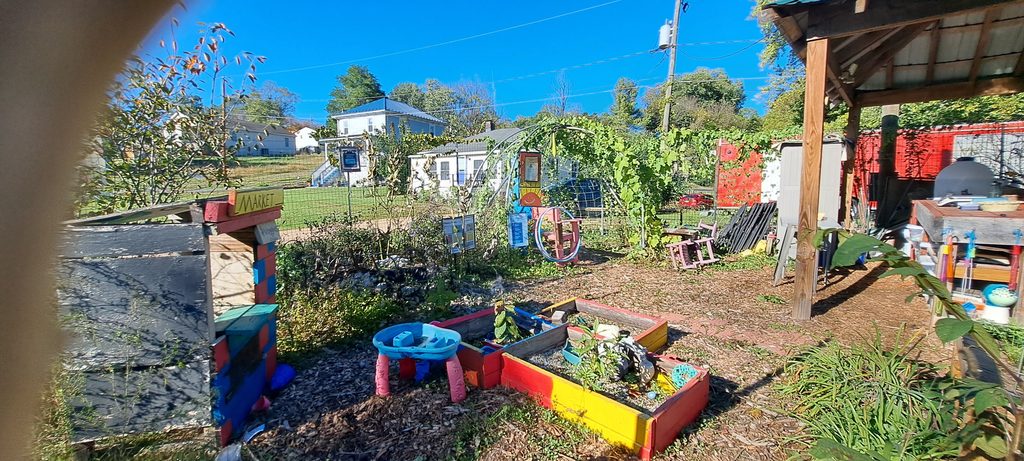
Reflecting
Seeing what the Virginia Beach Master Gardeners were doing with the community garden I worked in was so special. It was indescribably cool to see that what I helped plant years ago behind Virginia Garden with Michelle Sheen and her daughter Erica had become an established community space and classroom.
I appreciated the community gardens behind a couple of the historic homes in Virginia Beach at Francis Land House and then also, I believe the Lynnhaven house or Thurgood house., too.
It’s fair to say that the ag center in Virginia Beach is largely a community garden run mostly with Virginia Beach Master Gardeners.
The community gardens in Richmond are run by Richmond Grows Gardens, Richmond parks and recreation, and countless volunteers and Master gardeners.
In Charlottesville, there are several community gardens, but the one that I visited most recently, New Roots, is run by International Refugee Committee. They do a fabulous job here.
There’s over 20 countries represented in that garden that sidles along the Rivanna River and Trail, and it just goes on and on. It’s incredible.
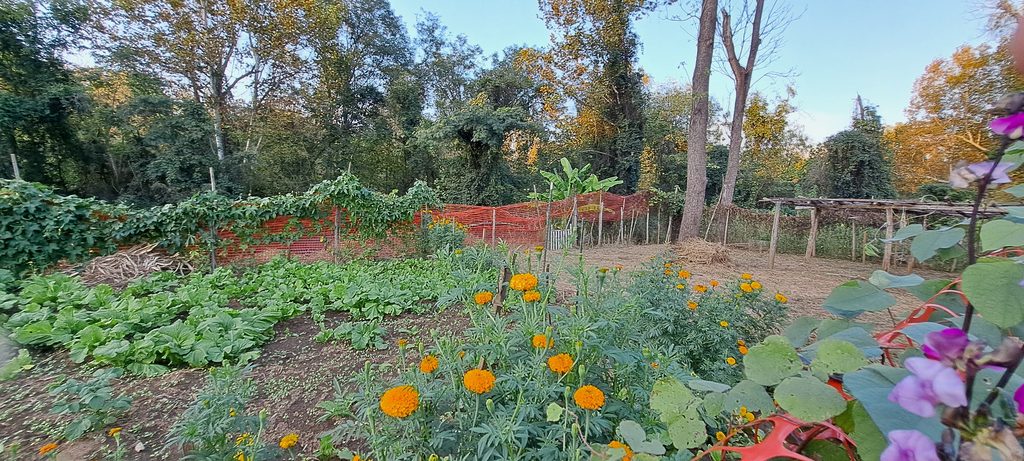
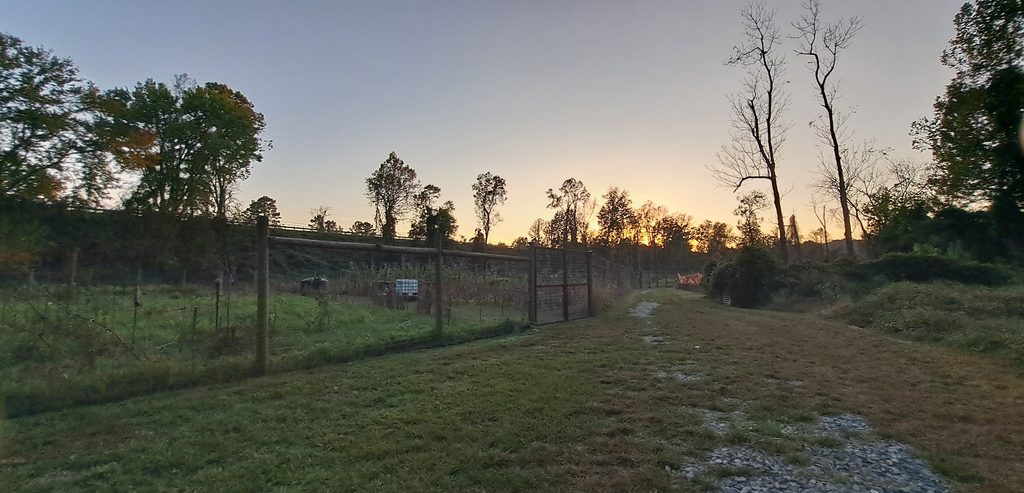
I went there in October when things are definitely winding down in the garden. Still it was just awe-inspiring and (rare in community gardens around here). there were chickens!
And just all kinds of things growing that you wouldn’t see in typical Gardens in Virginia. And they also have pop-up farmers markets in the summer, so check their social media sites or www.ilsr.org for more information. .
Queen City communal gardenspace
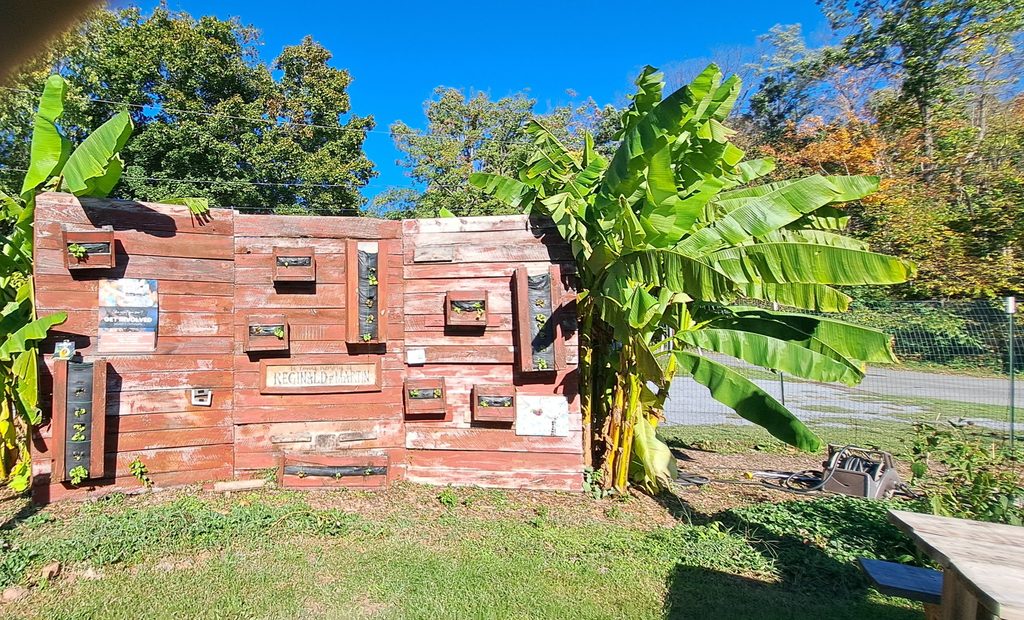
I also enjoyed the garden that I visited in Stanton, and I really hope to visit more community gardens. They just make me really happy.
Speaking of gardening: a checklist for creating a community garden
You will need some hand tools. And a wheelbarrow or tarp so that when you’re weeding, if something to put the plants on, you need a place to put the plants so that you can make compost. So compost Turners or compost pile, you need some kind of shed or place to hang the bigger tools.
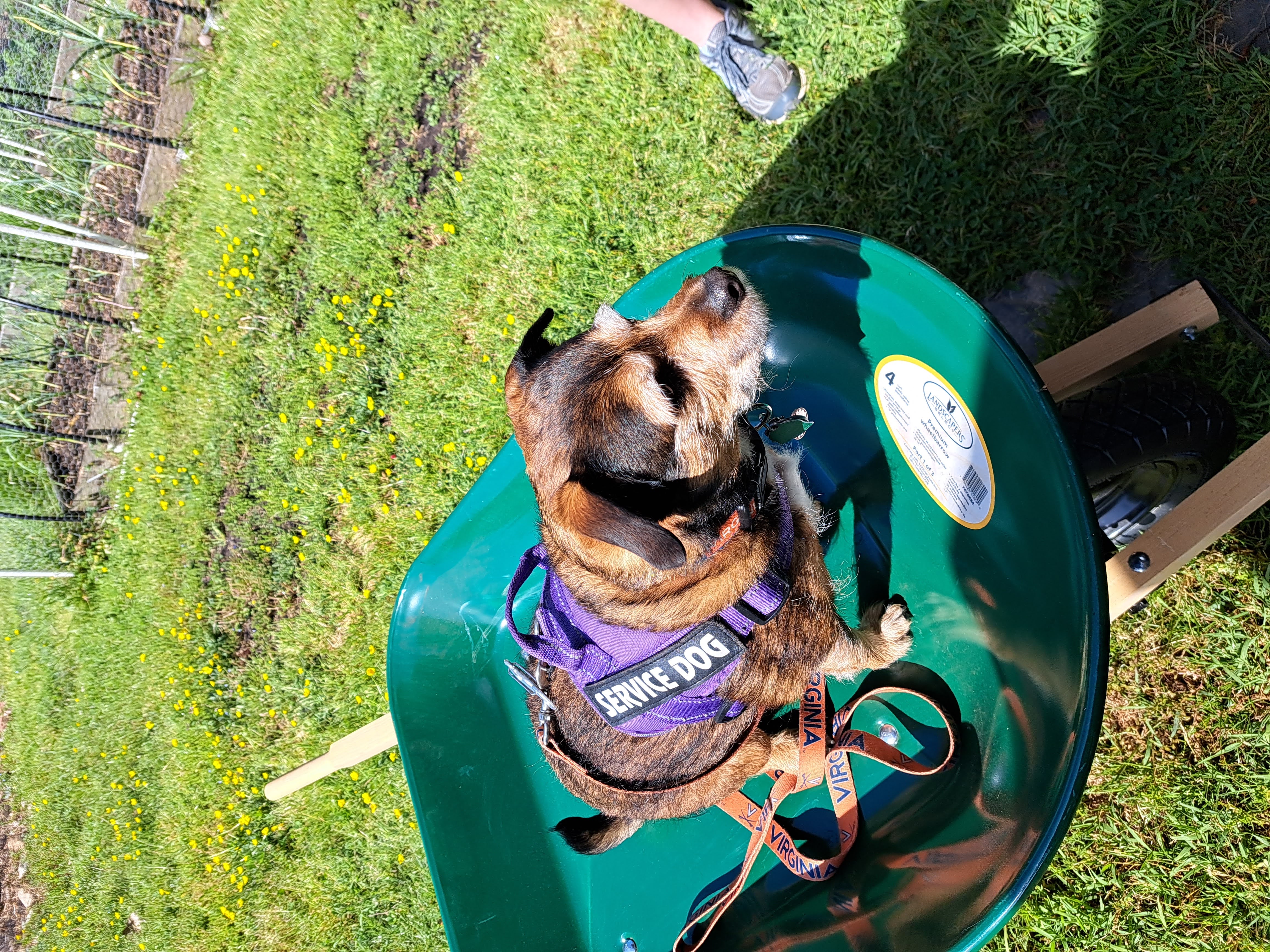
You need a source of water.
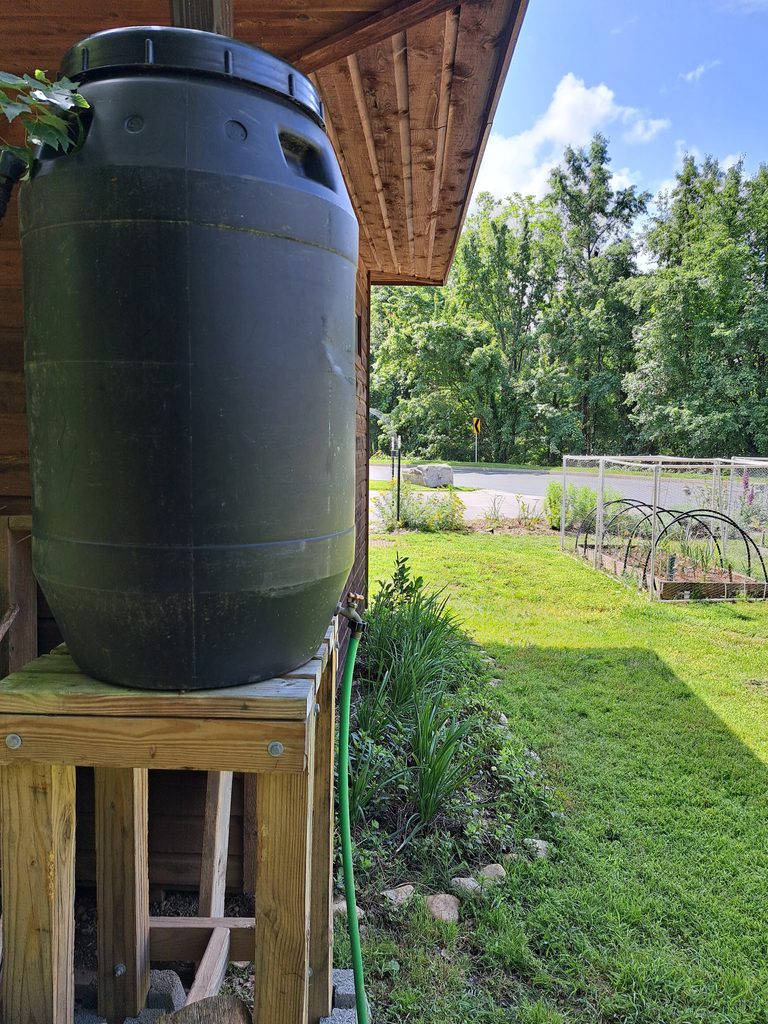
Whether it be a rain barrel and a watering can or an actual hydrant spigot supplied by the city or a well. It helps to at least one place in the garden (or more) with a water supply. If you are lucky enough to have a hydrant onsite, easy-to-maneuver hoses and a good hose attachment with which to keep plants hydrated are essential.
A checklist for your community garden:
-entrance gate/arbor/trellis and fence
-hand tools and larger tools: trowel, weeder, bromi, kneeling pad, bullnose shovel, metal rake, leaf rake, pitchfork
-containers/raised beds/rows
-wheelbarrow and/or tarps
-compost/fertile ground
-seeds and plants
-water source: a rainbarrel and watering can(s) and/or hose(s) and hose attachments
-seating: table/bench with umbrella (shade)
-shed/covered place to hang or store tools and supplies
-schedule for working: watering, planting and weeding
Most of all, though, a garden just needs what people need: water, air and warmth. People need plants, and gardens need people. Community gardens throughout Virginia accomplish both, beautifully and fruitfully.
Yeah. There are some beautiful hidden gardens in Virginia that aren’t actually so hidden if you know where to look.